

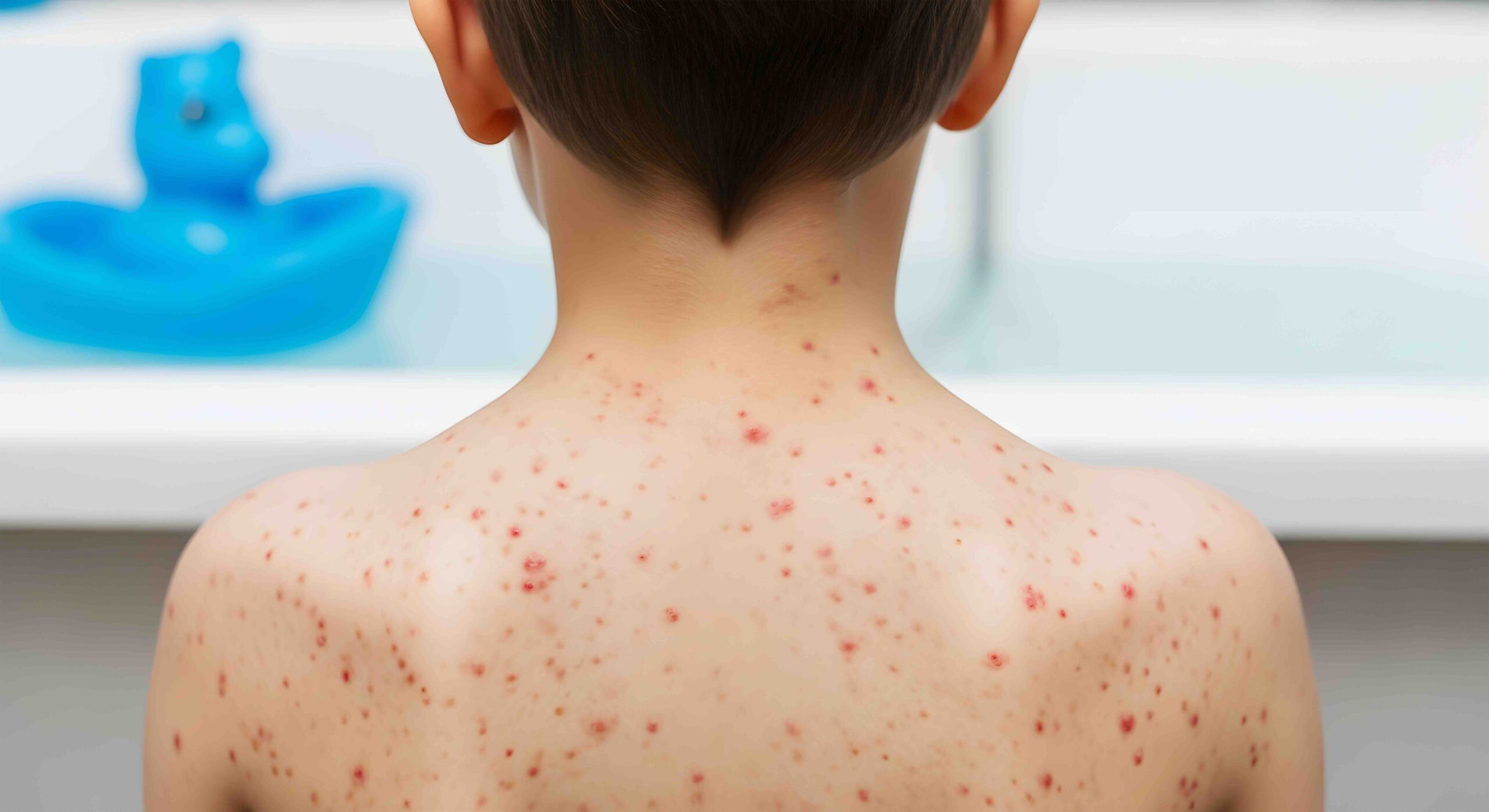
In its latest weekly update, CDC confirmed 211 new measles cases in the US – an increase that is more than double the previous week. Additionally, the 2026 current total of 2,777 already exceeds 2025 (2,289) which had been the highest case rate since 1991. Thus, despite the newly proposed childhood vaccination schedule, the CDC continues to state, “The best way to protect against measles is to get the measles, mumps, and rubella (MMR) vaccine,” adding that most people who are vaccinated will be protected for life. CDC also notes that the MMR (and MMRV which also protects against chicken pox) may be given at the same time as other vaccines.
Despite these recommendations and the wide availability of vaccines, uptake has declined which has not only led to public health issues but also a financial burden on both federal/state budgets and consumers themselves. Public health responses to outbreaks include case investigation, contact tracing, quarantine, and vaccination campaigns requiring extensive public health response for mitigation and consuming substantial hospital resources. From this, John Hopkins researchers estimated that each measles case in the 2025 US outbreak cost $43,200, rising to $58,600 when including the public health response. Thus, the 2,289 confirmed US cases of that year total costs of $134 million, with this year’s cases already reaching well above $150 million. That doesn’t even include unconfirmed or unreported cases.
Add to that, then, the potential long-term impacts and related costs for those who contract measles and their families. Severe cases can lead to serious health complications, especially in children under 5, from ear infections and diarrhea to pneumonia, encephalitis, and in some cases, death. The financial impacts of these can include lost wages for a parent to be with the child (or to supervise the mandated 21-day quarantine of an unvaccinated child’s exposure); out-of-pocket medical bills, and potential lifelong care expenses.
Measles is one of the most contagious human viruses known, with 90% of unvaccinated individuals who are exposed becoming infected. With each infected individual able to potentially infect 18 people, who can each then infect another 18, outbreaks can quickly increase from two cases to 124 in a single month. As measles continues to spread, TAG advises businesses to ensure employees understand the potentially severity and encourage measles vaccines for any unvaccinated employees and their children.
For more information on measles, see TAG’s Infectious Disease Fact Sheet on Measles
COVID Risk Matrix (As of July 29, 2026)
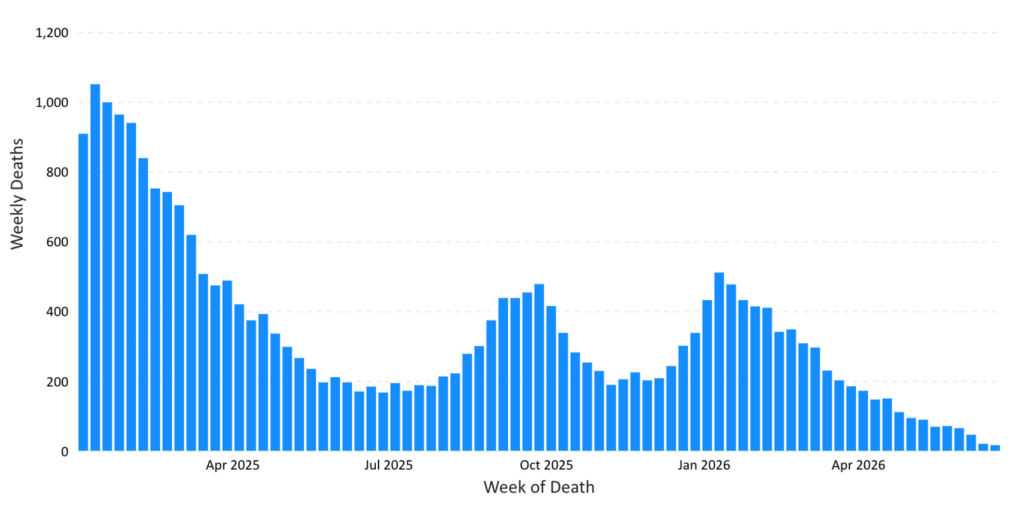
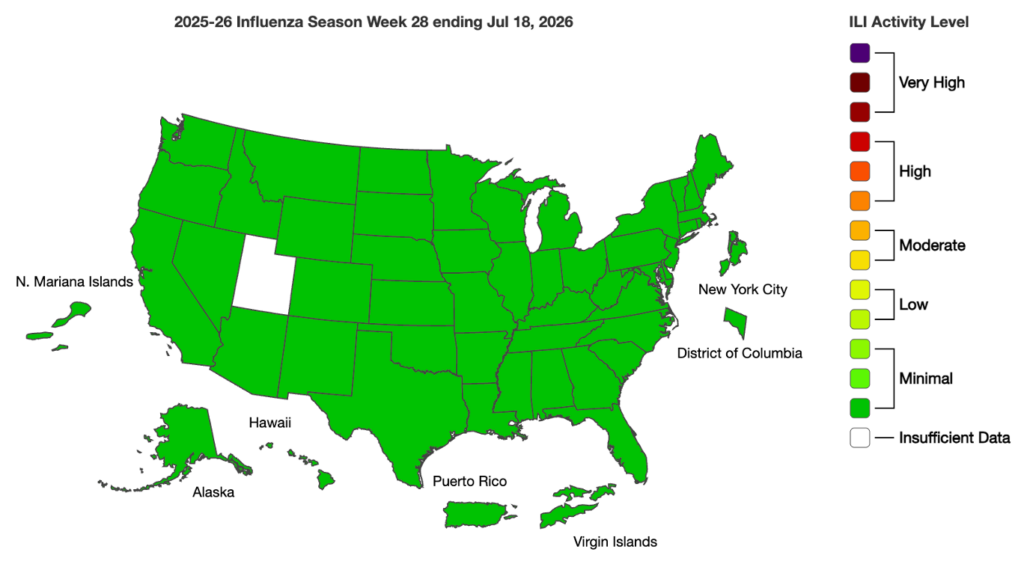
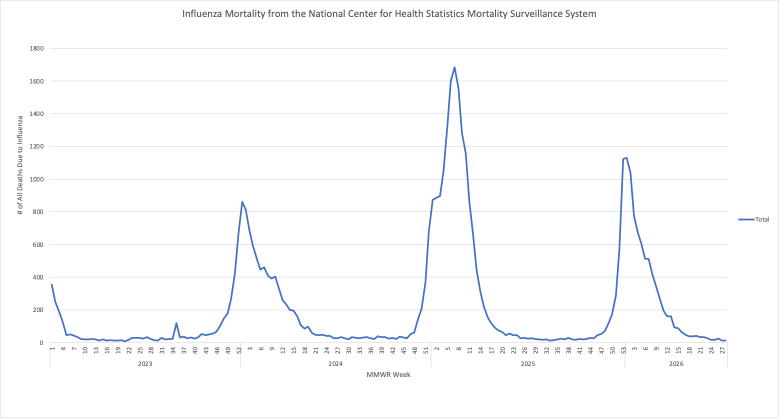
Influenza (As of July 29, 2026)
Public Health News
- Six European regions have reported locally acquired human cases of West Nile virus. The rise of cases is currently driven by Greece and Italy. There has been no human-to human transmission documented.
- A second case of influenza A H1N2 (swine flu) was reported in an individual who attended the Kent County Youth Fair in Michigan. Neither individual was hospitalized and both are recovering. There has been a total of four cases reported during the 2025-2026 season. The accumulation of four A(H1N2)v cases within a single season, with the season still ongoing, represents an elevated detection rate compared with prior seasons.
- Measles cases are rising at a faster rate than previous weeks in the US. In CDC’s update, last week they confirmed 211 new infections. Most of last week’s new cases have been reported in Pennsylvania and Ohio. There are currently 36 outbreaks in the US – last year there were 38. An outbreak is identified as three or more measles cases related.
- A record Salmonella outbreak in Belgium has infected at least 306 people after they ate eggs. A food safety agency said those who developed symptoms had been contaminated by a strain found at a farm. The issue first identified in May, resulted in a recall and a closed down hen house in Belgium. As more cases were reported, the whole farm closed and poultry were culled after a second recall in August. As many as 2 million eggs potentially contaminated with bacteria were sold in Belgium and Luxembourg.