


Helicobacter pylori. It’s not commonly discussed, yet it has been found to be the main cause of peptic ulcers, and it is estimated that up to 40% of people in the U.S. get an H. pylori infection at some time. An H. pylori infection is often asymptomatic, not causing any illness in most people. But it can be serious – having been found to be the main cause of peptic ulcers, it can increase the risk of chronic inflammation and severe digestive conditions, including stomach cancer.
H. pylori can be spread by an infected person not washing their hands after using the restroom, then touching food or food-contact surfaces. It can also be transmitted through saliva, such as in the sharing of utensils and drinking glasses. The bacteria can also be spread through contaminated water, such as runoff from livestock farms, and studies have found H. pylori DNA and antigens in raw milk, presenting a potential risk of foodborne infection.
Because H. pylori bacteria do not spread through the air (like COVID or flu), those who are infected do not need to isolate. However, persons with chronic gastrointestinal symptoms that could be associated with H. pylori should be tested and treated to prevent close-contact exposure.
Additionally, general precautions should be taken to help prevent spread:
- Use standard household or EPA-registered disinfectants to clean any surfaces that may have been touched; the bacteria are inactivated by common antimicrobial agents.
- All employees should always wash hands thoroughly with soap and water after using the bathroom and before eating.
- Because even asymptomatic persons are contagious, it is best that employees not share drinking glasses, utensils, etc. with others.
- Avoid consumption of raw milk to reduce the risk of H. pylori and other pathogenic bacteria.
- As contact does not pose a high risk if standard hygiene is maintained, testing is not recommended for close contacts unless they have active digestive symptoms like stomach pain or bloating.
There is currently no approved vaccine for Helicobacter pylori, however studies and clinical trials are ongoing.
Add COVID (as of September 28, 2026)
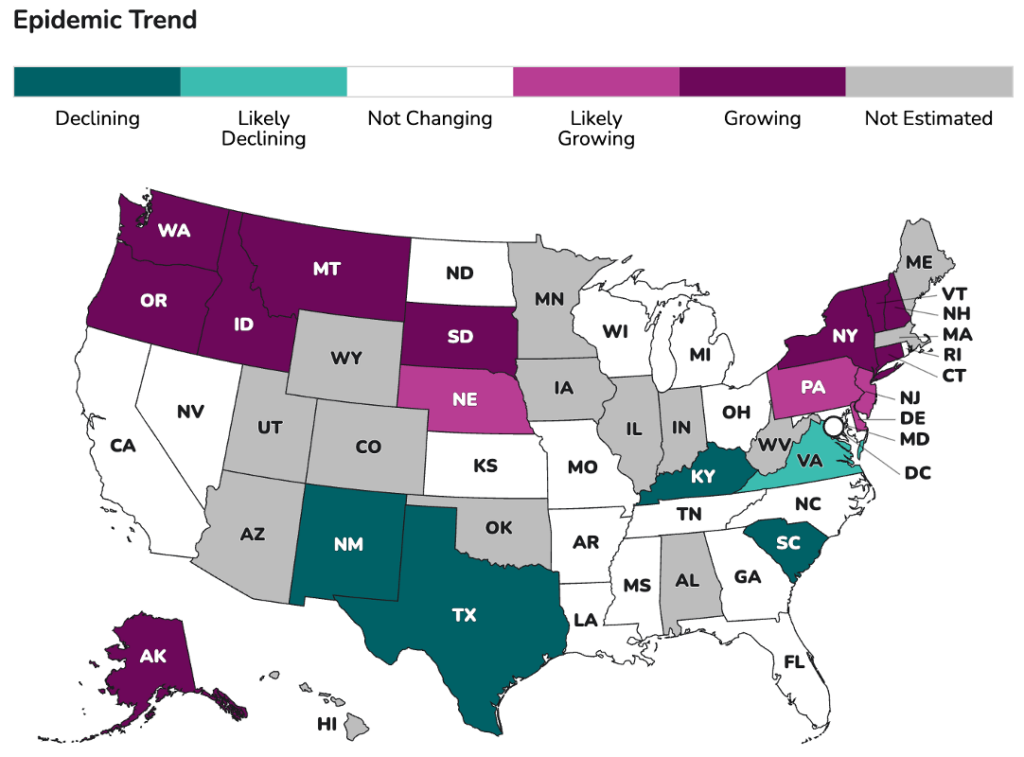
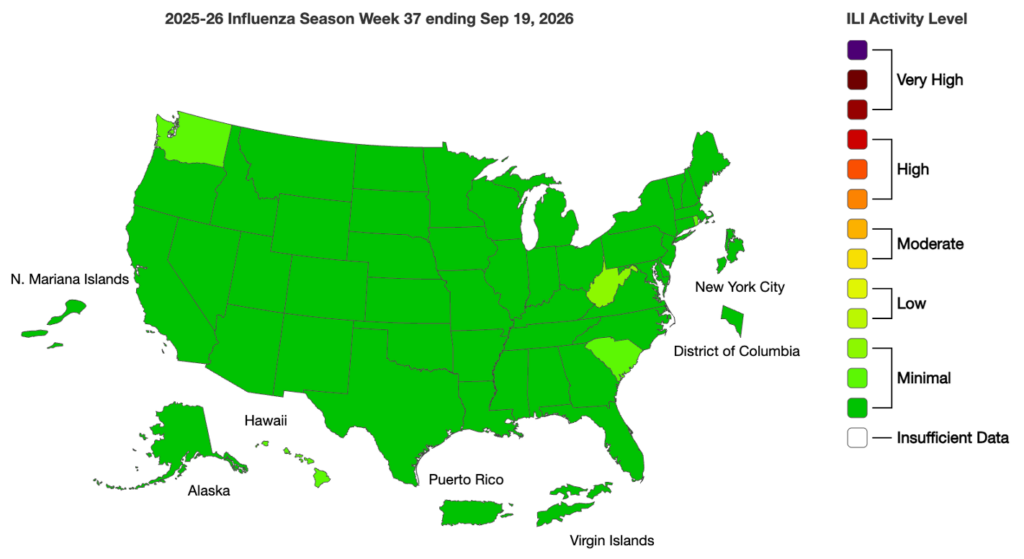
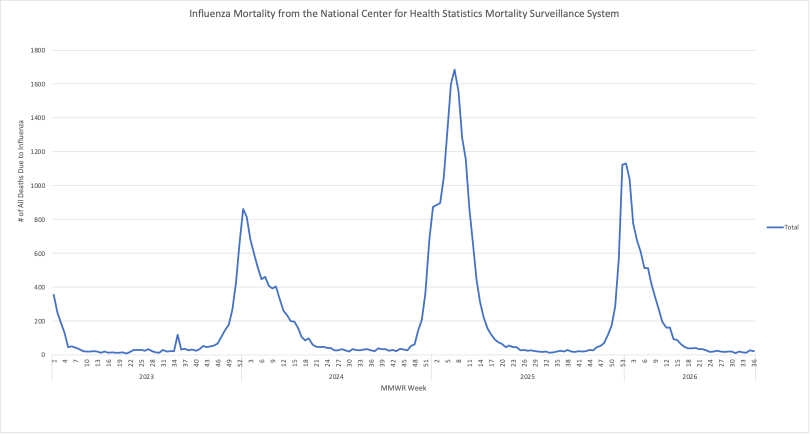
Influenza (as of September 28, 2026)
Public Health News
- A recent CDC publication reviewed an outbreak of H5N1, highly pathogenic avian influenza (HPAI) in a poultry flock in 2025. Various tests, including quantitative reverse transcription PCR, sequencing, and histopathology on samples from small mammals (e.g., cats and rats) that were found on the same farm, revealed the presence of similarities to the strain in the poultry, suggesting that these animals may have contributed to the spread of illness.
- A French-authored study using data from the Global Cancer Observatory’s Cancer Today database found that more than 2 million cancers in 2024 may be linked to infectious agents. The largest number of cases were linked to Helicobacter pylori, human papillomavirus (HPV), and hepatitis B. HPV and Hep B can be prevented with vaccination. H. pylori is the main cause of peptic ulcers and can spread among humans by close contact with body fluids, including saliva or stool and contaminated food or water.
- A case of Bovine Spongiform Encephalopathy (BSE) has been confirmed in a cow on a farm in Scotland in Dumfries and Galloway through routine testing. No other cases have been detected, and the cow did not enter the human food chain.
- A fifth measles-associated death has been reported in the ongoing measles outbreak in Pennsylvania. More that 900 cases have been reported through the end of September. Only 4 cases have been reported in vaccinated individuals.
- On Sept 1, 2026, EU proposed maximum limits for cereulide in infant formula. The European Commission was seeking feedback through the end of September 2026, on a draft regulation that would set limits for cereulide toxin infant formulas. Cereulide is a heat-stable toxin produced by the microorganism Bacillus cereus that can survive pasteurization and typical food processing conditions. The draft regulation would amend Regulation (EC) No. 2073/2005 on the microbiological criteria for foods to establish a Maximum Limit of 1 microgram per kilogram (µg/kg) cereulide in powdered infant formulas, follow-on formulas, and infant foods for special medical purposes. In liquid products, the ML should be adjusted by the manufacturer’s reconstitution factor to ensure compliance with the limit of 0.1 µg/kg in corresponding dried forms. Final adoption of these new limits is in early 2027.