


It’s been six years since World Health Organization (WHO) characterized the COVID-19 as a global pandemic in March 2020 and only three years since it was declared officially over in May 2023. Do you remember those three years? The lack of knowledge, unpreparedness, the business difficulties? More importantly, did you learn from these, and are you prepared for the next pandemic?
It was just such issues and need for preparedness that led the countries of the United Nations to call for a declaration of international collaboration and solidarity in preparing for and responding to pandemics. While endorsement would have “signaled a powerful expression of global political commitment to the issue,” there remains a divide between some of the wealthiest countries and low-income nations. The most notable are the U.S. and Italy, which rejected the declaration in whole, and the European Union, Germany, and India, which objected to certain aspects of the document.
The EU’s objections focused on technology transfer, which it said should be voluntary, have balanced financing and a finance tracker, and “key actors” (e.g., WHO) to ensure effective pandemic prevention, preparedness and response of all member states. The U.S. noted unresolved critical issues and “the inclusion of divisive ideologies that lack definitional consensus,” thus stating that it is not in a position to support the declaration in full. Italy rejected the declaration, concerned that it could allow for the ordering of global lockdowns – which the WHO Director-General said was incorrect, that it would not “infringe on national sovereignty in any way.” Even with the objections, the declaration will be brought up for consideration at a future meeting and is likely to be adopted at that time. While debates such as this play out on the international stage, companies and institutions have the opportunity to revisit and revise their employee health and continuity of operations plans. As we head into respiratory illness season in the Northern Hemisphere, basic public health protections such as handwashing, staying home while ill, employee illness screening policies, supportive sick leave policies, as well as adequate ventilation and well-designed HVAC systems can all contribute to limiting workplace transmission of influenza, COVID, and other respiratory illnesses. An ounce of prevention can still be worth a pound of cure!
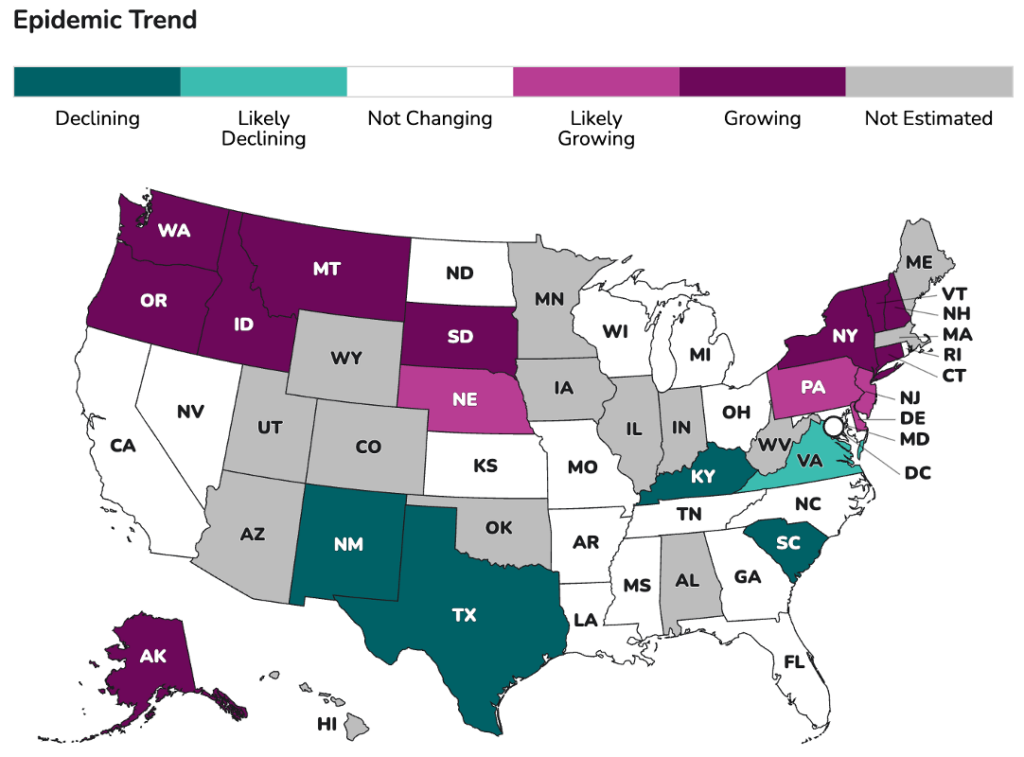
COVID (September 28, 2026)
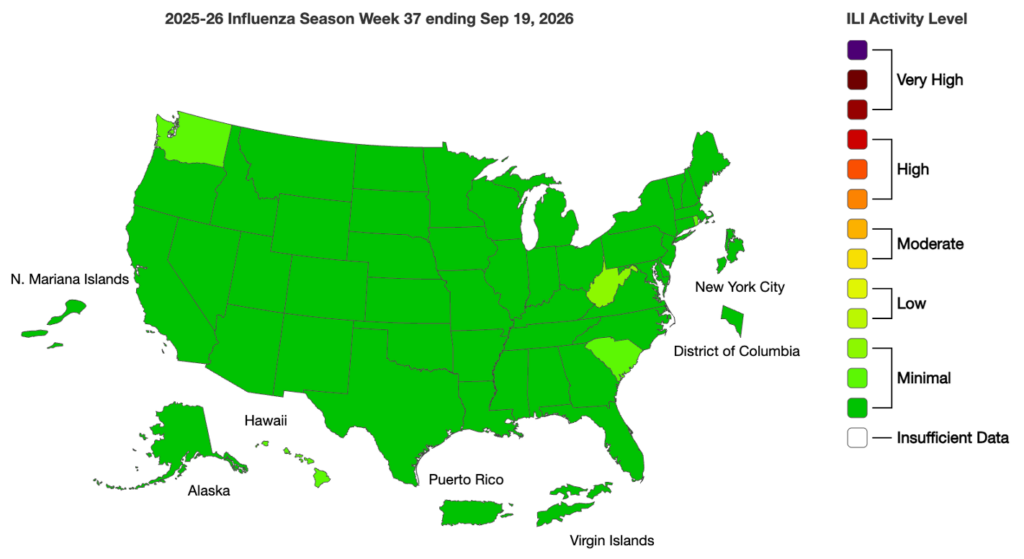
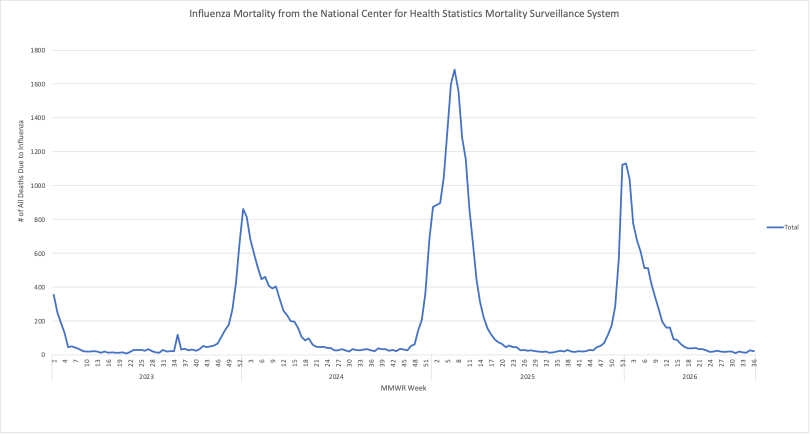
Influenza (September 28, 2026)
Public Health News
- Although flu season in the northern hemisphere is just beginning, the WHO has already issued recommendations for upcoming season in the Southern Hemisphere, which will likely start in March-April 2027. This will allow vaccine manufacturers to ensure that they have sufficient supply available when that flu season begins.
- The Santa Teresa livestock crossing in New Mexico reopened September 24th, 18 months after it closed to contain the importation of New World screwworm from Mexican cattle. The crossing will stay open only if Mexican authorities continue to meet the terms of a joint surveillance and treatment plan, since eradication of the affected fly larvae has not occurred.
- Costa Rica’s Ministry of Health reported an active chikungunya outbreak, with 12 cases confirmed out of 22 suspected. The cases seem to be linked to travel to Nicaragua, but is now being transmitted locally. The US embassy reminds us of the symptoms (high fever above 102°F, joint pain and swelling, headache, nausea, and general malaise) and to seek medical attention if symptoms occur during or after travel to Costa Rica. Note that a vaccine is available and is recommended prior to travel to an area with an active outbreak, such as Costa Rica.
- The Los Angeles County Department of Public Health is investigating a localized flea-borne typhus outbreak, with seven symptomatic cases identified; six of the seven were hospitalized, and all have recovered. 109 cases have been reported in this area year-to-date. The cat flea whose principal host is the domestic cat—but which is also found on opossums, dogs, and rats—is the predominant vector in suburban areas of the US.