

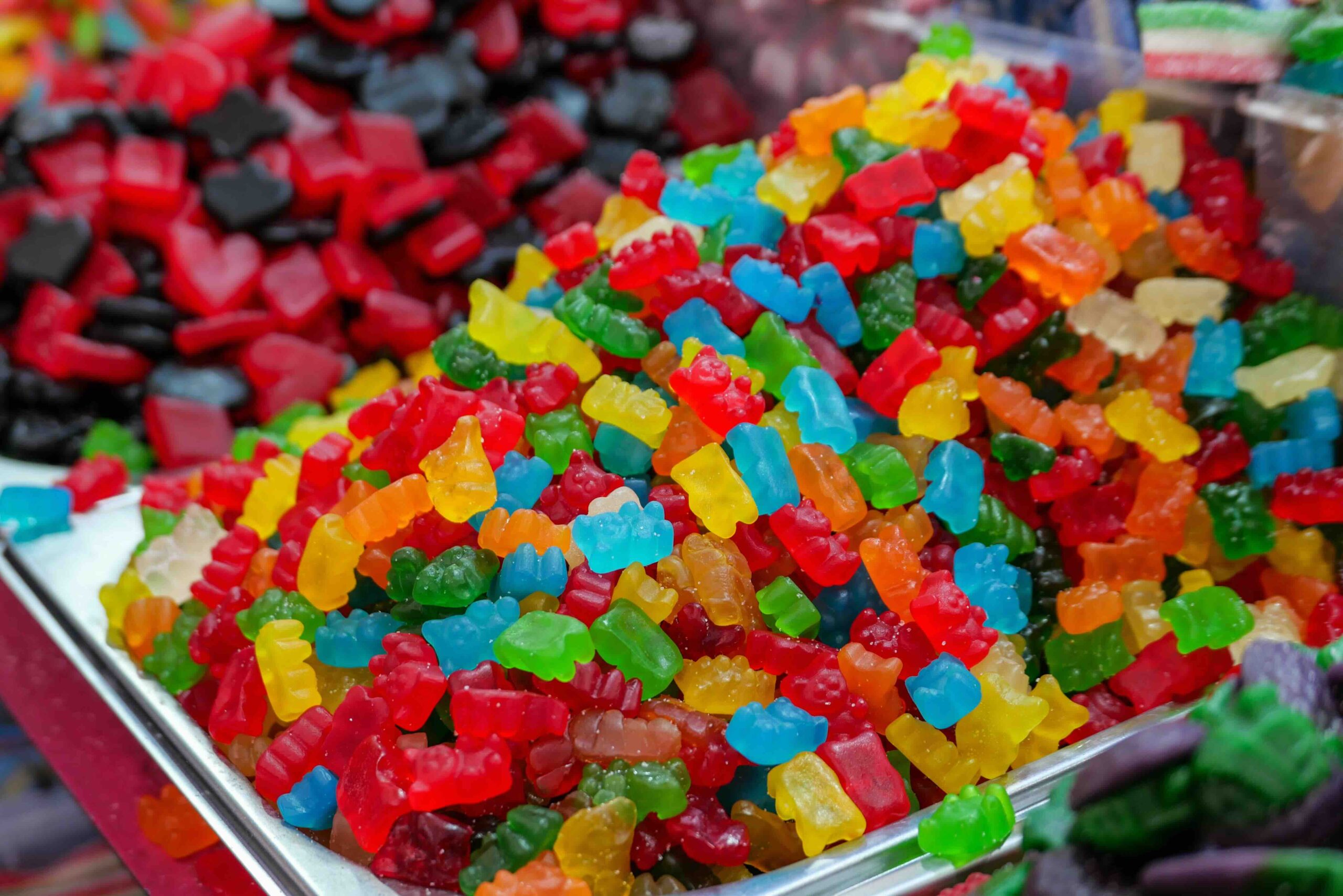
As FDA gradually approves new food colors from natural sources and major food companies transition to these from artificial FD&C colorants, studies are finding that a gradual transition, rather than rapid deployment, will benefit the industry and consumers.
It’s not the first time an attempt has been made to convert food from synthetic to natural colors. In the mid-2010s, there was a push by a number of food companies to remove synthetic colors. However, the technology wasn’t yet matured enough which caused reformulation challenges, and consumers at that time rejected the muted colors of the products, so many brands resorted back to synthetics.
While the likelihood of successful transition and consumer acceptance is better now than in the past, as new techniques exist and consumers are more health-conscious, full industry conversion will take time. As noted in a new study by RTI International commissioned by the National Confectioners Association, the FD&C dyes are deeply embedded in the U.S. food system, reformulation is challenging, and key limitations are found in the upstream supply chain. Additional challenges include the limited supply of natural colors and some continuing consumer resistance to muted colors in some foods, despite their desire for foods without artificial substances and additives.
As with any natural product, variation in the source of natural colorants (be they plants, fruits, vegetables, spices, algae or insects) is innate – as can be seen in the produce section of any grocery store or farm market. And with many of the inputs being very geographically concentrated, sourcing/availability, climate change, and trade (including tariffs) – along with formulation – all come into play to present challenges. Availability of plant sources, whether local or imported, is of key concern if a rapid change is made as farmers can’t suddenly grow enough beets, purple carrots, spirulina, butterfly pea ternatins, saffron croncins or any other colorant to replace the artificial dyes. When you factor in instability due to environmental stressors, such as pH fluctuations, heat, light, and oxygen, the challenges compound. While certain challenges impact only specific steps of the supply chain, the resulting disruptions impact the entire chain, and generally lead to increased consumer costs.
Even with this compendium of challenges, we’re not saying that a move to natural colors is not desirable. Rather, a gradual transition will prove to be more successful than a rapid move as it will give farmers time to plant and harvest the crops needed for dyes in a safe way; applicable technologies can be developed and formulations perfected; processing can be optimized; and consumers can progressively adapt their color expectations.
Because no single stakeholder can manage all the challenges in isolation, the RTI study makes several recommendations, all based on the consideration that the industry, regulators, and consumers are given time to make the transition. Among these are:
- National, science-based standards and regulations should be set to align with industry sourcing and reformulation needs and prevent a patchwork of state laws without impeding safety and quality of the food and its additives.
- A communication infrastructure should be developed that brings together policymakers, industry, and other stakeholders to work through best practices for industry transition, conduct or support shared research, identify and seek solutions for key sourcing challenges, and provide consumer education.
- Along with safety verification of the natural colorant sources themselves, the full chain from plant extraction to food production, storage, transport, retail handling, and consumer use needs to be considered in ensuring quality and food safety management throughout.
A successful transition will also require the overcoming of industry hesitancy due, not only to the challenges, but also to the lack of scientific evidence of health risks associated with many of the synthetic colors that are in use by the today’s food industry. But with consumer groups continuing to focus on studies on the effects of high levels – to which humans wouldn’t normally be exposed; the requirement for FDA to ban any food additive with any link to cancer (regardless of the exposure level); and other countries are more stringently regulating synthetic colors, the pressure is continually increasing for the U.S. food industry to follow suit.
There is, however, a likelihood that a transition and consumer acceptance will be more successful now than in the past, as new techniques exist and consumers are more health conscious – if it is acknowledged that full industry conversion will certainly take time. And because, if not now, then when? As stated in the study, “The opportunity now is to pair clear rules with disciplined execution so the industry can deliver a transition that is credible, workable, and resilient” – as well as safe!
In summary, as FDA gradually approves new food colors from natural sources and major food companies transition to these from artificial FD&C colorants, studies are finding that a gradual transition, rather than rapid deployment, will benefit the industry and consumers. While the likelihood of successful transition and consumer acceptance is better now than in the past, as new techniques exist and consumers are more health-conscious, full industry conversion will take time.