

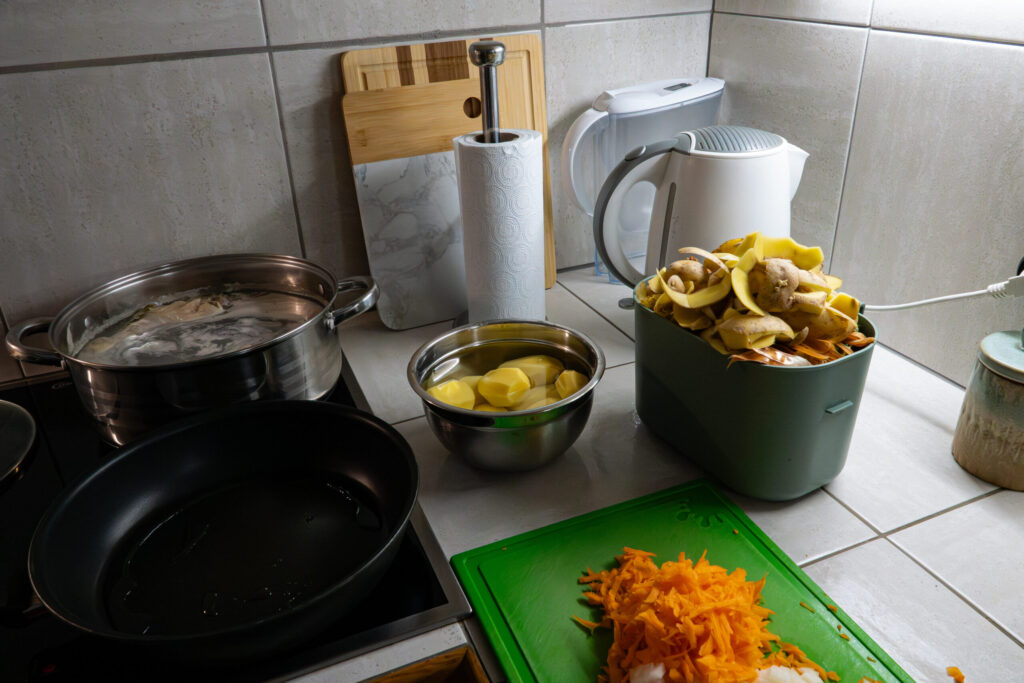
Is the home-cooking zero-waste trend safe?
The short answer: Yes, but…
The explanation: Zero-waste cooking – utilizing every part of ingredients to minimize waste – can be great for the environment and easy on the budget, but there are some food safety risks. So it is important to understand which parts of the fruits and vegetables are edible – and which can be toxic!
The following are some general guidelines:
- Peels: Zero-waste cooking often uses peels, so thorough washing under running water is essential before using them in broth or baking. The skins of mangoes and cashews should always be avoided, as these have an acid related to that of poison ivy and can cause similar irritation to both your skin and stomach.
- Seeds/Pits: Avoid eating pits and seeds of apples and stone fruits (i.e., mangos, cherries, peaches, apricots, nectarines, etc.). These taste bitter because they contain a chemical that can release cyanide in the digestive tract, particularly if crushed or chewed. An accidentally swallowed seed or two won’t hurt you, but don’t use them as an ingredient!
- Other Vegetable Scraps: Never eat rhubarb leaves, as these are very high in oxalic acid, which can cause kidney failure. Additionally, the eyes and greenish skin of potatoes and red berries of asparagus are best left to the compost pile to avoid adverse health effects.
- Storage: Store scraps in the freezer rather than the refrigerator, especially if they won’t be used within a day or two.
- Containers: It is best not to reuse old plastic containers for food storage, particularly if they are scratched or cracked, as they can leach chemicals; it’s better to use containers specifically made for food storage.
- Cooking: When using scraps or produce that is past its prime, heat them thoroughly, to at least 167°F, to kill any potential bacteria growth.
- When to compost: Any time a food shows any signs of mold, has an unpleasant odor, or feels slimy to the touch, it should be composted – not eaten.
Even healthy foods can have food safety risks, so it is important to understand any hazards, particularly of parts of produce not generally eaten, and ensure proper handling and storage of all foods. TAG can simplify your food safety and quality practices. Contact us for information!