


The internet is a primary source of information on nearly every topic, but widespread misinformation and disinformation make it essential to seek out credible, trustworthy sources especially when seeking health advice. And discretion has become even more important with the rise of AI-powered chatbots.
Because of the way AI platforms are set up, no one outside (or inside?) the AI company is looking at the advice the chatbot gives to determine misinformation because the conversations stay on the chatbot’s platform making external oversight impossible. Thus, as a new paper from Binghamton University researchers warns, doctors can’t know what medical advice a person was given, or exactly what happened, when something goes wrong. The lack of visibility keeps the chatbots’ information and conversations hidden from clinicians, researchers, and regulators who could detect and correct errors. So, when AI causes harm, there is no record of it outside the platform, no way for a user to report it, and no ability for independent researchers to measure the consequences.
The issue also goes beyond the chatbot platforms, as there are numerous AI-generated posts on social media as well. While much of the misinformation is easy to debunk with a bit of extra research, it is a step that few social media users take. Rather the posts are commented and reposted to spread further and further with the inaccurate guidance able to harm large numbers of people.
To combat these issues, the researchers recommend that AI companies develop a disclosure system to allow misinformation to be flagged, reported, and investigated. They also recommend that social media companies clearly label AI-generated content, and withhold medical content until it is vetted by medical governing bodies, and that search engines only utilize vetted information in summaries. To further the onus, policymakers should extend physician malpractice liability to AI chatbot companies. Even if such rails were to be placed around AI, its continuing evolution makes it ever more difficult to control and detect. Thus, the onus really stays on each person to vet any information provided by AI, check the source to ensure not only its legitimacy but also its expertise, and consult with your medical care provider before making any major changes.
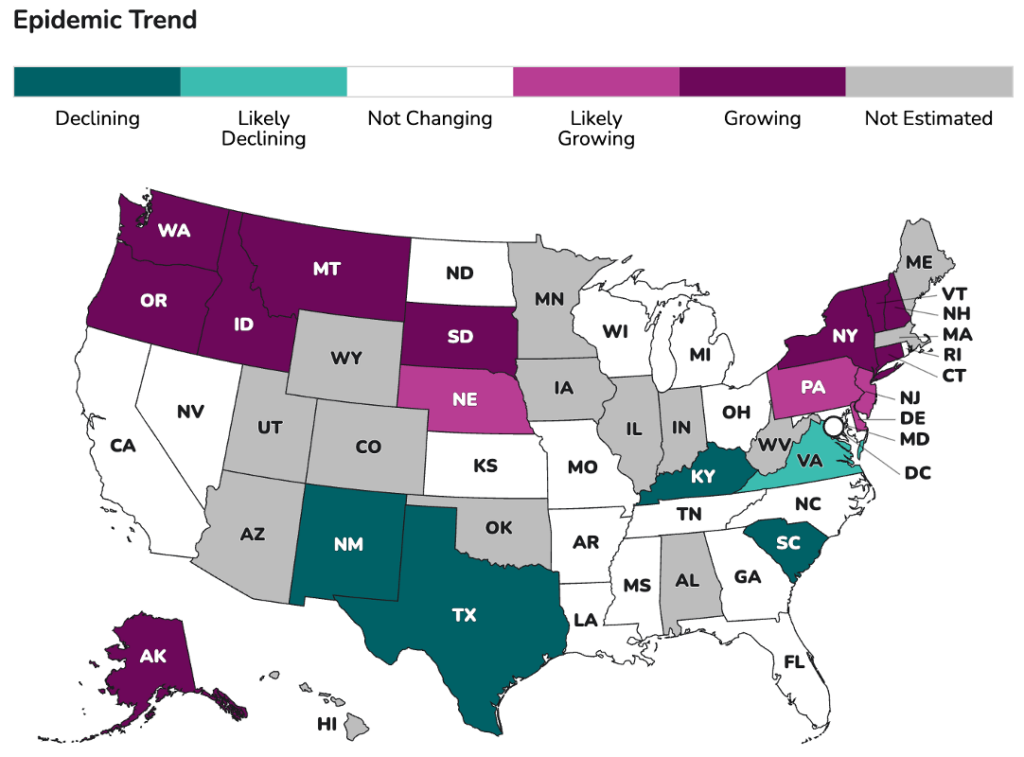
COVID (as of September 28, 2026)
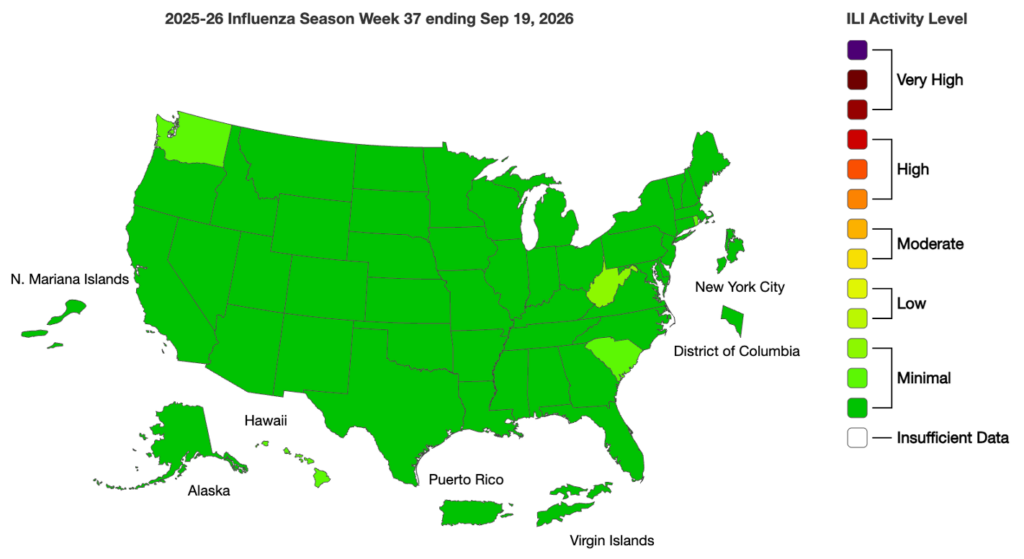
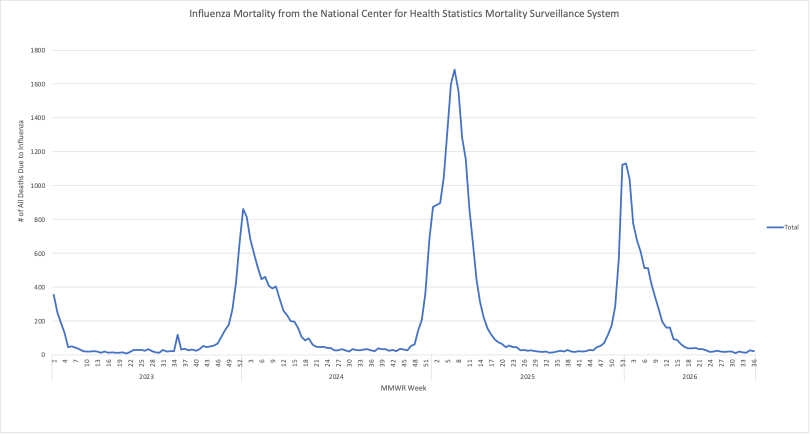
Influenza (as of September 28, 2026)
Public Health News
- Florida’s first fatal case of mosquito-borne Dengue has been reported in an elderly woman. The most recent report describes that nearly 300 locally acquired cases have been detected. Higher rates of Dengue have also been reported in Cuba, with more than 11,000 reported to date in 2026; this figure is 9 times the typical rate.
- A fatal Ebola case has been reported in Kenya in a traveler who came from DRC; this is the first case reported in Kenya. Contact tracing is in progress.
- The suspect case of the plague, which lead to fatal pneumonia in a lab worker in Russia, has not been confirmed, though work colleagues of the patient were quarantined. No additional cases or detections of concerning pathogens have been reported; if there are any, they can be treated with antibiotics.
- We are accustomed to hearing reports of new world screwworm cases in cattle in Mexico that has caused spillover in the US and aggressive actions from the USDA to prevent further transmission. In Central America, there has been an increase in cases since 2024, when routine dispersal of sterile flies was stopped in Panama. More than 200,000 cases have been reported in animals and 2700 in people.
- The CDC has recently released $100 million to states to help curb the ongoing measles outbreak. It is expected that the funds will be used for enhanced vaccination and surveillance.