

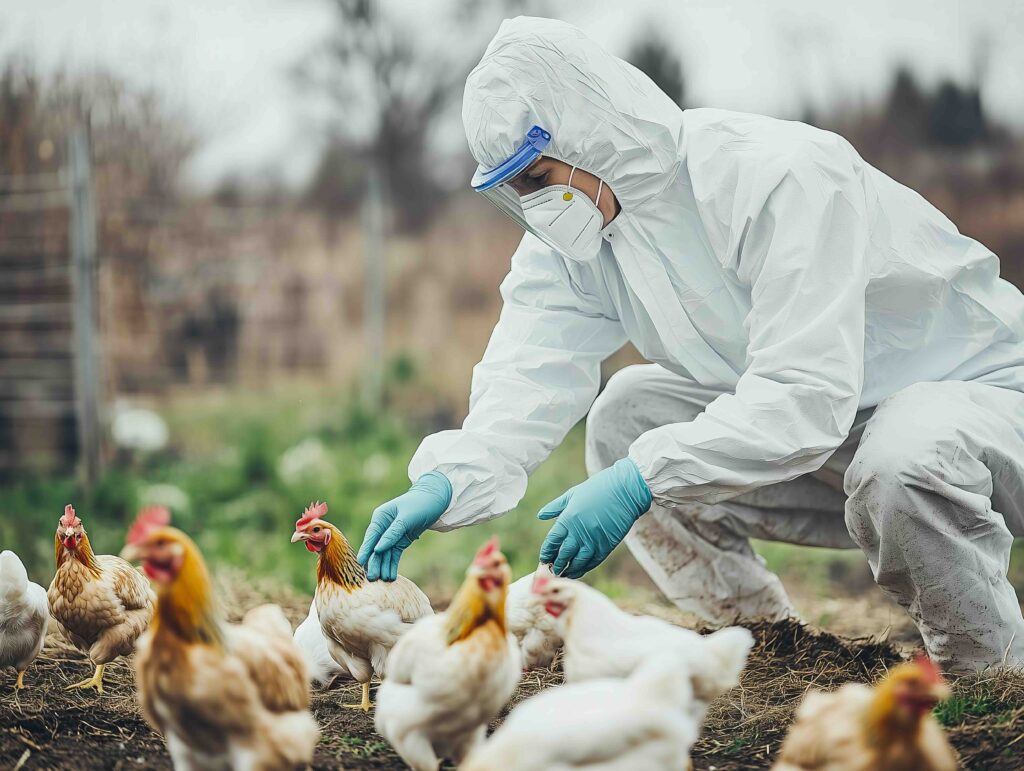
From Delaware to California, health officials are warning about the heightened risks of highly pathogenic avian influenza (HPAI) due to the fall migration of wild birds. Wild birds can be infected with HPAI without showing signs of illness, then as they migrate, carry the flu to infect other flocks and animals. Within the last 30 days alone, APHIS has confirmed outbreaks in 33 flocks, affecting 2.63 million birds. California and Illinois are seeing the greatest number of affected birds, but numbers are rising across many states, primarily in the Northwest through the Midwest.
And it’s not just flocks being affected, a Washington resident has died of complications from avian flu following exposure to infected cattle. With 34 dairy herds in two of the state’s counties having tested positive, the state Department of Agriculture is recommending the increased and consistent use of PPE, along with frequent handwashing, when around dairy cattle. Other animals can also be at risk, from cats to polar bears – which have recently been found in Greenland to have been infected by Arctic-breeding migratory birds.
The current public health risk is considered to be low, but CDC is watching the situation carefully, is working with the states, and using its flu surveillance systems to monitor bird flu activity in people. Common signs and symptoms include: fever; chills; cough; sore throat; shortness of breath; teary, red, or irritated eyes; headaches; runny or stuffy nose; muscle, body aches; and diarrhea/vomiting.
To protect flocks and livestock, the Washington Department of Agriculture recommends:
- Keep flocks covered and away from wild birds.
- Limit visitors and use dedicated boots/clothing.
- Clean and disinfect equipment regularly.
- Watch for sudden illness or unusual behavior.
- Report sick or dead wildlife or poultry right away.
For more information and recommendations, see TAG’s Infectious Disease Fact Sheet on Avian Influenza.
Add COVID (October 27, 2026)
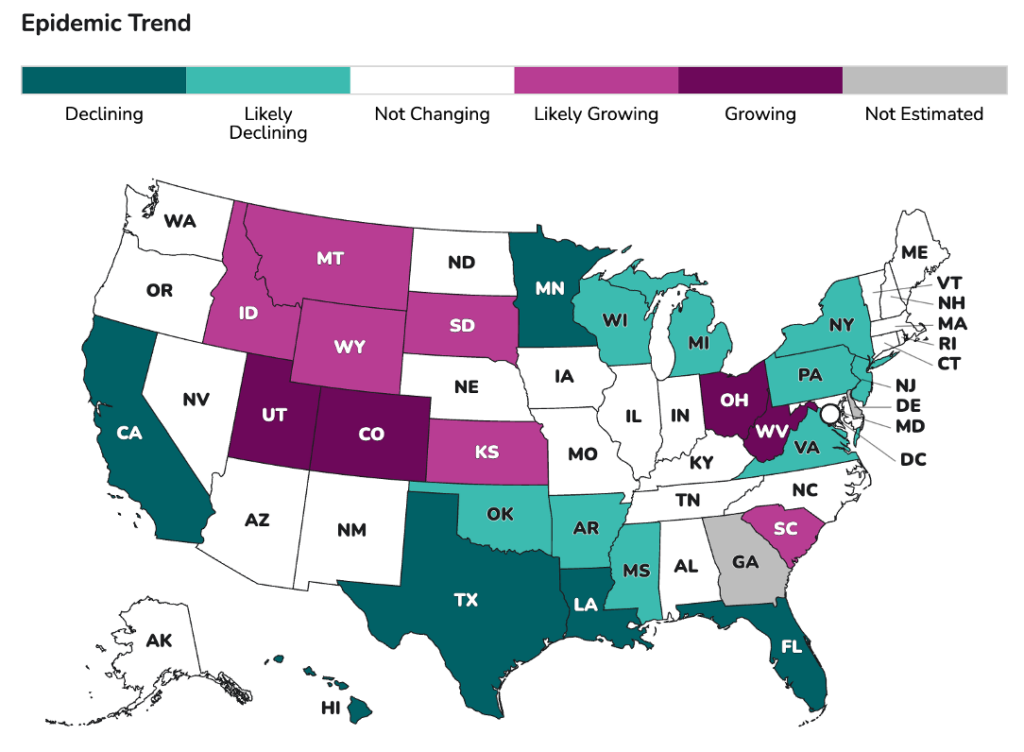
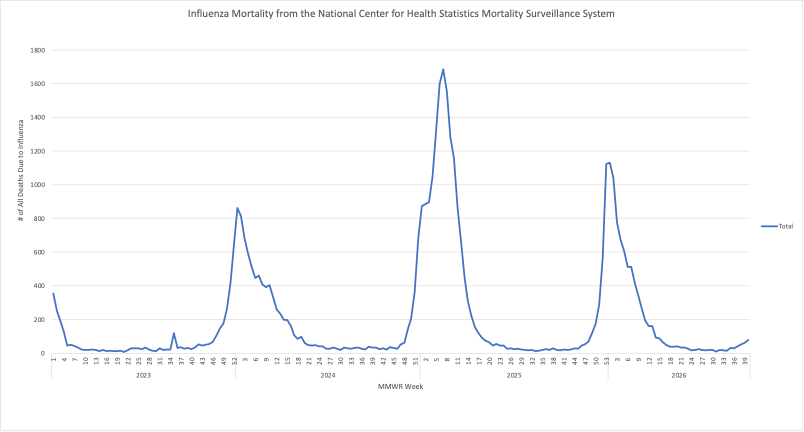
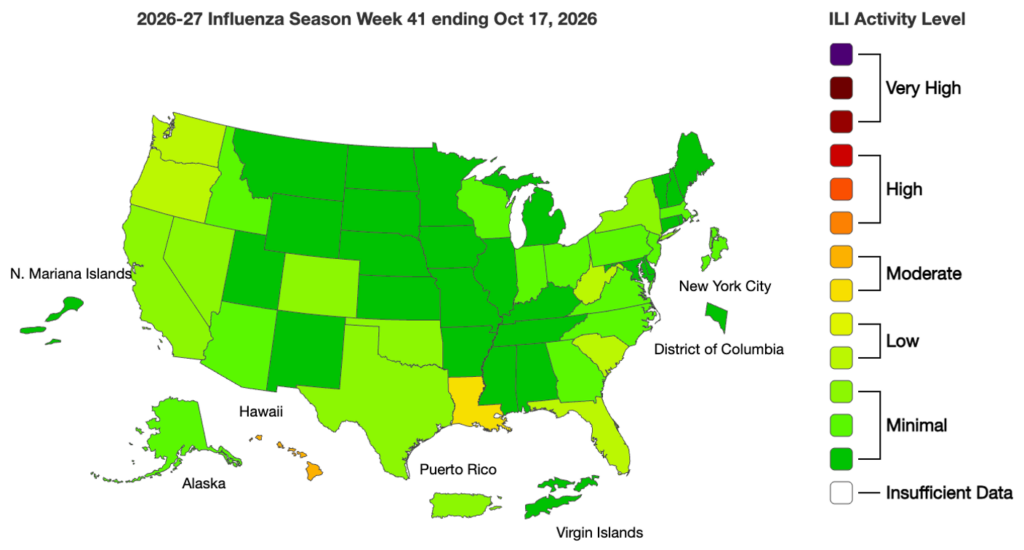
Influenza (October 27, 2026)
Public Health News
- Due to the ongoing Ebola outbreak, beginning November 3 and continuing through at least December 18, all passengers boarding an international flight to the United States must sign an attestation that they have not been in the Democratic Republic of the Congo during the previous 21 days. If they have, they will not be permitted to board the flight.
- An outbreak of Shiga-toxin E. coli has been linked to San Luis Obispo County farm in California, though the potential source remains elusive. Environmental testing is underway, and it was noted that there was not a petting zoo on site. 5 cases have been confirmed, including 3 in children, and another 8 are suspected.
- 4 cases of trichinellosis among diners at an upscale restaurant were linked to consumption of raw or undercooked meat sourced from an unlicensed warehouse in Lebanon. Trichinellosis is caused by roundworm parasites of the genus Trichinella, acquired through ingestion of raw or undercooked meat (typically pork) that contains encysted larvae.
- As of October 30, the US has recorded 4,852 cases of measles this year. This is far exceeding the yearly total in over 35 years. There have been 12 straight weeks of triple-digit increases nationwide. Pennsylvania continues to be the nation’s hot spot.