

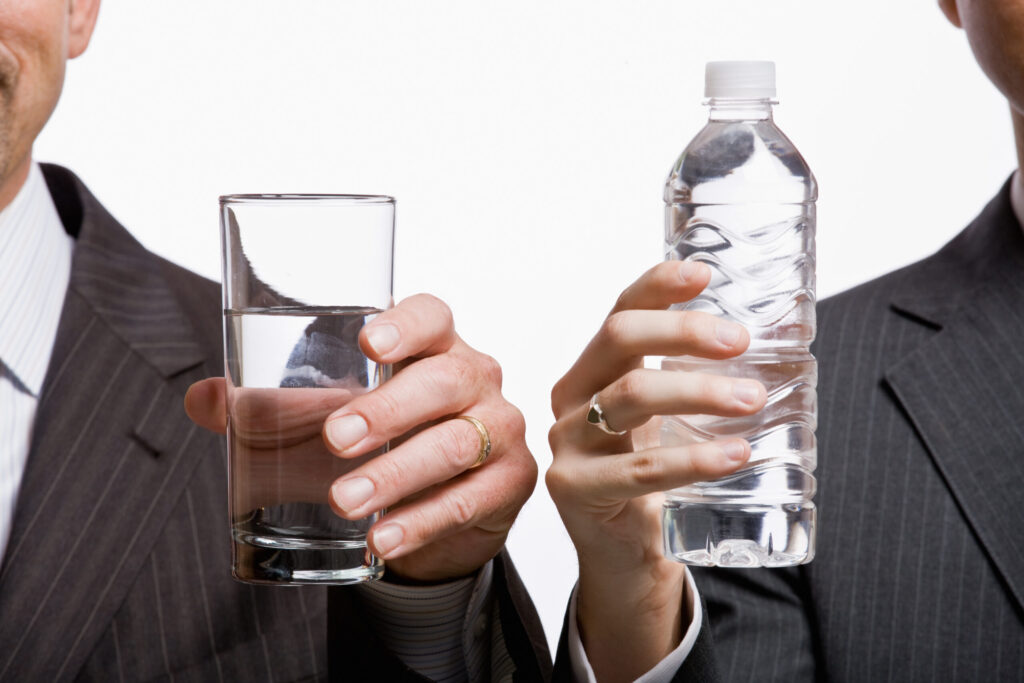
I’ve been seeing conflicting reports on the safety of bottled water vs tap water. I’m now quite confused!
Which should I drink?
The short answer: It’s really a matter of preference, not safety.
The explanation: In the U.S., whether you prefer to drink bottled water from the store or a glass of water from your tap, you can rest assured federal safety regulations are enforced for both.
- Tap water is regulated by the Safe Drinking Water Act which is overseen by the U.S. Environmental Protection Agency (EPA).
- Bottled water is subject to the FD&C Act, with oversight by the FDA to ensure that the quality standards for bottled water are compatible with EPA standards for public drinking water.
- EPA establishes the standards for contaminants in water, with the FDA adopting the standard when it is applicable to bottled water.
DEBUNKING MYTHS
Bottled Water is safer than tap water: False.
- The regulations for tap water can actually be more stringent, as tap water is generally required to be tested for coliform bacteria at least 100 times a month, while bottlers need only test for it once a week. Additionally, the NRDC estimates that at least 25% of bottled water came out of a tap.
Tap water is safer: False.
- Plastic water bottles do not contain BPA; rather, they are made from PET (polyethylene terephthalate), so bottled water is also safe. Additionally, according to a Cancer Council, there is no cancer risk of drinking from a bottle that has been left in a hot car, frozen, or reused, as there is no scientific evidence to dispute this. However …
Bottled and tap water can get contaminated: True.
- Bacteria and fungi can grow in water that sits for a long time in a bottle, glass or other container (e.g., in that hot car!). So, the container should be cleaned with hot, soapy water before being reused.