
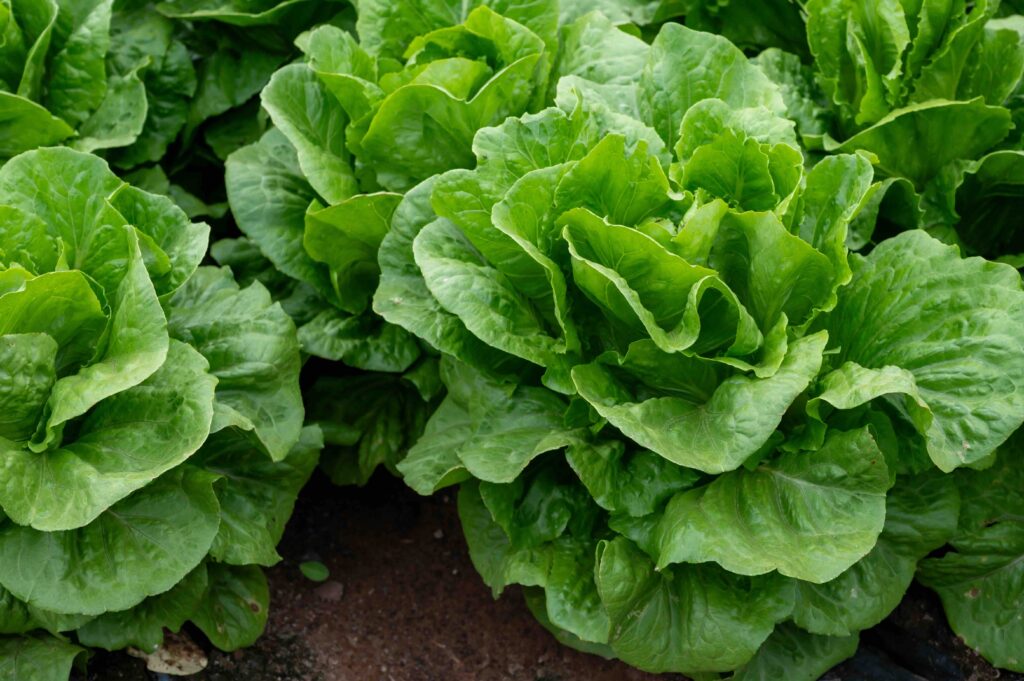
As it has since 2019, the CFIA is once again implementing seasonal temporary import restrictions on romaine lettuce originating in the U.S., but this year, CFIA is providing a new option for the entry of California Salinas Valley romaine.
As in the past, romaine from outside of the Salinas Valley counties of Santa Cruz, Santa Clara, San Benito, and Monterey can be imported with a proof of origin indicating the state and county where the romaine lettuce was harvested. Romaine from within these counties can also still be imported through lot-by-lot testing with a CoA from the testing laboratory for each consignment/shipment demonstrating that it does not contain detectable levels of E. coli O157:H7. (Full information is available in section 3.3.)
But new this year, the CFIA is also allowing romaine imports from the four counties if the supplier is a California Leafy Greens Marketing Agreement (LGMA) member that participates and is in compliance with the LGMA Romaine Test & Learn (T&L) Program. Evidence demonstrating this must be provided in the form of a letter and include, at a minimum, the following information:
- Name of the LGMA member
- Date of issuance of the letter
- A statement confirming that the certified LGMA member participates in the LGMA Romaine T&L Program
- Name, title and signature of the LGMA member representative
The letter may be obtained once at the beginning of the import period, but the evidence of the supplier’s LGMA membership status and T&L Program participation must be provided upon request by CFIA. The LGMA option may also be used if proof of origin is not provided.
What is LGMA and its Test & Learn Program?
LGMA is food safety program, created collaboratively by university and industry scientists, food safety experts, government officials, farmers, shippers and processors, designed to protect public health by reducing potential sources of contamination and establish a culture of food safety on the farm. The program consists of a set of food safety practices that are implemented on leafy greens farms and verified through government audit, including general requirements, environmental assessments, water use, soil amendments, work practices and field operations.
LGMA members are companies that ship and sell California-grown lettuce, spinach and other leafy greens products. A sister program in Arizona is closely identical.
The Test & Learn Initiative is an industry-wide effort that collects, aggregates, and analyzes pre-harvest and post-harvest romaine lettuce testing data from participants, then utilizes the findings to inform future food safety practices that will improve the safety of leafy greens and prevent outbreaks. The goal of Test & Learn is to point the industry in the direction of practices that will work to more effectively improve the safety of leafy greens.
Test & Learn participants are required to meet minimum protocols for collecting and testing samples, anonymous data sharing, and a root cause analysis for any members with a positive sample. Data is to be shared quarterly, and the data will be verified by LGMA audits, conducted at least three times per year by the California Department of Food and Agriculture, with oversight from the United States Department of Agriculture.
Importing Romaine Lettuce
CFIA began implementing the temporary import restrictions on romaine lettuce because of the association of U.S. romaine from the four counties with recurring outbreaks of foodborne E. coli O157:H7 illnesses in both Canada and the U.S. This year’s option to submit LGMA participation for import acceptance was initiated due to the absence of reported E. coli O157:H7 outbreaks linked to romaine lettuce in recent years, along with the implementation of strengthened control measures for romaine originating from the Salinas Valley.
Additional changes for the 2026 season include CFIA’s removal of:
- The requirement to provide the Importer’s attestation for romaine lettuce products from the Salinas Valley form (CFIA/ACIA 5961).
- The requirement for the supporting documents to be uploaded as part of the import declaration.
However, importers must still obtain and retain all documents to demonstrate that all applicable temporary import requirements have been met, and each consignment/shipment is in compliance.
TAG provide import services for many of its clients and can assist you in your efforts. Give us a call to answer your questions or help ensure all your import or export efforts run smoothly.
In summary, the CFIA is once again implementing seasonal temporary import restrictions on romaine lettuce originating in the U.S. New this year, romaine imports from four counties will be allowed if the supplier is a California Leafy Greens Marketing Agreement (LGMA) member that participates and is in compliance with the LGMA Romaine Test & Learn (T&L) Program. Removed this year; the requirement to provide the Importer’s attestation for romaine lettuce products from the Salinas Valley form (CFIA/ACIA 5961), and the requirement for the supporting documents to be uploaded as part of the import declaration.