

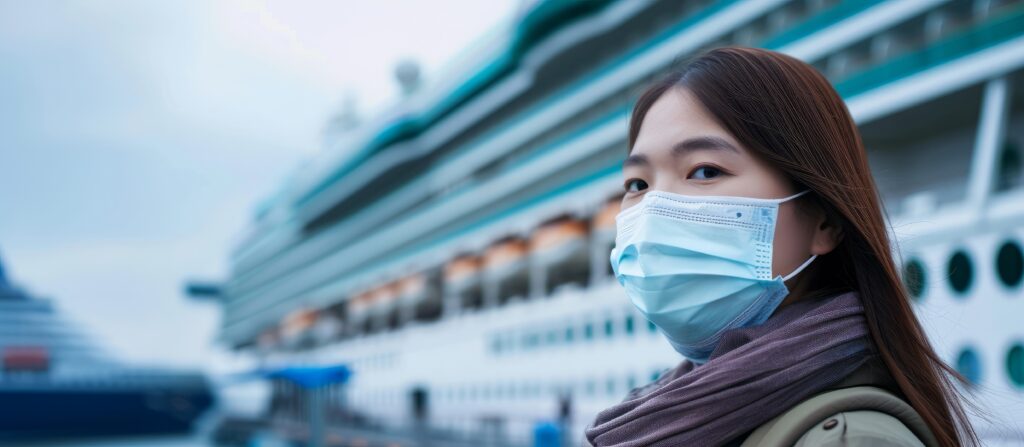
With the holidays here, vacation is top of mind for many people. If your vacation includes a jaunt on a cruise ship, you may be wondering about your risk for norovirus or other illnesses on the ship.
While there have been 10 outbreaks of gastrointestinal (GI) illness on cruise ships recorded thus far this year by the Vessel Sanitation Program (which has jurisdiction over ships with 13 or more passengers that dock at both the US and foreign ports), CDC cites norovirus outbreaks on cruise ships as accounting for only a small percentage (1%) of all reported norovirus outbreaks. Norovirus is most commonly spread through direct contact with an infected person, with the most common outbreak setting for infections being healthcare facilities. Additionally, about 50% of food-related illness outbreaks are caused by norovirus.
A new study, on gastrointestinal outbreaks on cruise ships between 1969 and 2026, found that norovirus remains the leading cause of such outbreaks, however it also found that respiratory viruses and other emerging pathogens are gaining ground. The study identified 619 outbreak event records from 236 different ships in the 57 years, with acute gastroenteritis being the predominant clinical syndrome, and norovirus the most frequently identified pathogen. Norovirus risk was found to be 6.5% among passengers and 1.5% among crew, with influenza risk also at 6.5% for passengers, but 7.3% for crew. SARS-CoV-2 risk was also measured (5.1% for passengers; 26.4% for crew), but this included the pandemic years.
As in any confined setting, control of gastrointestinal and respiratory viruses is challenging on cruise ships due to the number of people in a limited area over extended periods, continuous turnover of passengers, and the ability for norovirus to be carried back onto the ship in contaminated food/water or newly infected persons each time it docks.
Thus, reducing illnesses on ships requires passenger cooperation. Illnesses should be reported to the ship’s medical center, and stool or vomit samples provided when requested to allow for testing to help determine the causative agent and attempt to track the source. Additionally, cruise passengers can help protect themselves by washing hands often with soap and water – hand sanitizer alone does not work well against norovirus; drinking water and getting plenty of rest; and leaving the area if someone is getting sick.
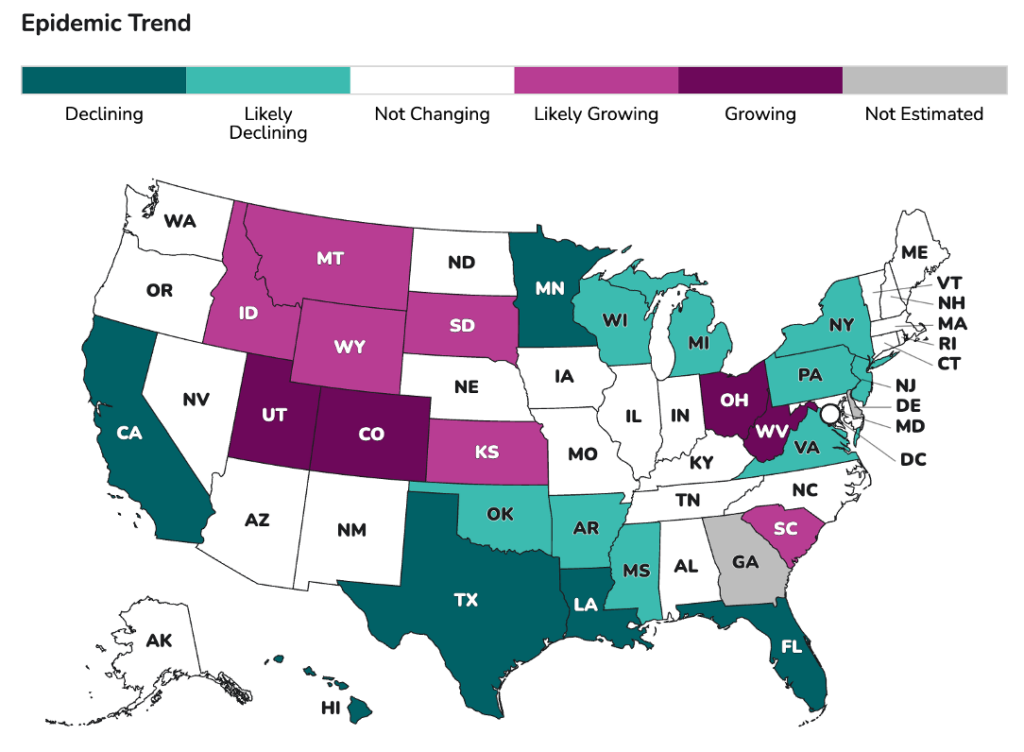
COVID (October 27, 2026)
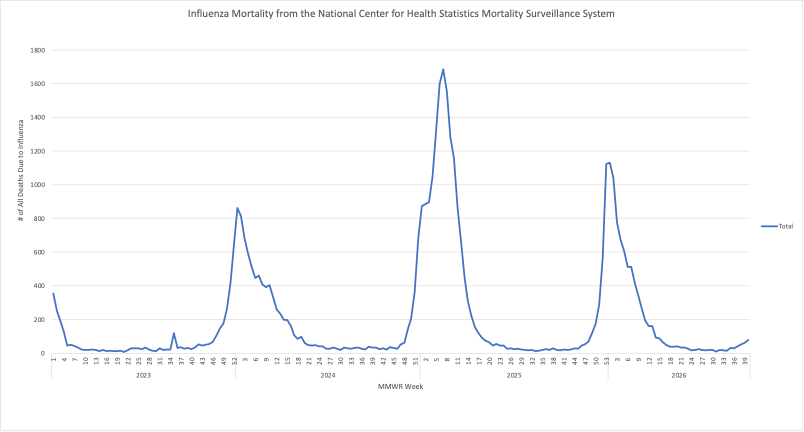
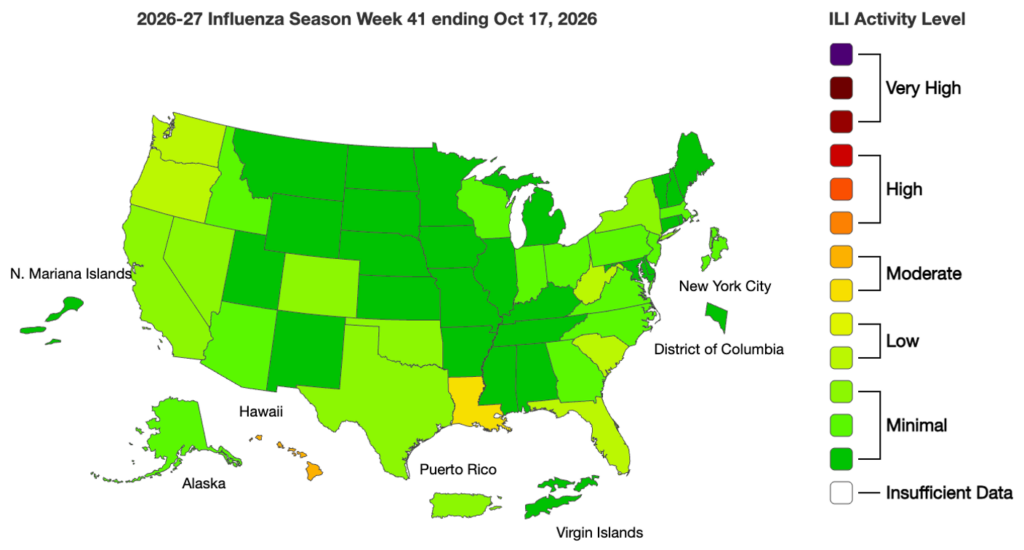
Influenza (October 27, 2026)
Public Health News
- Recently, the National Association of State Departments of Agriculture and the National Assembly of State Animal Health Officials jointly sent a letter to the USDA Secretary Brooke Rollins, urging the agency to authorize a voluntary national emergency vaccination framework for dairy cattle as part of an integrated disease control strategy in response to ongoing highly pathogenic avian influenza outbreaks. Reasons include disruptions to supply chain and the economic impacts related to the affordability of dairy, beef, egg and poultry products.
- A recently published study showed the benefits of mass malaria vaccination in two African villages where the disease was endemic. Prevalence decreased 25-70%. The WHO estimates that use of vaccines could prevent up to half a million child deaths from malaria by 2035 if scaled up in moderate- to high-transmission areas.
- The case count of New World Screwworm is up to 157 with cases increasing in Arizona, New Mexico and Texas. While most cases are still in cattle and other farm animals, a few have been reported in dogs. This has prompted travel guidance from the Arizona State Veterinarian, requiring that dogs and cats that move from an infested zone be on an approved treatment for NWS.