

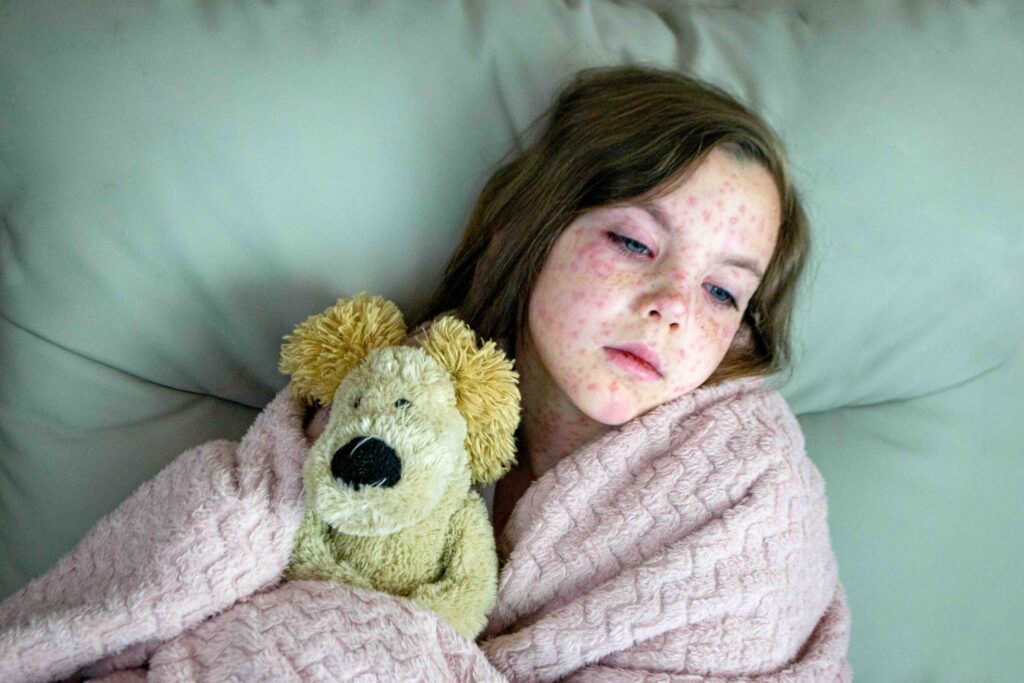
After a quarter century, the US has lost its measles elimination status as was officially announced by the Pan American Health Organization November 17. Loss of this status means that population immunity is low enough to cause sustained spread of the disease, and the loss is directly attributable to the decline in the measles vaccine rate.
A country loses measles elimination status if transmission continually re-establishes for at least 12 months. In the US, measles outbreaks are both sustaining themselves and seeding new outbreaks, which causes ongoing transmission, and is seen by infectious disease experts as a public health crisis. It is a crisis which could have been avoided, and can be reversed by increasing measles vaccine rates – as evidenced by the fact that people who have not been vaccinated, or have unknown vaccination status, make up 96% of reported cases. As KFF states, two doses of the measles-mumps-rubella vaccine prevent about 97% of infections, so when almost everyone in a community is fully vaccinated, the virus can’t easily spread.
According to CDC, as of November 12, there have been 5,412 confirmed measles cases reported in the United States in 2026 – nearly double the 2,289 confirmed cases in 2025, with 96% of the 2026 cases associated with 43 new outbreaks.
In 2026, at least eight people in the United States have died from measles, as well as three in 2025. And for the first time in generations, congenital measles—passed from an infected pregnant woman to her newborn—poses a serious threat to public health.
COVID (October 27, 2026)
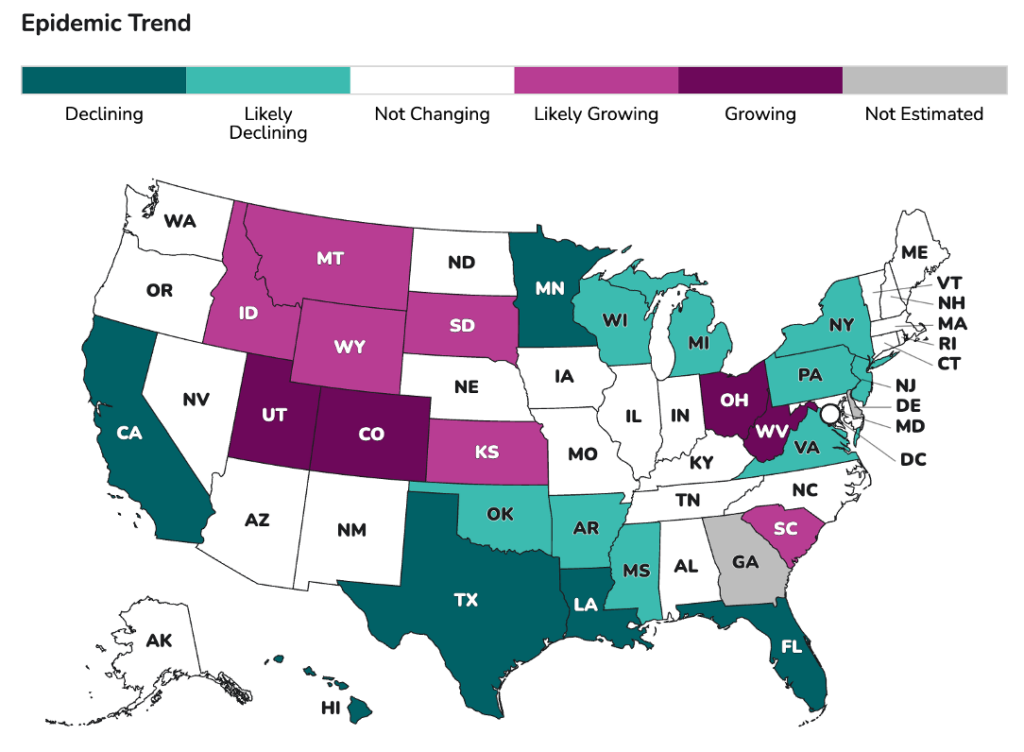
Influenza (October 27, 2026)
Public Health News
- According to the Pan American Health Organization, the US has officially lost its measles elimination status after recording more than 5,400 cases of measles this year. The last time the US did not meet this standard was in 2000. Loss of this status means that population immunity is low enough resulting in sustained spread of the disease. This is directly tied to declines in measles vaccination rates.
- The 31st meeting of the Conference of the Parties to the UN Framework Convention on Climate Change (COP31) continues in Antalya, Türkiye, with broad stakeholder involvement. Day one on November 9th was Health Day focused on the impacts of climate change on public health. The need for dynamic and resilient health systems was the primary emphasis.
- Researchers at Louisiana State University who have received a $2 million grant from the USDA APHIS are working on an H5N1 vaccine for poultry. It is targeted at infection entry points in hopes of generating a broader immune response throughout the body.
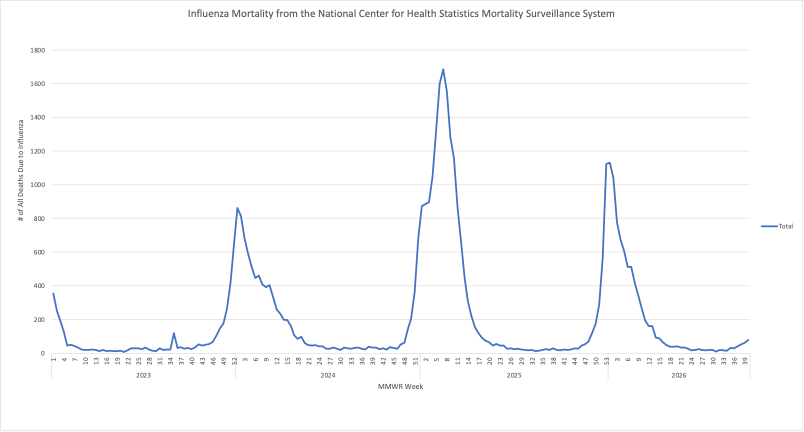
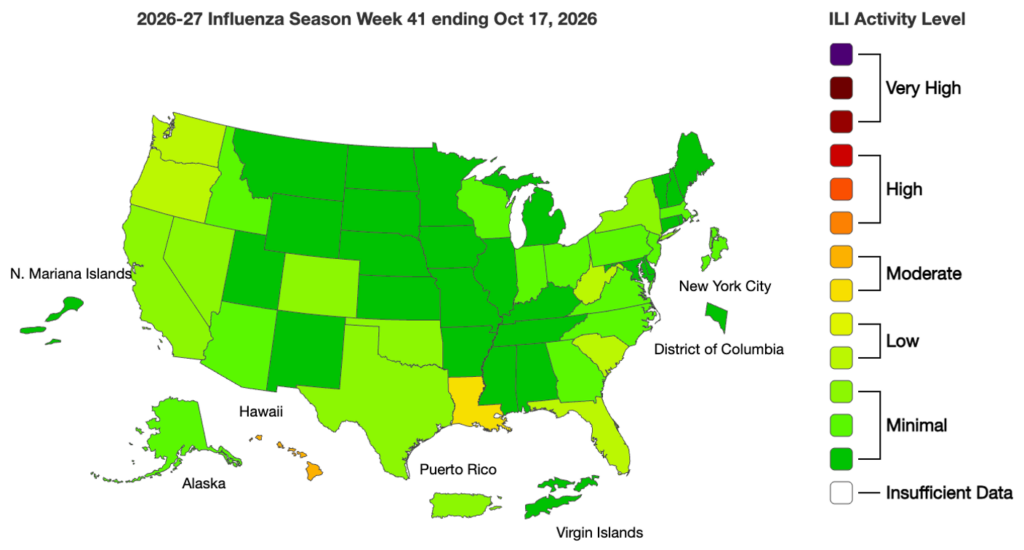
- The US influenza season has begun, with disease activity higher than is typically observed at this time of year. In the week ended Nov 7, 2026, two additional pediatric deaths were reported this past week for a total of 5 to date.
- A study of more than 600 infectious disease outbreaks on cruise ships from 1969-2026 has been done. Norovirus remains the top cause of infections, but respiratory viruses including influenza and Covid-19 are also found.
- HHS released a Final Rule to Modernize the HIPAA Privacy Rule to Support Coordinated Care and Individual Engagement and Reduce Regulatory Burdens. This final rule strengthens individuals’ rights to access their own protected health information (PHI), including electronic PHI through personal health apps; improves information sharing for care coordination and case management; and reduces regulatory and administrative burdens on covered entities.