

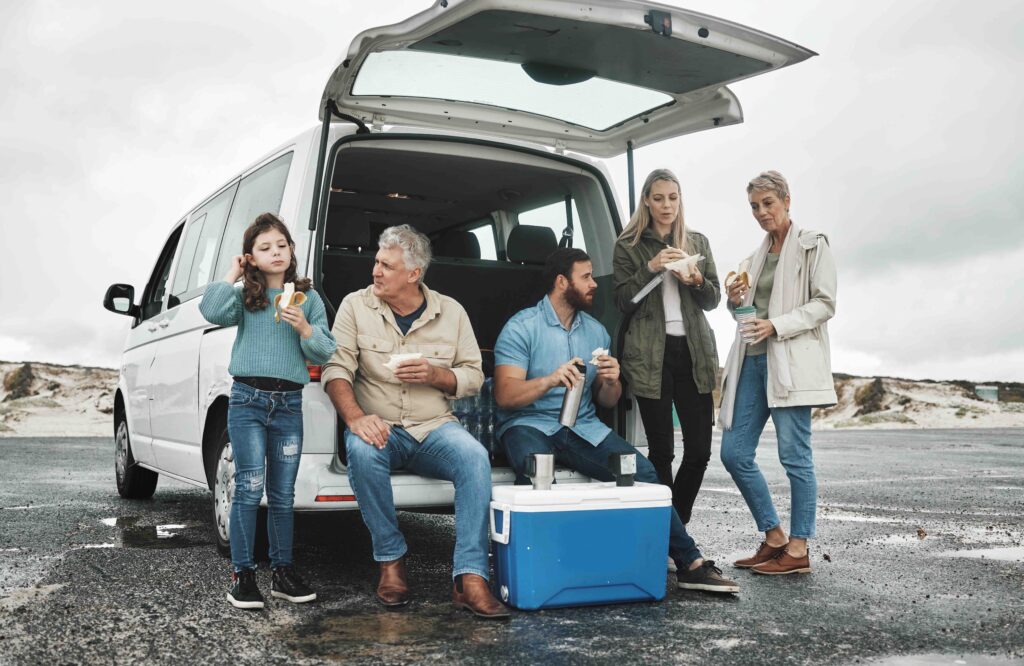
How do I keep food safe for a family gathering on a long drive?
The short answer: Maintain proper temperatures!
The explanation: With November bringing the start of the holiday season, families will be traveling near and far, often bringing food for the celebration or for eating along the road. Since you won’t have the preservation and preparation equipment on a car that you do in your home (e.g., refrigerator, freezer, oven, air fryer, etc.), there are some things you need to do and consider before embarking on the road with food.
Perishable foods
The first thing is ensuring you have a cooler large enough to hold, not just the food, but also ice or freezer packs enough to keep the food at or below 40oF. When packing:
- Take foods straight from the refrigerator or freezer to the cooler.
- Stick with the golden separation rule: wrap raw meats and poultry well and keep separated from cooked, RTE, and produce that you’ll eat raw. (Use separate coolers if possible.)
- If taking foods for both during the trip and after arrival, it’s best to use separate coolers, keeping the after arrival-food cooler closed to maintain the temperature.
- Any perishable foods that are left out of the cooler or in a cooler that has become above 40oF for more than two hours should be discarded.
- Beware of transporting hot dishes long distances, as these must be maintained at or above 140oF for safety (e.g., using an insulated thermos, heated travel container, etc.)
Eating during travel
- It is best to stop to eat when traveling; if this can’t be done light snacks are best as heavy meals can lead to fatigue and reduced reaction time.
- When eating in the car, stick with low-mess, easy-to-eat options to help avoid spills and distractions.
- Good ideas for road-trip snacks are RTE fruits and vegetables that don’t require refrigeration (apples, bananas, carrots, etc.); high-protein foods (jerky, string cheese, nuts, etc.); and whole grains (crackers, popcorn, granola bars, etc.).
The longer the trip, the more likely you’ll need to eat along the way, but also the more likely that your cooler or heating container will be unable to maintain proper temperatures for the long haul. Keeping all these tips in mind will help to ensure that you – and your food – arrive at your destination safely.
TAG can simplify your food safety and quality practices. Contact us for information!