

In early August, FDA approved the new mRNA MFlusive influenza vaccine from Moderna for adults 50 years of age and older; in September it started becoming available, and is now widely accessible wherever you get your vaccines. However, quantities may be limited at some locations this year where pharmacies placed their initial orders before the vaccine was available, but the standard vaccine should have full availability.
Thus, as October wanes, it is time to consider getting your annual flu vaccine. Flu activity is picking up in many areas, and it takes about two weeks for the vaccine to build full antibodies. Taking the two weeks into consideration also means you will be protected when family gatherings begin for Thanksgiving and other upcoming holidays.
You can determine the flu activity in your area through the CDC wastewater monitoring data, which is updated each Friday. Such wastewater surveillance can act as an early detection tool for infectious diseases present in a community. Collecting samples from sewage and testing it for the presence and quantity of different pathogens can expose viruses spread within a community earlier than clinical testing; before sick persons go to their doctor; and when there are asymptomatic persons.
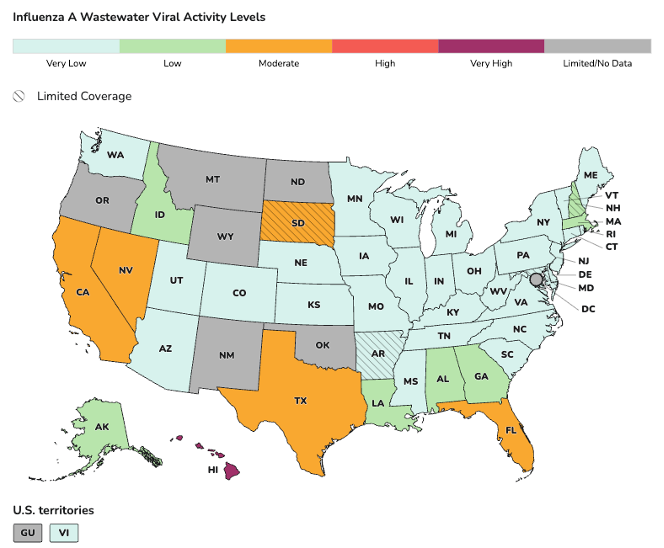
CDC’s data currently shows that overall viral activity for the flu is very low, however, a number of states are increasing, with five states at moderate levels, including California, Nevada, Texas, Floria, and South Dakota; and Hawaii is at very high levels of influenza.
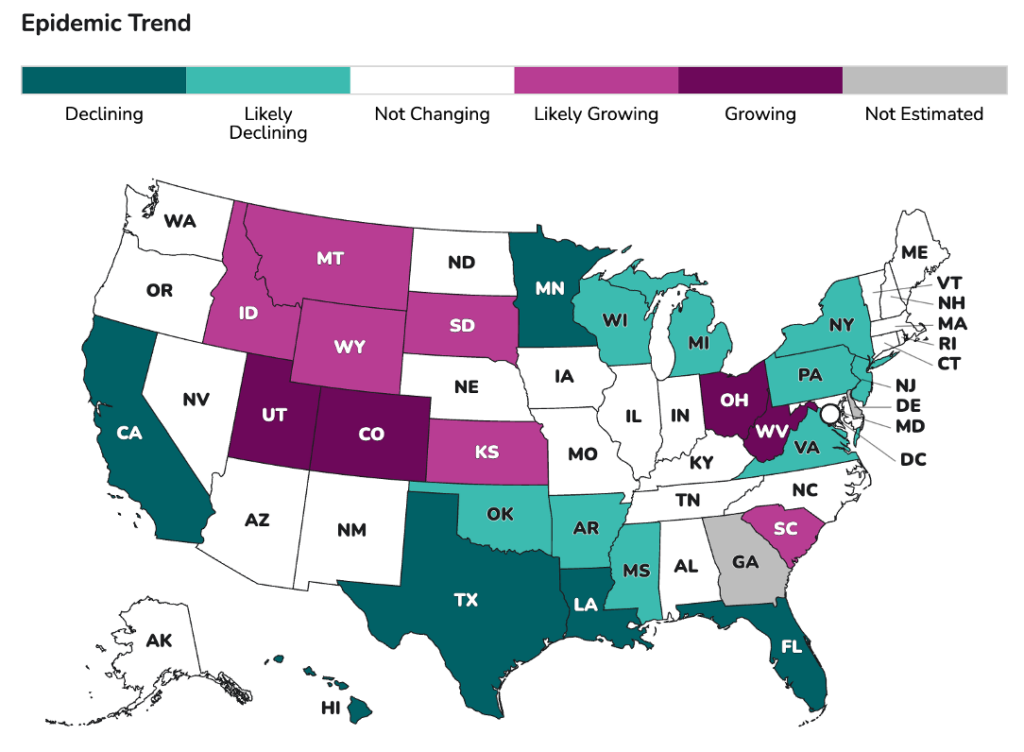
If your state is currently trending upward, TAG advises that you be vaccinated as soon as possible – and encourage your employees to do so as well. But even if your state is currently low or very low, the CDC has predicted a moderately severe flu season in the U.S., based partly on Southern Hemisphere data, so getting ahead of the spread means getting your flu vaccination soon.
COVID (October 27, 2026)
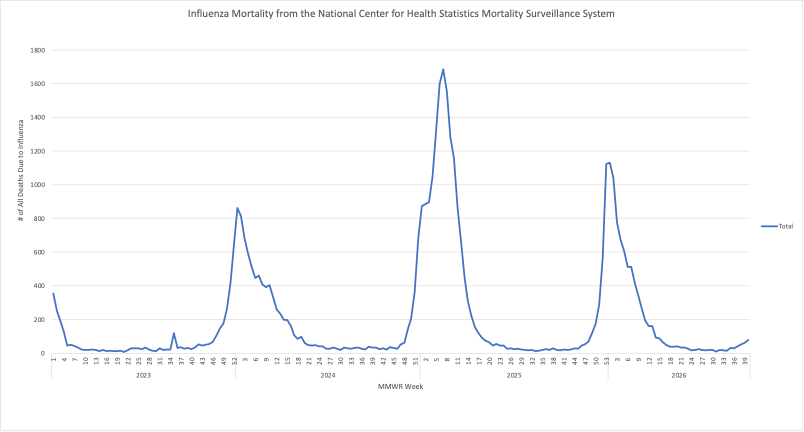
Influenza (October 27, 2026)
Public Health News
- On October 26 the third port of entry for Mexican cattle reopened despite Screwworm. This port has been closed for nearly two years. The animals do undergo tests, receive shots and inspections prior to getting close to the border.
- The European CDC reports of the first ever human case of Shamonda virus (SHAV) in France which has until now only ever rarely infected farm animals. SHAV typically spreads between animals through bites from infected midges. The patient had a “serious [underlying] illness that made them more susceptible to infection and complications than the general population,” the ECDC said. Since the man died in a Lyon hospital in early October, experts have been investigating whether the virus led to his death and how he contracted it.
- A case of Ebola has been detected in a Nigerian woman after travel to Uganda. She has been quarantined and contract tracing is underway.
- Last month the US CDC issued an advisory in response to recent reports of a 17% increase in human exposure to rabid or possibly rabid animals and rabies post-exposure prophylaxis administration errors.
- A Phase III Clinical Trial of a Combination Vaccine for Six Diseases (Pertussis, Diphtheria, Tetanus, Inactivated Polio, Hib, and Hepatitis B) has been initiated in Japan by FirstWord Pharma. This combination vaccine will make it easier for young children and their caregivers to maintain the recommended vaccine schedules.
- Officials in Kenya have reported the country’s second Ebola death in a 65-year-old woman who was a close relative of the country’s index patient. There are no new cases of the virus in Kenya, but seven individuals who did test positive are still receiving treatment in isolation units.