

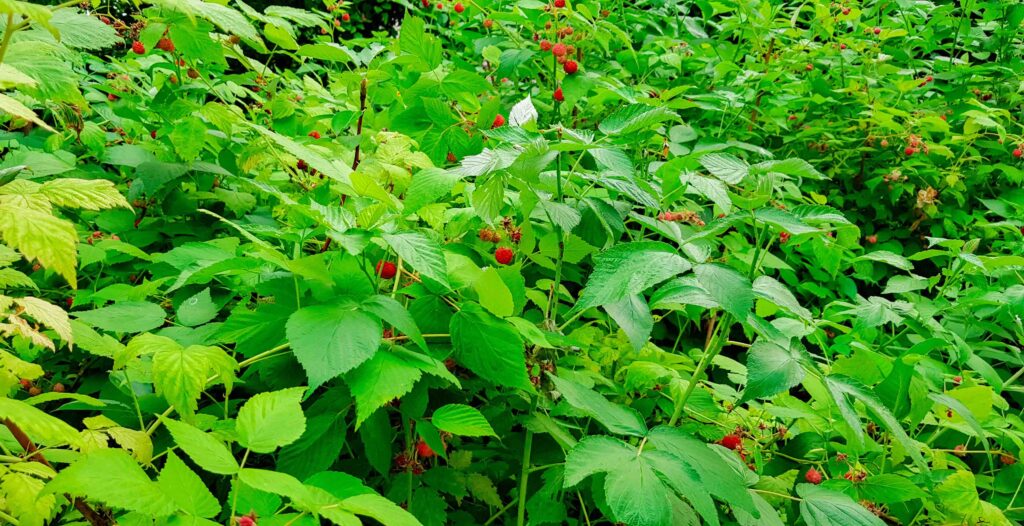
FAO has issued a new publication on Cyclospora with what are likely the most important points set right in its title:Food Safety Begins Upstream. The piece discusses what the recent outbreaks should remind us about food and water safety across agrifood systems, and why those reminders are critical for the safety of consumers. It also includes some recommendations – to which we are adding those from TAG.
How Does Cyclospora Get into Food?
Although animals can carry some species of Cyclospora, they do not carry Cyclospora cayetanensis, which causes cyclosporiasis in humans. Because Cyclospora cayetanensis is human specific, sanitation, wastewater management, and hygiene throughout food production systems are critically important. Cyclospora is primarily associated with fresh, ready-to-eat (RTE) produce that has been contaminated by human feces, often through agricultural water with potential contamination pathways including:
- Water used in food production, including that of agricultural input preparation.
- Irrigation and post-harvest handling with un- or inadequately treated human wastewater.
- Poor worker hygiene during harvesting and handling.
- Inadequate sanitation and human waste management that allow for production environment contamination.
Once produce is contaminated, it is difficult to control because routine washing and chlorine-based sanitizers do not reliably eliminate the parasite. While heat treatment does effectively inactivate it, it is not applicable for produce typically consumed raw, such as the leafy greens, fresh herbs, and berries most frequently associated with outbreaks. Further complicating the issue, a person who has consumed a contaminated food may not have symptoms for as long as two weeks after exposure, so traceback to a suspect food or water source is difficult.
All of this emphasizes the importance of contamination prevention both in the field, from preparation of agricultural inputs and irrigation, as well as in post-harvest handling.
What can be done to help prevent Cyclospora contamination?
In addition to some general recommendations for government agencies, researchers, laboratories, agricultural extension services, and farmer organizations, the paper provides some specific thoughts for farms and producers, to which we’ve added TAG insights and recommendations as well:
On the Farm
- Incorporate good agricultural practices (GAPs) and hygiene practices that reduce opportunities for contamination both pre-harvest and in food handling.
- Assess the adjacent land to your farm or processing operation for possible Cyclospora-specific hazards to inform accurate management approaches. This would include evaluating proximity to biosolids processing facilities, wastewater treatment plants, and areas with intense septic systems.
- Consider adding Cyclospora to your hazard analysis if you are growing crops mentioned above; ensure that you have an agricultural water assessment, even if not required, that evaluates wastewater (treated, not treated, etc.) proximate to and on your operation; assess the risk of flooding from potentially Cyclospora-contaminated water.
- Assess adjacent land use for human activities that could contribute to Cyclospora contaminating your water source or land (i.e. nearby waste water treatment, high populations of people, changes in the land use near your farm or water source).
Worker Health and Sanitation
- Manage potential hazards through appropriately sited and stocked bathrooms with enough running water for workers to wash hands after every break/before returning to work; have worker training programs and worker illness programs that include financial support for sick workers so they are not incentivized to stay at work when sick.
- Ensure toilet and handwashing facilities are appropriately placed and maintained.
- Provide and document practical education for farm workers on hand hygiene and hygienic practices.
- Make toilet and handwashing facilities easily accessible (and have clean water available for handwashing).
- Ensure separation of human waste from production areas and water sources.
- Make safe hygiene and water-use practices easier to adopt and sustain:
- Ensure that workers do not work when ill.
- Train personnel on safe human waste management to prevent contamination of food-production areas.
- Consider behavioral and social factors of your workers that could impact their understanding and following of general hygiene practices.
Microbial Testing
- Ensure that any Cyclospora cayetanensis testing program (and the specific detection method) is validated.
- Prioritize risk-based testing programs of water sources (irrigation, processing, wastewater) and selected commodities, possibly worker wastewater immediately prior to and during known Cyclospora seasons.
Learnings and Resources
- Learn from outbreaks, including those with which you are not involved, to improve practices and implement increased preventive measures.
- Learn about new research that can reduce or minimize the potential Cyclospora contamination in your operation (water filtration using sand or sand / zero-valent iron, cold chain integrity, etc.).
Improving agriculture water quality and worker health practices will also reduce the overall microbial contamination risk of bacteria and viruses, along with Cyclospora, at the start of the food chain – thus reenforcing the title of the FAO paper that, particularly for contaminants such as Cyclospora: Food Safety Begins Upstream.
For more information on Cyclospora, its prevention and control, give TAG a call and see:
- TAG Cyclospora Fact Sheet
- What Is Cyclospora and Why Is It Such a Problem?
- Grower Considerations for Cyclospora Prevention and Control
- Cyclosporiasis Update
In summary, since Cyclospora cayetanensis is human specific, sanitation, wastewater management, and hygiene throughout food production systems are critically important. Cyclospora is primarily associated with fresh, ready-to-eat (RTE) produce that has been contaminated by human feces, often through agricultural water with potential contamination pathways. Once produce is contaminated, it is difficult to control because routine washing and chlorine-based sanitizers do not reliably eliminate the parasite. Thus, preventing contamination on the farm is the way to keep the consumer safe.