

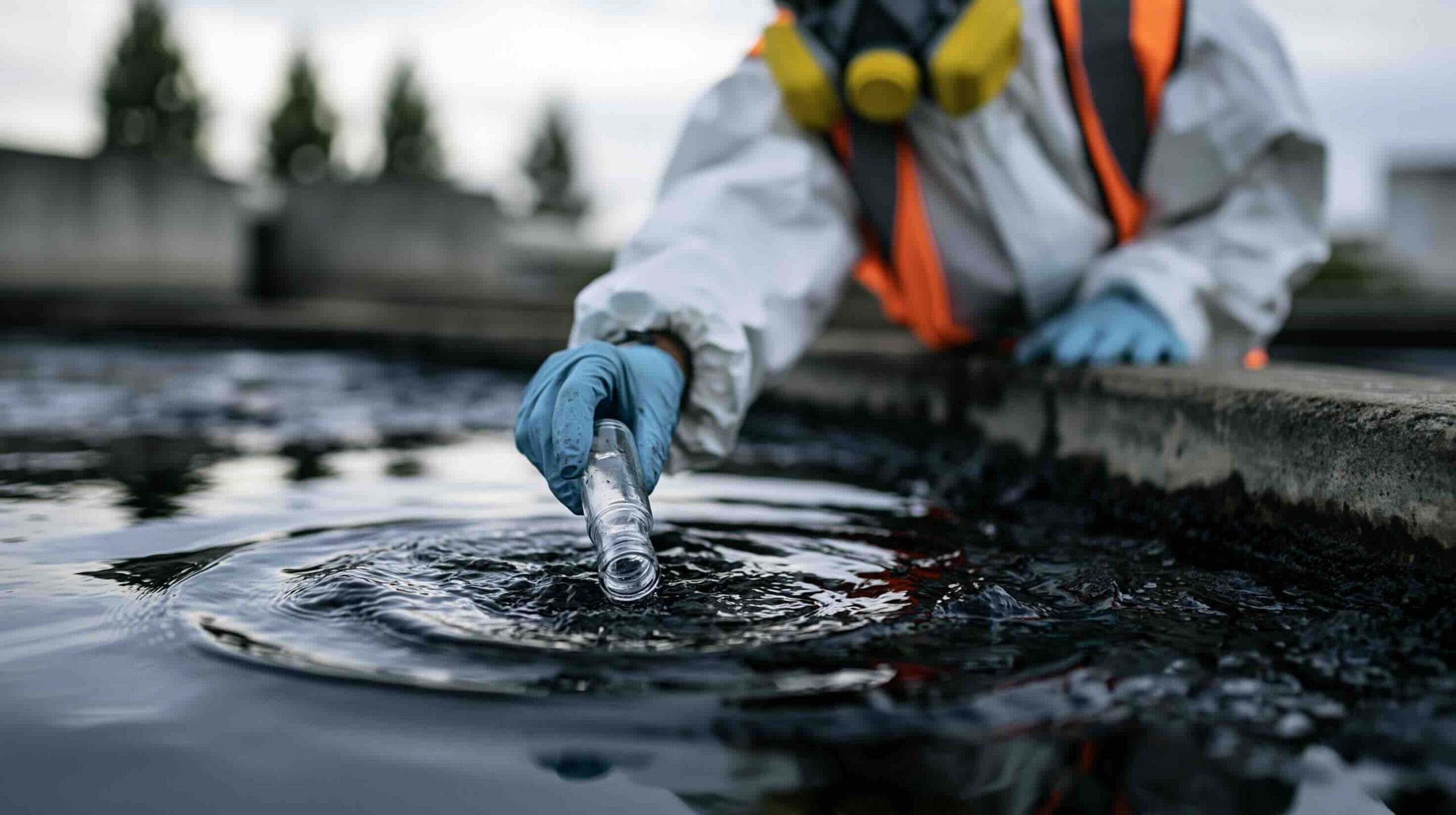
In infectious disease epidemiology, cases detected by traditional public health surveillance systems are generally only the tip of the iceberg, as undiagnosed infections, asymptomatic cases, spontaneous recoveries, unrecorded deaths, and other uncounted incidences lie beneath the surface. It is those uncounted incidences that wastewater surveillance can help to contextualize, and the benefits and potential of that surveillance are the subject of 16 studies published in a Summer 2026 Supplement of Emerging Infectious Diseases (EID).
As an early detection tool of infectious diseases present in a community, wastewater surveillance (WS) works by collecting samples from sewage and testing it for the presence and quantity of different pathogens. It can outperform traditional individual disease testing, as it can capture information from entire communities, regardless of symptoms or healthcare-seeking behavior. But there are shortcomings – while WS can provide early warning of outbreaks, identify emerging pathogens, and monitor disease trends, it cannot discern the sources of exposure (e.g., whether they are from homes, hospitals, farms, or even humans or animals).
As one example of the limitations, an article in the issue, which discusses the US multi-partner effort in WS, notes that the system does not stand alone, but complements traditional public health surveillance. Its success will rely on collaboration across the public health system with academic institutions, utilities, jurisdictions, and medical professionals; a focus on assay development, data tracking and reporting systems, and risk management and risk communication; and each stakeholder contributing unique expertise and resources to its continued development. Additionally, public perceptions of the value of WS depend on the public’s overall trust in government, as well as their understanding and awareness of the technology.
However, WS has proven to be a viable detection method as shown by the studies in the Supplement, of which these are just a few:
- An evaluation of detection methods for WS of antimicrobial-resistant bacteria in healthcare facilities found monitoring facility sewage to be a viable, noninvasive approach for tracking the bacteria, particularly in resource-limited settings. The results underscore the potential for WS to support infection control and early outbreak detection in medical facilities.
- A study of WS applied during a global athletics championship in Oregon detected influenza A virus, SARS-CoV-2, and hepatitis A virus, showing its capacity to augment traditional surveillance to mitigate risks associated with large, even multi-national, gatherings. It demonstrated the feasibility and utility of WS for pathogens of public health significance that might not be detected through traditional surveillance systems.
- Additional studies, focused on temporal and location specific surveillance, showed WS able to detect early season influenza when clinical specimens were scarce; demonstrate that negative WS signals of monkey pox in North Carolina aligned with periods of no reported cases; and linked norovirus in wastewater with GI hospitalizations.
While some challenges remain with wastewater surveillance, the ability to determine when an infectious disease is present in a population provides a useful perspective and detection ability that goes well beyond the “tip of the iceberg.”
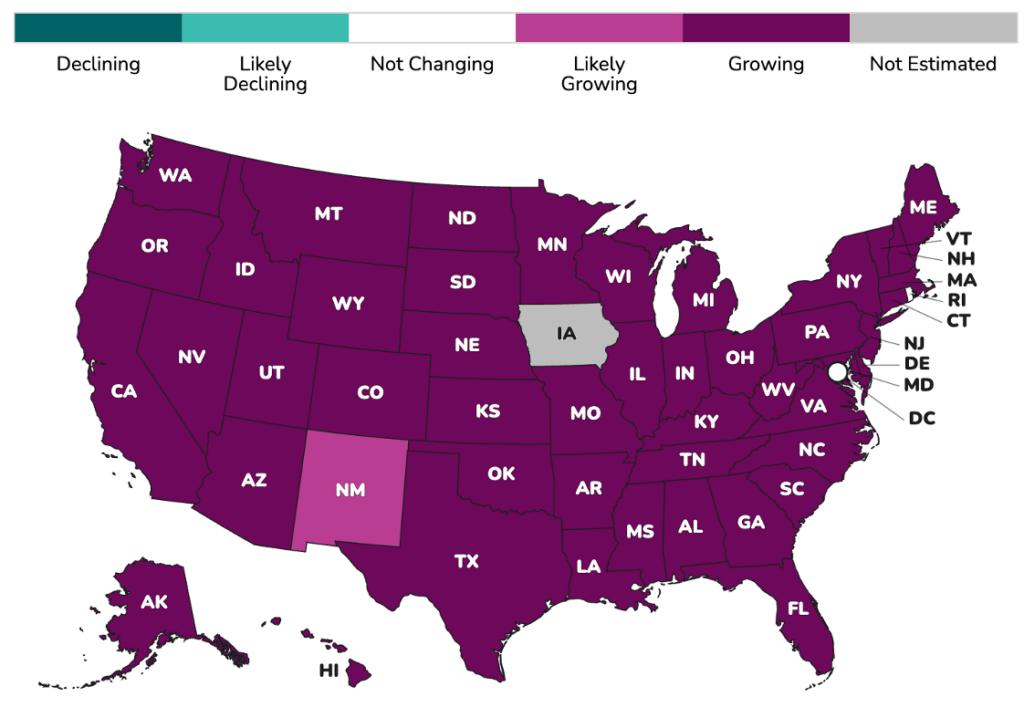
COVID (as of August 31, 2026)
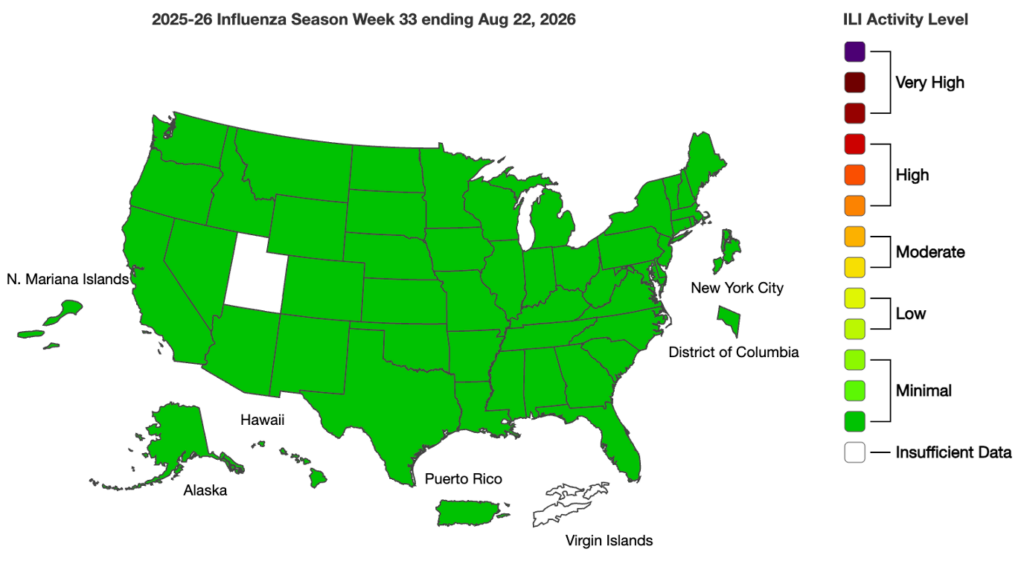
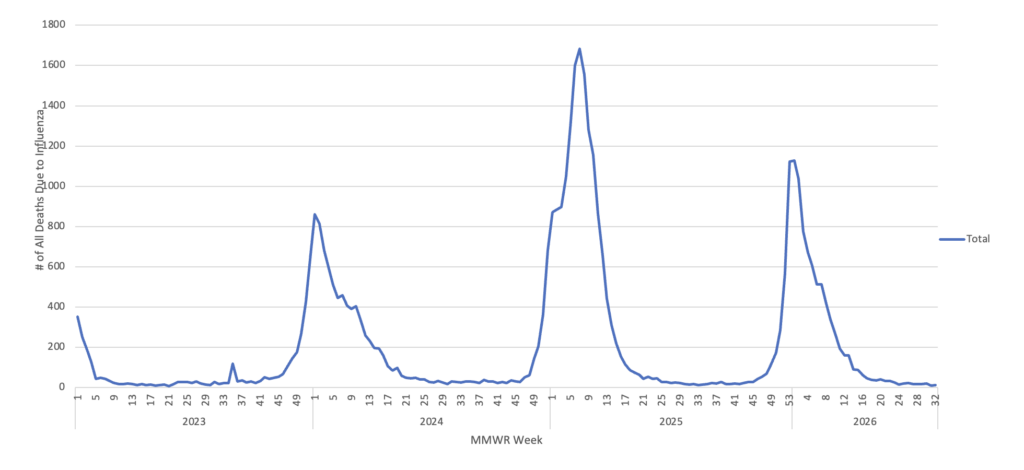
Influenza (as of August 31, 2026)
Public Health News
- A study of air samples collected near international arrivals, travelers’ nasal swabs and national surveillance data at 4 airports in San Francisco, Newark, Washington Dulles, and Dallas/Fort Worth demonstrated a correlation with Influenza A but not with SARS-CoV-2.
- A recent study found that people who are ill with influenza rarely isolate from others for long enough to avoid possible transmission of the virus. The work showed that peak shedding occurred around 4 days after symptom onset.
- Six cases of botulism after use of Botox for cosmetic and other personal reasons, are being investigated in Denmark. It is suspected that the individuals were treated with an unapproved product at an unregistered cosmetic clinic or by an unauthorized practitioner without the proper training.