


Disease outbreaks can occur anywhere at any time, and due to the current environment (e.g., global travel, crowded cities, asymptomatic spreaders, etc.) infectious diseases are spreading faster today than at any point in history. In fact, an overseas health threat can reach the U.S. in just 36 hours. So, with recent global tracking analysis estimating that an average of 100-300 infectious disease outbreaks occur annually, why doesn’t the U.S. hear more about them?
Enter CDC’s frontline global health security force: In the last two years alone, CDC’s global health security experts helped contain more than 250 outbreaks across more than 40 countries. U.S. citizens heard little about many of them because the diseases were detected and contained by these teams before they could spread farther or threaten Americans. The teams, which are based overseas and at CDC headquarters, work with partners from across the U.S. government and around the globe to help ensure continued U.S. leadership in protecting the nation’s and the globe’s security.
Since 1980, CDC’s Field Epidemiology Training Program (FETP) has trained more than 25,000 disease detectives in over 100 countries, strengthening the first line of defense against global health threats: finding cases, tracing how diseases spread, and turning data into action.
As one example, CDC cited the January 2025 deadly Crimean-Congo hemorrhagic fever that surfaced in Senegal’s Kaffrine Region, which sickened five people and killed one. Because the disease has a high fatality rate and multiple transmission pathways, a small cluster can quickly grow. Within hours, CDC’s global health experts and Senegalese health officials launched a coordinated response: tracing how the virus was moving, treating livestock, disinfecting contaminated areas, identifying possible human exposures, and interrupting transmission.
Through their efforts, the outbreak was contained in just two weeks, spreading no further than the five cases and the original affected area. It is an outbreak which you likely heard nothing of. And that is exactly the point of the CDC health security force’s detection and containment work.
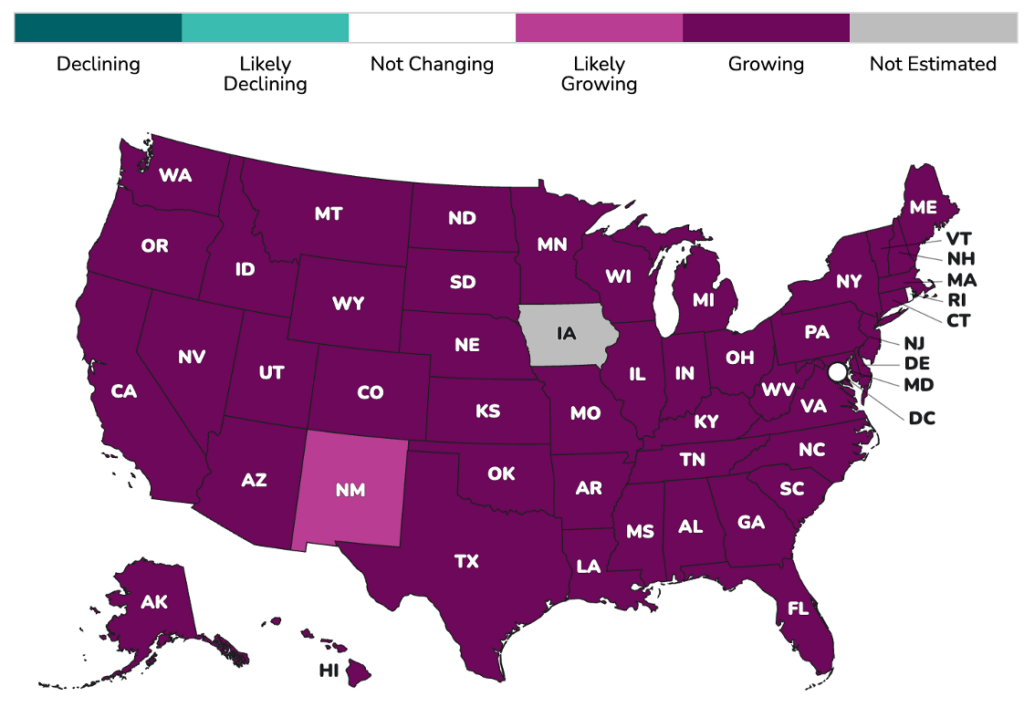
COVID (as of August 31, 2026)
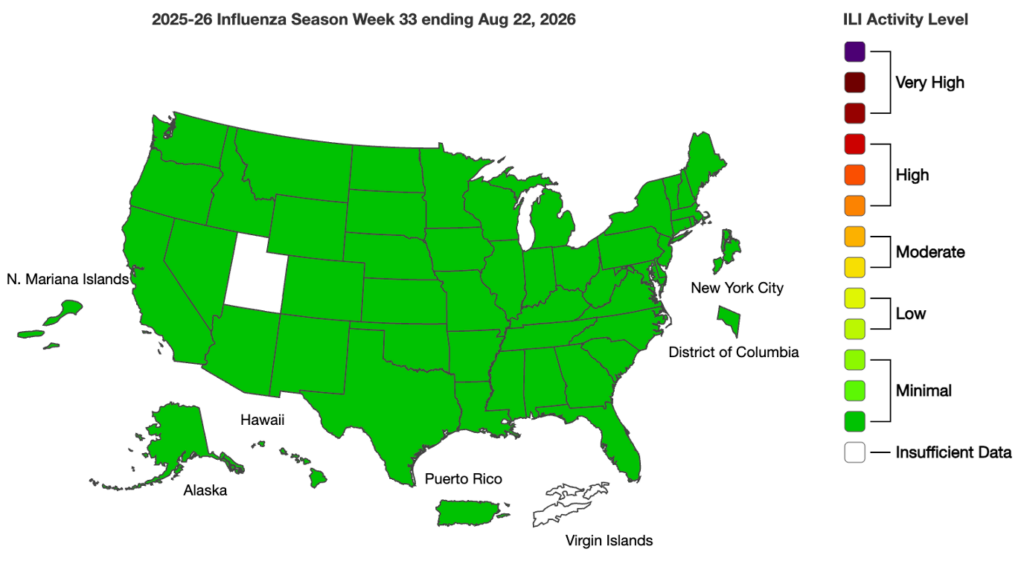
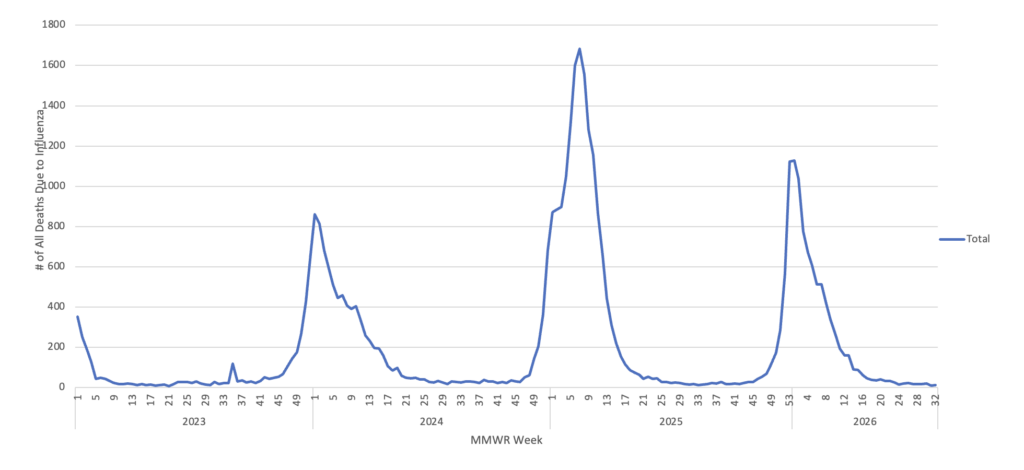
Influenza (as of August 31, 2026)
Public Health News
- The WHO recently pre-qualified a multidose version of a maternal RSV vaccine from Pfizer, to be given to pregnant women. This new format will be less expensive and easier to deliver. It is aimed at protecting infants in their first 6 months of life as antibodies are transferred from the mother to baby before birth. Since 1987, the WHO has reviewed production information and inspected manufacturing sites to come up with such a qualification.
- Cases of legionellosis have been increasing in the US and in Europe over the past several years. A recent study shows that rates in the US were up more than 6-fold since 1999, with a seasonal pattern of more reported cases in the June-October timeframe. Further, they suggest that climate change factors, including warmer temperatures and higher rainfall may be contributing to the increase. At the same time, there was also a move to the use of more sensitive PCR methods for analyzing samples which could have also contributed to enhanced detection.
- A meta-analysis has revealed that toilet flushing produces aerosols than can reach adult’s breathing zones. Larger flush volumes create more aerosols. Ventilation and lid position weren’t significantly associated with aerosol concentrations.
- A local health department in Hastings, MI is responding to suspicions of a single person exposed to ricin from self-manufacture in a residential building. 145 other residents were evacuated because the toxin could spread through HVAC systems, and there is no antidote or vaccine. Ricin is a toxic compound, naturally found in castor beans and has been considered as a possible warfare agent.
- A case of anthrax has been confirmed in a beef cattle herd to South Dakota. In response, adult cattle have been vaccinated, a quarantine area has been established and warnings of possible human cases via exposure to sick animals have been issued. In the US, anthrax has almost been eliminated through livestock vaccination, yet wildlife and livestock anthrax still occurs sporadically in certain areas including South Dakota.