
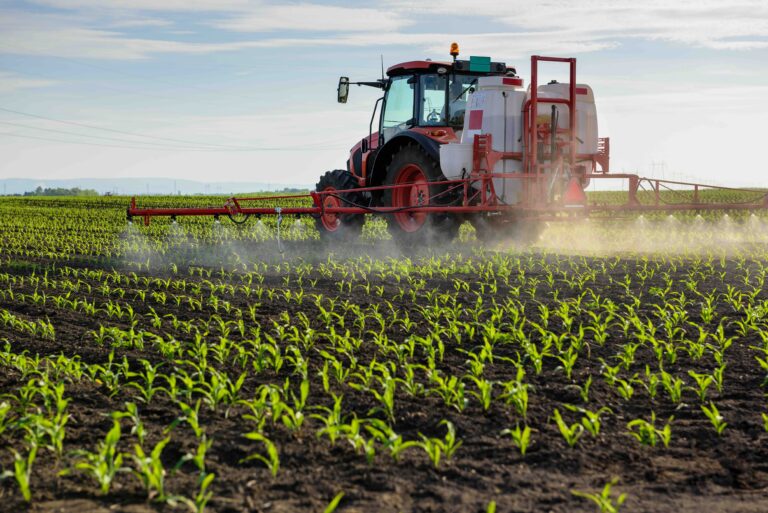
Although FDA’s recent updates to its Pesticide Monitoring Compliance Program have not received much media attention, the food industry could feel some distinct impacts, particularly domestic manufacturers focused on infant formulas, children’s foods, and school lunches.
The goal of the FDA’s pesticide residue monitoring program is to carry out selective monitoring focused on raw agricultural foods of dietary importance and foods consumed in large amounts by infants and young children. Most of the tolerances EPA establishes are for raw agricultural commodities, with a limited number of tolerances on some processed foods. While FDA selectively monitors about 3,500 domestic and import samples yearly for residues of approximately 780 different pesticides, the agency’s focus in the past was primarily on imported foods, as the data showed domestic foods to be lower risk. But the new updates to the Compliance Program 7304.004, last updated in 2011, make it clear that domestic foods will be in the spotlight as well.
The updates also reflect a major overhaul to the compliance program in that it now focuses exclusively on monitoring pesticide residues in foods and eliminates language on industrial chemicals. This is highlighted by the agency’s renaming of the program to “Pesticides in Human Foods – Domestic and Import.”
With primary objectives being to enforce pesticide residue tolerances in foods established by the EPA, determine the incidence and level of pesticide residues in domestic and imported foods, and fulfill requirements described in the Pesticide Monitoring Improvements Act, the updated compliance program targets:
- Prioritizing the risk-based sampling of raw agricultural commodities that are highly consumed by infants and children to ensure resources are directed toward the areas of greatest potential risk.
- Improving FDA regulatory lab throughput and consistency by aligning instructions with updated FDA procedures; harmonizing detection of pesticide residues through multi-analyte gas- and liquid-chromatography tandem mass spectrometry; and eliminating separate, analyte-specific methods.
- Removing references to industrial chemicals, including dioxins, and conducting those activities under their own programs.
- Strengthening the collaborative approach to food safety through the inclusion of a section outlining the interactions and partnerships with FDA centers, related FDA compliance programs, other federal agencies, and U.S. state and local counterparts.
Specific to domestic foods, the program puts emphasis on data gathering, selective sampling, and aggressive compliance follow-up. The program will maintain surveillance sampling but emphasizes finding residues of significance and taking appropriate follow-up actions to control the immediate problem and deter future violations. Additionally, the program is intended to identify farmers or growing areas (including bodies of water) for sampling of products that have been associated with past residue problems involving foods of dietary significance.
The agency’s focus on pesticides increased with the swearing in of Robert F. Kennedy Jr. as Health and Human Services Secretary, who had fought and campaigned against the use of farm chemicals. However, with federal policies shifting away from strict regulation toward voluntary industry measures; MAHA Commission Report updates removing previous version statements about “alarming levels” of pesticides in children; and FDA still operating at understaffed levels, we will see if it is just a program in name or also in deed – and how it all translates to oversight.
It also is difficult to tell exactly when we will see these in action, as the implementation date on the program detail is listed as 5/28/26, yet the Constituent Update announcement issued the same date uses the future tense in discussing the program. Thus, TAG’s advice is simply, to be prepared.
Summary: Recent updates to the FDA’s Pesticide Monitoring Compliance Program could have distinct impacts on the food industry, particularly domestic manufacturers focused on infant formulas, children’s foods, and school lunches. While FDA selectively monitors domestic and import samples for pesticide residues, the agency’s focus in the past was primarily on imported foods. But the new updates to the Compliance Program, make it clear that domestic foods will be in the spotlight as well. With federal policies shifting away from strict regulation toward voluntary industry measures; MAHA Commission Report updates removing previous version statements about “alarming levels” of pesticides in children, and FDA still operating at understaffed levels, we will see if it is just a program in name or also in deed – and how it all translates to oversight.