

The Acheson Group
Disease Fact Sheets
Norovirus Fact Sheet
What is Norovirus?
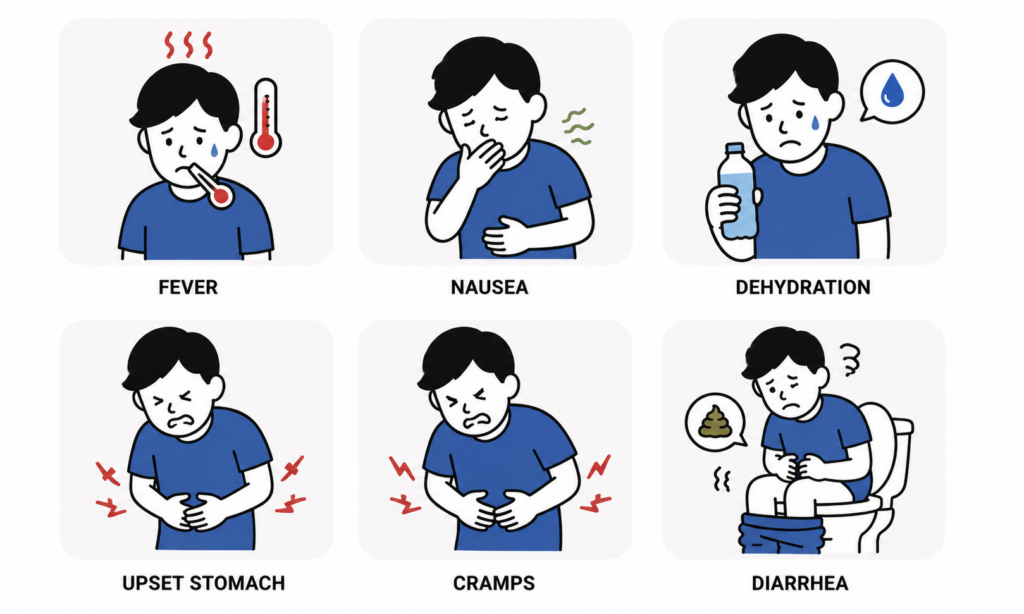
Norovirus causes vomiting and diarrhea, typically within 24 hours of exposure to viral particles from an infectious person. It is the #1 cause of foodborne illness but is not always associated with food. It occurs commonly in long-term care settings and in other situations where people gather. The virus is persistent and requires aggressive techniques to be inactivated.
Why Should I Care about Norovirus?
- >20 million norovirus illnesses occur annually in the US alone
- $500 estimated as the cost per illness
- $100 billion spent annually on norovirus healthcare
- Norovirus mutates often so people can be infected over and over.
SIGNS & SYMPTOMS OF NOROVIRUS
What Do I Do About Norovirus?
Because prolonged exposure to persons ill with TB can lead to infection:
- Recognize and manage the signs/symptoms, and potential source.
- • Identify employees who are ill, have policies to incentivize
and require staying home.
- • If a guest/visitor becomes ill, respond quickly to contain and
disinfect any bodily fluid spills and surrounding areas and
exclude other people from the area.
- • Pay attention to disease tracking metrics – to be aware of
illness risks in the local area that could spread within the
facility.
- • Be aware of what RTE foods could be contaminated – e.g.,
raw shellfish.
- Implement valid preventive strategies.
- • Illness policies
- • Personal hygiene practices
- • Proper cooking of foods
- • Ensure that the primary source of RTE foods is not an endemic area or contaminated.
- Verify that practices are in place and being followed consistently.
- • Have training protocols with periodic knowledge checks.
- • Review records of relevant practices – routine sanitation, restroom cleanliness and
availability of hand hygiene products, adherence to employee illness protocols.
- • Have sanitation chemicals (e.g., disinfectants) with claims against norovirus are readily
available and unexpired.
- • Have internal and 3rd party audits performed.
- Respond as needed to identified lapses in any protocols.
TAG Public Health Experts have the experience and expertise to help companies and institutions successfully integrate science-driven public health approaches into their business strategy.