
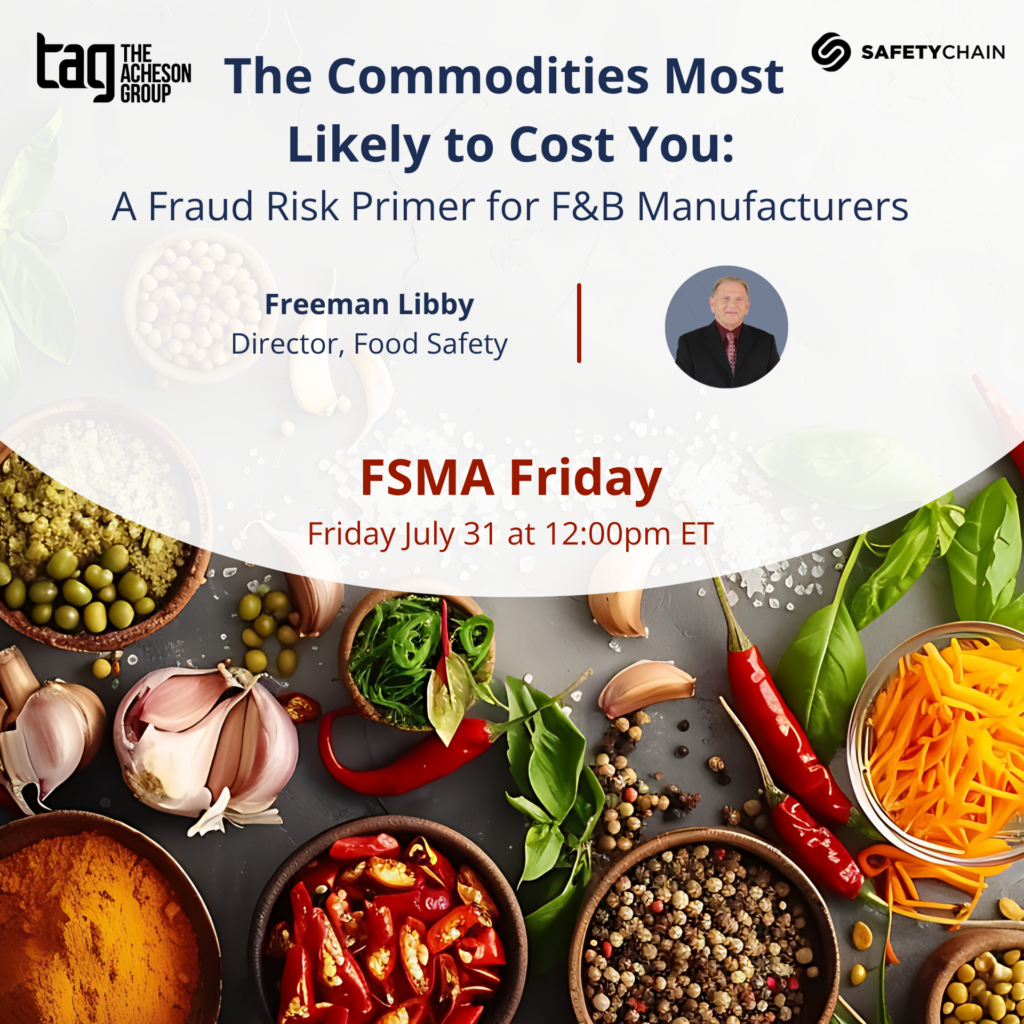
Food fraud isn’t new, but adulteration methods are getting more sophisticated and enforcement remains reactive. Most manufacturers only discover a supplier integrity problem after the damage is done, often during an audit or after a recall. In this session, TAG’s Freeman Libby, Director, Food Safety will discuss design options to help FSQA and operations teams understand the risk before it becomes a problem.
What You’ll Learn
-
Which ingredients are most commonly adulterated: The specific commodities where substitution and dilution are most prevalent, and what to watch for.
-
What food fraud actually costs your operation: Beyond ingredient overpayment, the real exposure sits in recalls, rework, brand damage, legal liability, and how those risks compound.
-
How FDA defines Economically Motivated Adulteration: What 21 CFR Parts 117 and 507 require from your food safety program, and where most facilities have gaps they don’t know about.
-
Why detection is harder than it looks: The practical challenges of cost of testing, foreign supplier oversight, and the limits of documentation that make EMA a persistent problem even for compliant operations.