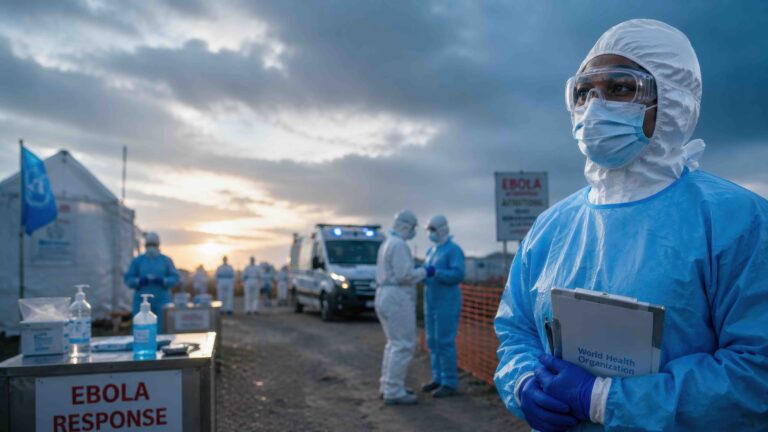
The case rates of Bundibugyo Ebola in the Democratic Republic of the Congo (DRC) and Uganda are continuing to increase, as the outbreak spreads substantially faster than previous Ebola outbreaks, making it the second-largest Ebola outbreak on record. As a result, U.S. entry for travelers from these areas is temporarily restricted.
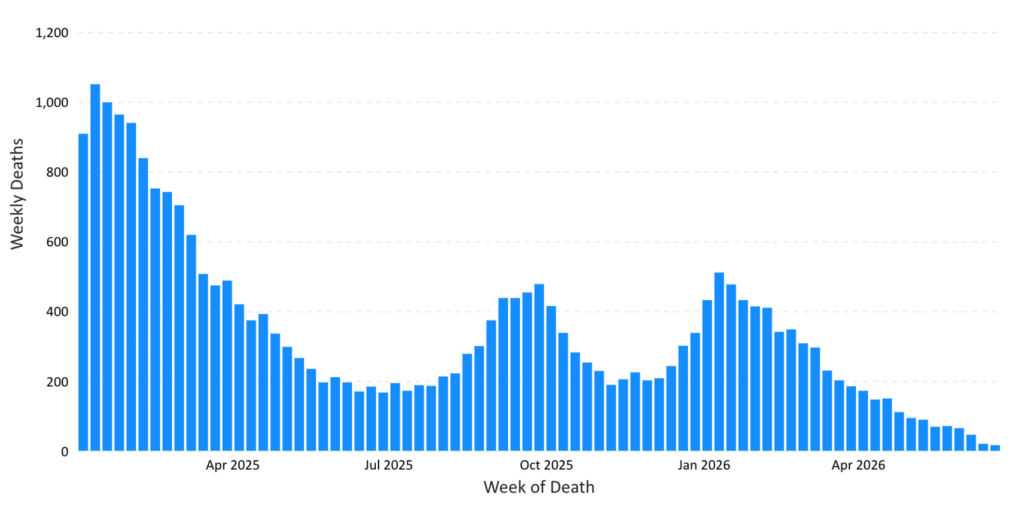
However, there is some good news in that cases are generally less severe and less lethal than during the earliest recorded outbreaks. While the 1976 outbreaks in Zaire and Sudan had mortality rates up to 90%, current case fatality rates average around 50%. The reduction can likely be attributed to greater knowledge about the disease leading to faster diagnostics, advanced medical care and treatments, better preparedness and targeted vaccines, with today’s rates dropping even lower when those who are infected seek out medical help early.
Of critical importance is the development of vaccines, which have helped to control transmission, protect frontline workers, and reduce death rates. Currently, two vaccines are approved for Ebola, but both target the Zaire ebolavirus species, to which most human outbreaks are attributed.
With the Bundibugyo virus causing the current outbreak, for which the existing vaccines are not expected to provide protection, there is a trial in progress on a new vaccine targeting this strain. The vaccine, ChAdOx1 BDBV developed by researchers with the Oxford Vaccine Group, is in phase 1 of a trial to assess its safety and immune response in 50 healthy volunteers aged 18 to 55 years – with the first volunteer vaccinated the last week of July. The team is continuing to recruit and vaccinate volunteers while monitoring participants for the trial.
Subject to regulatory approval, preparations are underway for further clinical studies of the vaccine in Uganda. If early-stage trials are successful, late-stage trials will continue to generate data for emergency use authorization or licensure.
COVID Risk Matrix
Influenza Public
Health News
- A report from CDC re US-reported Arboviral diseases (arthropod-borne viruses, infections transmitted to humans through the bites of infected insects and arachnids, such as mosquitoes and ticks) in 2024, shows that West Niles Virus is the leading cause, although its incidence dropped some in this time period. Other transmitted illnesses include Powassan virus disease, La Crosse virus disease and eastern equine encephalitis.
- As the Ebola outbreak continues, it is notable that work on a vaccine by the University of Oxford’s Oxford Vaccine Group and Pandemic Sciences Institute against the causative strain (“Bundibugyo”) is ongoing. The first volunteer has been vaccinated in a phase 1 trial of an investigational vaccine targeting this specific virus. If trials are successful, continued work to generate data for emergency use authorization or licensure will continue. Also, a randomized trial of two antiviral therapies is in progress.
- The GII.17 strain of norovirus replaced GII.4, which had been the dominant strain for years in England. The severity and impact on fatality rates of noro GII.4 and GII.17 in the UK 2022-2025 were compared in this recent study. Although infection with the GII.17 strain may have resulted in more severe symptoms, there was no impact on the overall case fatality rate, although more deaths were reported among older adults and those in care facilities.
- Although this recent report describes that illnesses linked to consumption of poisonous mushrooms are up, fatalities have dropped significantly due to prompt medical intervention. Still, the increase in cases highlights the need for enhanced awareness of the issue.
- The Ebola outbreak in the Democratic Republic of the Congo (DRC) is entering its third month as the second-deadliest in history and the largest Ebola outbreak ever recorded in the DRC. As of August 2, DRC officials reported 3,695 cases and 1,623 deaths.