
While one source has been identified in the cyclosporiasis outbreak in Michigan and surrounding states, the investigation is continuing as there are likely several concurrent outbreaks occurring. FDA CORE’s current outbreak table lists two other Cyclospora investigations, in addition to the outbreak associated with iceberg lettuce.
FDA’s traceback investigation of the cyclosporiasis outbreak identified a single supplier, Taylor Farms de Mexico, that provided shredded iceberg lettuce used by Taco Bell locations as well as Marketside brand shredded lettuce and iceberg salad. But a re-review of an FDA sample result that was initially positive was later determined to be a false positive.
However, with the epidemiologic and traceback data showing that the farm’s lettuce was contaminated with Cyclospora, the company has voluntarily stopped receiving product from the implicated lot, suspended distribution of the iceberg lettuce from Central Mexico, notified its customers, and is continuing to work with the FDA, CDC, and state authorities on the investigation and recall. It’s important to remember that product recently sampled by the FDA is not the same product that would have been consumed in June when the majority of the cases were exposed and subsequently became ill. This is always a challenge during traceback investigations associated with produce; often the contaminated product has been consumed and is no longer available for testing, and product that is tested later likely came from a different farm or source.
Cyclospora investigations are complex because of the unusual life cycle of Cyclospora cayetanensis, which must mature before it becomes infectious, causing a significant delay in symptom onset. Additionally, whole genome sequencing (WGS), which is typically used to investigate other outbreaks, does not work with Cyclospora, as the stool samples do not typically yield enough DNA and the parasite is difficult to culture for WGS to link cases.
TAG will continue to follow this outbreak and provide information to our TAG newsletter readers (to which you can subscribe here). For more information on cyclosporiasis and cyclospora controls, see TAG’s additional articles on:
- What Is Cyclospora and Why Is It Such a Problem?
- Grower Considerations for Cyclospora Prevention and Control
- Cyclosporiasis Fact Sheet
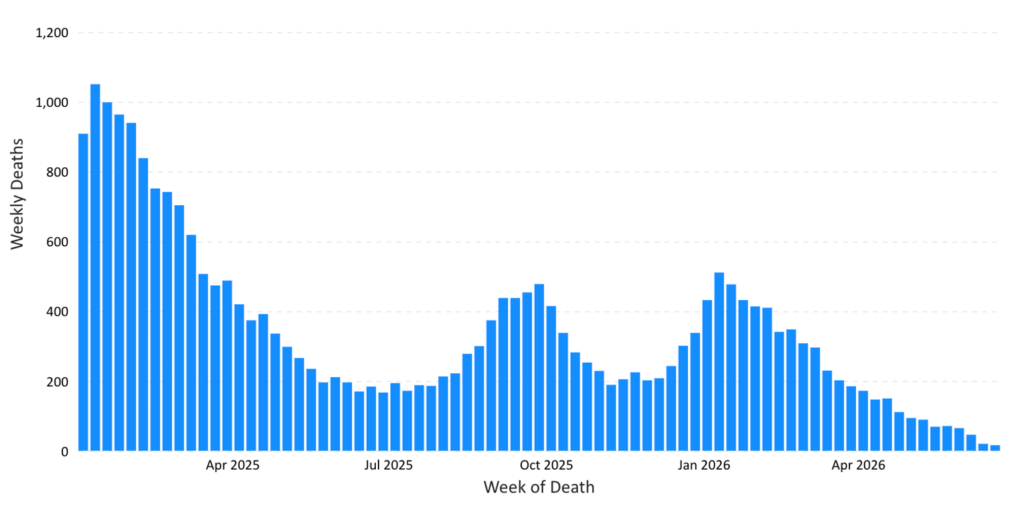
COVID Risk Matrix
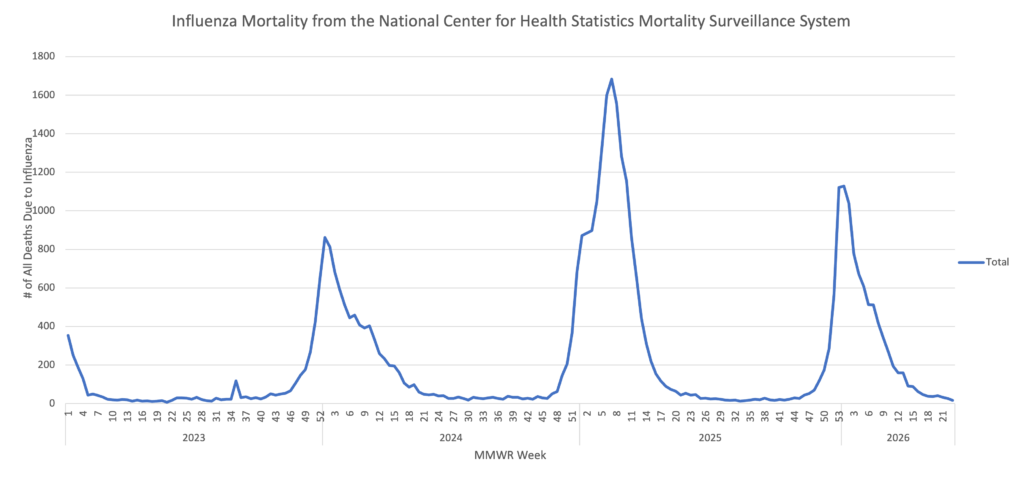
Influenza
Public Health News
- Last week, the US CDC updated its travel restrictions for people traveling to the US from the DRC to “Do Not Board” due to the ongoing Ebola outbreak. This means that entry is prohibited and persons who were in the DRC must quarantine in a third country prior to US entry. There are some exceptions, so travelers are advised to check with health authorities and their airlines for more information.
- As part of the investigation into the ongoing Legionella outbreak in New York City that has affected 72 patients and resulted in 3 deaths so far, it’s been reported that 76 cooling towers have tested positive for the bacterium. If people experience flu-like symptoms, they are encouraged to seek prompt medical care.
- At least 81 cases of mosquito-transmitted West Nile Virus have been reported by mid-July marking an early surge of the disease. Disease rates are nearly eight times the post-2004 average. Illnesses recorded across the US in at least 15 states indicate that the 2026 surge is likely driven by favorable overwintering conditions for mosquitos and elevated infection rates in avian reservoirs.
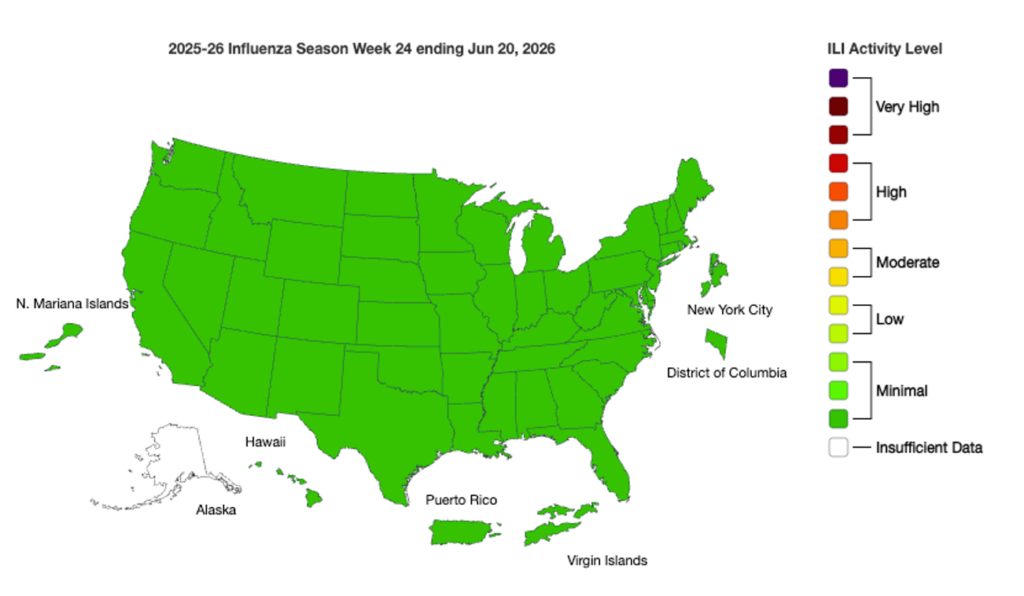
- The European CDC monitors respiratory illness rates and virus activity across the EU/EEA. Findings are presented in the European Respiratory Virus Surveillance Summary and indicate that levels of these illnesses are at a baseline rate, which is low for this time of year.