After declaring that the positive for cyclospora on iceberg lettuce was a false positive, the FDA is continuing to investigate the source of the multi-state outbreak of cyclosporiasis for which nearly 7,000 cases have been confirmed or suspected. There may, of course, be more than one outbreak going on causing these high numbers of cases. But with the outbreak impacting so many people, what does it mean to the food industry? And, more importantly, what can food establishments, particularly growers, do to help prevent outbreaks and control contamination by the unusual Cyclospora cayetanensis parasite?
Cyclospora gets into fresh produce through contaminated water or soil, but, as discussed in TAG’s recent public health article,typical controls used in produce processing (i.e., washing, rinsing, sanitizing) have minimal effects; FDA substantiates that, stating that chlorine and other common anti-microbial chemical treatments are not effective against Cyclospora cayetanensis. Additionally, because symptoms don’t show up until up to 14 days after consumption, it can be difficult for infected persons to remember what was eaten, and it’s not currently possible to genetically link product or environmental findings with an outbreak strain. Without such molecular tools along with the long incubation period s, it’s exceedingly difficult to trace back to the source product and take corrective action.
Thus, the key to preventing contamination, and outbreaks, is controlling the sources of contamination in the field, packinghouse, and from farmworkers – It is advice that is much easier given than conducted!
However, there are some general practices that can be undertaken to aid in that prevention – many of which are rooted in the Produce Safety Rule. In fact, because humans are the only known host, with infected people shedding the parasite in their feces, monitoring of inputs that may be contaminated by human feces and practices that ensure proper worker hygiene and workplace sanitation, such as those described in the rule, are key to preventing cyclospora spread to fresh produce.
Following are some practical considerations from TAG, FDA, and AFDO (source links below) for practices that can help growers reduce the likelihood of produce contamination.
- Start out by reviewing farm conditions and practices with a food safety team to identify and mitigate potential sources or routes of contamination.
- Educate farm personnel – in their native language and considering cultural practices – on both food safety and hygienic practices, including the availability and proper use of farm toilet facilities, sanitary disposal of toilet paper, and proper handwashing techniques.
- Instruct personnel to notify their supervisor if ill; exclude ill employees from tasks that could contaminate produce or food contact surfaces.
- Ensure there is supervisory oversight for farm worker health, hygiene, and sanitation.
- Assess the potential for farm conditions (including water systems and adjacent land) that could introduce or contribute to contamination, such as sources of human waste or contamination by farm employees or visitors, adjacent land run-off, etc.
- Map water sources, including nearby and adjacent lands, wastewater treatment facilities, landfills, and recreational activities to ensure they do not have the potential for contamination.
- Consider if cyclospora contamination can occur early in the growing season (such as through early season irrigation) as the oocysts can persist in the environment to later transfer to produce or food contact surfaces.
- Maintain septic systems and portable toilets, and where and how toilet facilities are located and cleaned. Maintenance considerations should include, but are not limited to, cleaning and sanitizing; proper storage of human waste and gray water; and disposal of sewage according to federal, state and local regulations.
- Understand how to identify sewage spills or leaks and develop a management plan to prevent environmental and produce contamination. Map sewage and septic systems, including drain fields, to assist in monitoring.
An investigative article from AFDO is of interest in that it looks at the recommendations for agency investigations in the case of a cyclosporiasis outbreak, thus provides areas that growers should regularly inspect – and correct, before an outbreak occurs. These include inspection of:
- The location of portable toilets and their servicing; distance from field, farm production areas, and water sources; other potential sources of human waste around water sources.
- Signs of toilet paper or human feces in fields or use of human waste (sewage sludge or bio solids) on the farm.
- Repairs, leaks, or spills from sewage systems or portable toilets on the farm.
- Irrigation use of recycled or grey water (e.g., used handwash water).
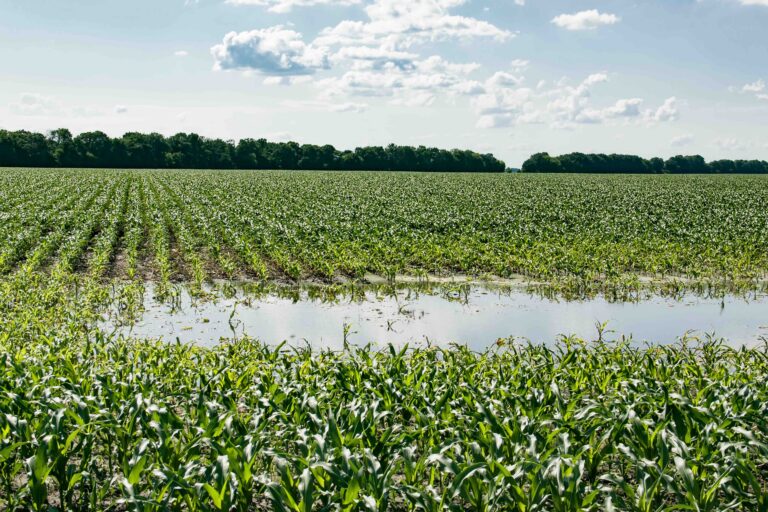
- Any flooding event, with a particular focus on the source of the flooding; depth and length of coverage to a crop; field drainage to another field; and potential for backup of sewerage lines.
- How the crop is harvested (e.g., bare hand with or without utensils, gloved hand with or without utensils, automated, etc.).
While such practices, inspection considerations, and corrective actions do not constitute all that can be done to prevent and control cyclospora on the farm and packing house, particularly with the extensive variation among fields and grower practices, they provide a general outline of areas to consider. Additionally, the final rule on agricultural water provides some definitive areas of focus that can apply whether one is subject to the rule or not.
With extensive experience in farm practices, TAG has subject matter experts in pre-harvest agricultural water uses and controls who can assist you in assessing your processes, practices, and environmental conditions to help keep your produce as safe as possible.
Sources:
- FDA: Cyclosporiasis Fact Sheet
- TAG: What Is Cyclospora and Why Is It Such a Problem?
- AFDO: Investigating Fresh Produce Cyclospora Outbreaks
- Produce Safety Rule
- Pre-Harvest Agricultural Water Rule
In summary, when asked what food establishments can do to help prevent outbreaks and control contamination by the unusual Cyclospora cayetanensis parasite, TAG, FDA, and AFDO have some recommendations that can help growers reduce the likelihood of produce contamination. While this article does not constitute all that can be done to prevent and control cyclospora on the farm and packing house, it provides a general outline of areas to consider. It starts in the fields, packinghouses, and from the farmworkers, where control is the key to prevention. Though that is advice which is much easier given than carried out!