
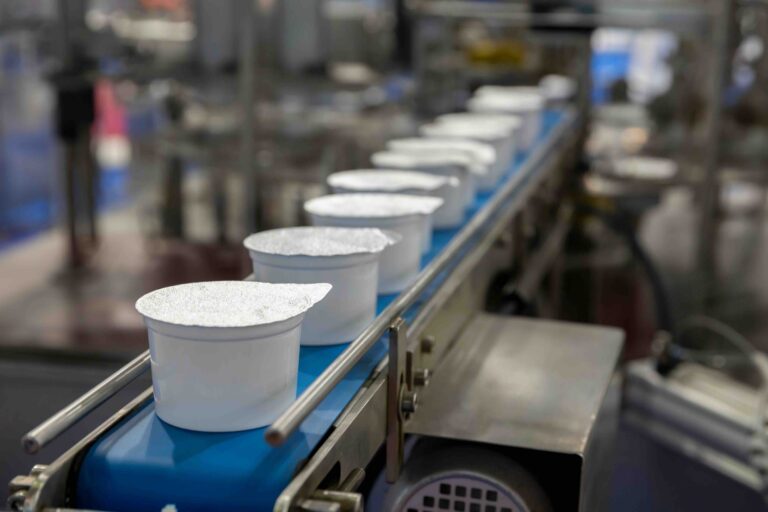
New California and European Union regulations are making packaging more difficult for the food industry while forcing health and sustainability considerations. California’s SB54 (in effect since May 1) impacts single-use packaging and foodservice ware, while the EU’s Packaging and Packaging Waste Regulation (effective in August) establishes rules that cover the entire life cycle of packaging for all food sold into the EU (including US imports).
California’s SB54 Recyclability Regulation
SB54 establishes a new extended producer responsibility (EPR) program which shifts the responsibility, cost, and regulation of managing post-consumer packaging back to the producers (i.e., those who sell, distribute, or import packaged food products or plastic food service ware). The regulation, which impacts any company selling into California, requires producers to ensure that by 2032 single-use packaging and plastic foodservice ware sold in the state be:
- 100% recyclable or compostable.
- 65% recycled.
- reduced in sales/distribution by 25% from 2023 numbers.
While a first glance may see this as primarily impacting foodservice/retail sales, the amount of manufactured single-use, packaged food has surged significantly over the last decade. In fact, the packaged food and beverage sector has not only seen rapid expansion in single-serve packaging due to consumer demand, it makes up the greatest share of the single-serve packaging market.
The EU Packaging and Packaging Waste Regulation (PPWR)
Although the EU PPWR also focuses on recycling, its mandates are that all food companies selling into the Union – including U.S. food companies exporting to the EU – adopt recyclable, minimal packaging; meet strict recycled content targets; and use mandatory, harmonized labeling. Thus, the regulation will necessitate that many manufacturers redesign their packaging. Key components of the rule are that it:
- Mandates that all packaging must be recyclable by 2030 and recycled “at scale” by 2035, sets minimum recycled content levels for plastic packaging, requires minimized packaging volume and weight, requires harmonized sorting labels for packaging, and bans PFAS in food-contact packaging.
- Sets per-capita packaging waste reduction targets, mandates re-use and refill targets for specific sectors, bans certain single-use formats (e.g., small-scale packaging for fresh produce and individual condiment portions in restaurants).
- Requires producers to register and bear the financial costs of managing their packaging’s end-of-life.
The Challenge
As TAG found through a comprehensive literature search, alternative materials (i.e., bioplastics, cellulose-based films, coatings, reusable systems, and recycled plastics) are being researched to reduce environmental impacts and reduce waste byproducts, but:
- Many of these face performance limitations in barrier properties, mechanical strength, standardization, cost, and compatibility with existing infrastructure.
- In some cases, increased spoilage risk or a shortened shelf life, resulting in increased food waste, would offset environmental impact.
- Life cycle assessments show variable results and are highly dependent on product type, logistics, and end-of-life systems, which are not yet uniformly established.
- Emerging and alternative packaging technologies may also lack robust long-term human and environmental safety data, including data on the toxicity of degradation byproducts and migration risks.
Overall, while current scientific evidence supports the essential role of conventional plastics in maintaining food safety, quality, and shelf-life, advances in research have shown that some long-accepted packaging technologies (e.g., PFAS) are unsafe and cause long-term adverse effects. But while development continues on alternatives to such traditional packaging, many are still commercially inaccessible.
Notwithstanding that, new regulations, such as that of California and the European Union, are making it essential for packaging manufacturers to continue to strive toward more sustainable, PFAS-free packaging and for food manufacturers to be highly selective in packaging options that keep products safe while also considering the health and environmental impacts.
In summary, new California and European Union regulations are making packaging more difficult for the food industry while forcing health and sustainability considerations. Through a comprehensive literature search, TAG has found that alternative materials are being researched, but many limitations still exist. It is essential for packaging manufacturers to continue to strive toward more sustainable, PFAS-free packaging and for food manufacturers to be highly selective in packaging options that keep products safe while also considering the health and environmental impacts.