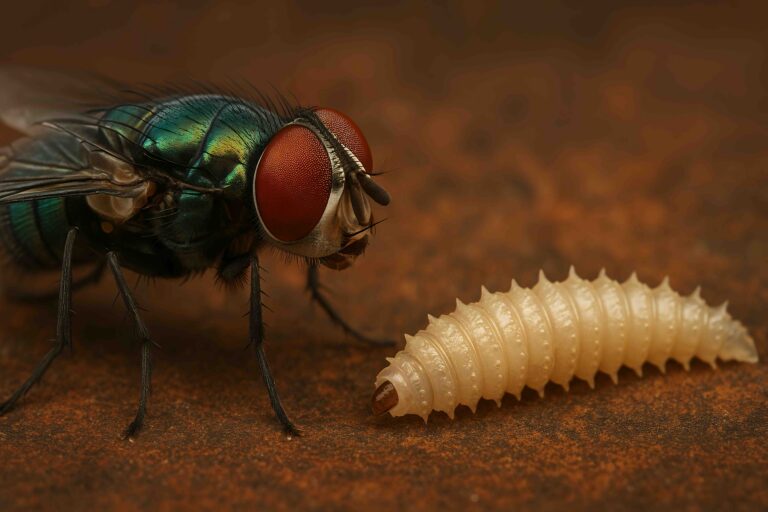
On June 8, the USDA confirmed additional cases of New World screwworm (NWS) in Texas, all in counties near the Mexican border. The first three confirmed cases were in calves and a goat and the fourth was a dog. Livestock, pets, and wildlife (and rarely humans and birds) can be affected when a screwworm larvae burrows into a wound “feeding as they go like a screw being driven into wood.” These are the first US cases since the screwworms were eradicated in 1966 (with one additional small outbreak successfully eliminated in the Florida Keys in 2017).
The current appearance of the screwworms in Texas was not unexpected; as NWS is endemic in Cuba, the Dominican Republic, and countries in South America; the flies had moved into Mexico; and the USDA stated that many models projected the pest would reach the US in 2025. But USDA, along with state, federal and industry partners, were able to take action to hold off the screwworms longer, with the extra time enabling the USDA to be prepared for and take immediate action upon the recent detection.
Similar to the actions that enabled the previous eradication, USDA is following the NWS Response Playbook which includes:
- Establishing a 20 km infested zone around the detection and implementing quarantines, movement controls, and surveillance in this area.
- Immediately releasing sterile male screwworm flies through ground release chambers, in addition to the 4 million already being released aerially each week to dwarf the wild populations. (Because female screwworms mate only once in their lifetimes, mating with sterile males results in unfertilized eggs and causes the population to collapse)
- Increasing trapping for NWS flies along the border and just outside of the dispersal area.
- Implement other surveillance, management, and outreach strategies in the area.
The only human case in the US in almost a decade has been the 2025 travel-related case reported in Maryland. With NWS being a “tropical” disease, there are likely to continue to be more cases in the south through the summer, though movement very far northward is less likely.
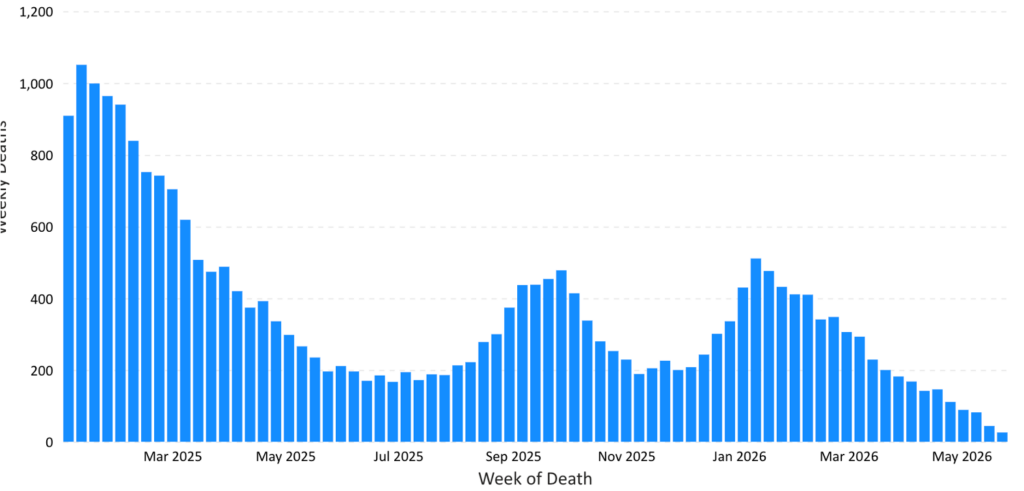
COVID Risk Matrix (as of June 1, 2026):
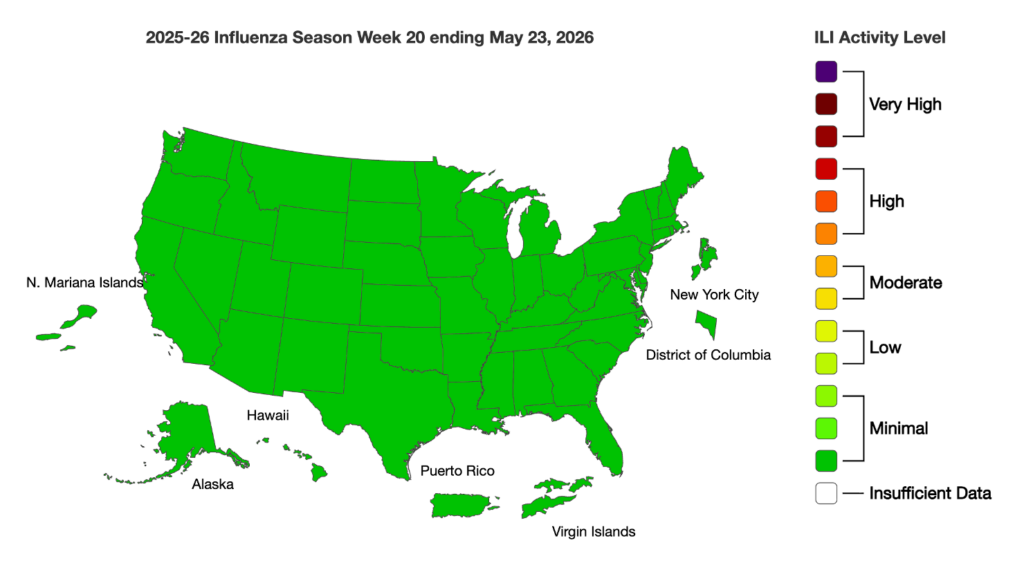
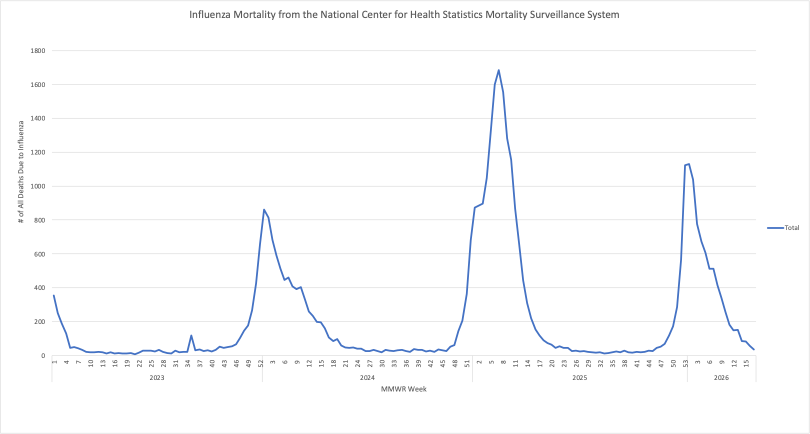
Influenza:
Public Health News:
- President Trump signed an Executive Order directing the CDC and its Advisory Committee on Immunization Practices to review a December 2025 HHS scientific assessment that called for fewer recommended childhood vaccines and the taking of “any appropriate steps” to update the US childhood vaccine schedule to align with its findings. As we previously reported, these recommendations call for decreasing the number of recommended vaccines from 17 to 11.
- The burden of the current Ebola outbreak has changed, as some of the suspected cases have not been confirmed. A June 5 situation summary reported that the Democratic Republic of Congo has 452 confirmed cases and 82 deaths; and Uganda, 19 confirmed cases and 2 deaths.
- An EFSA annual report assessing pesticide residue levels in food provides an overview of the official control activities on pesticide residues carried out in the EU Member States, Iceland, and Norway. In 2024, 9,842 samples were analyzed and only 1.2% were found to be non-compliant. Thus, the dietary risk is estimated to be low for most of the EU subpopulation groups and assessed substances.
- In just the first five months of 2026, the US measle cases exceeded 2,000 cases, with some severe cases including brain inflammation and pneumonia reported. Additionally, a new CDC report found that of those hospitalized during the first two months of the 2025 West Texas measles outbreak, nearly all were unvaccinated children, only 11% had preexisting conditions, and respiratory complications were common. On the positive side, a new study has shown how the ability of “cross-reactive” T cells to simultaneously recognize multiple species of paramyxovirus may guide the development of new vaccines and therapies for measles and related infections.