
My New Year’s resolution is to keep my family’s food safe! So… what can – and should – I do?
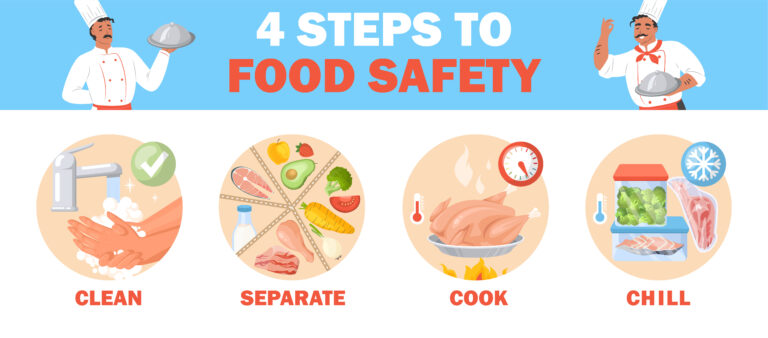
The short answer: How about a focus on the Basic 4: Clean, Separate, Cook, Chill
The explanation: Although food safety should be a year-round focus, taking some time to rethink, and ensure you are applying, the basics in everything you do is a perfect New Year’s Resolution. What does that mean?
For a start, following the 4 basic steps of food safety can help keep you and your family safe from foodborne illnesses:
- Clean hands and surfaces often. Foodborne illness bacteria can survive on your food, hands, utensils, cutting boards, and countertops, so:
- Thoroughly wash your hands before, during, and after preparing food, especially between preparation of raw and ready-to-eat foods.
- Wash cutting boards, dishes, utensils, and countertops with hot soapy water, especially after preparing raw foods.
- Wash fruits and vegetables, but not meat, poultry, and eggs, as that can spread germs rather than eliminating them.
- Separate raw from ready-to-eat foods and allergenic from non-allergenic foods.
- To avoid dangerous cross-contamination, use separate cutting boards, plates, and utensils for raw foods (meat, poultry, seafood, eggs) and ready-to-eat foods.
- Whenever allergens may be of concern to those who are eating the foods, use separate tools for these foods.
- Keep these foods separated during shopping and storage as well.
- Use hot, soapy water to thoroughly wash hands and tools between preparations.
- Cook food to a safe internal temperature.
- Follow USDA’s safe minimum cooking temperature guidelines for a variety of meats, casseroles, and leftovers.
- Use a food thermometer to ensure each food has reached the safe temperature.
- Follow the complete package directions for microwave foods, including resting times which provide for thorough cooking of cold spots.
- Once cooked, keep food to a temperature of at least 140°F, to keep germs from growing and causing illness.
- Chill food promptly.
- Refrigerate perishable foods within two hours, or within one hour if exposed to temperatures above 90°F.
- Use an appliance thermometer to ensure your refrigerator stays at or below 40°F and your freezer at or below 0°F.
- Thaw and marinate foods in the refrigerator, never on the counter, as germs can multiply at room temperature and above.
Following these four basic tenets of food safety will help you, your family, and your guests have a safe-food 2026!
TAG can simplify your food safety and quality practices. Contact us for information!