

The Acheson Group
Disease Fact Sheets
MRSA Fact Sheet
What is Methicillin-Resistant Staphylococcus Aureus?
Methicillin-resistant Staphylococcus aureus (MRSA) causes infections that are resistant to the antibiotics typically used to treat infections. MRSA has most commonly been spread in healthcare facilities from unclean hands, linens, or medical equipment. Patients who have invasive procedures that compromised the skin (e.g., catheter placement) are at higher risk. MRSA infections of the skin can also be community-acquired among people who spend a lot of time in close quarters (e.g., military, sports teams, prisoners, etc.).
Why Should I Care about MRSA?
- MRSA can be carried by people. On rare occasions, even those without infections can spread MRSA through skin contact to others who are susceptible.
- The ongoing opioid epidemic may be connected with increasing infections. Those who inject drugs are 16x more likely to develop invasive MRSA infections than others. (CDC)
- MRSA cells may be able to persist on surfaces for weeks which can lead to transmission unless effective cleaning and disinfection is conducted.
SIGNS & SYMPTOMS OF MRSA
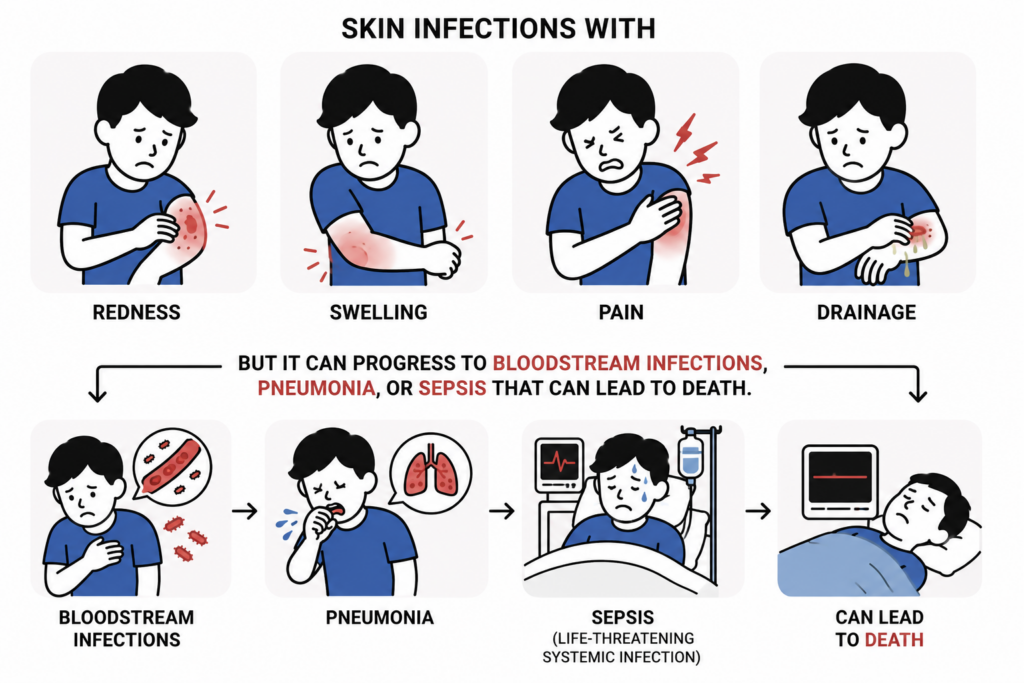
What Do I Do About MRSA?
- Prevention relies on a combination of measures such as:
- • Effective handwashing, and cleaning the body with soap and water after exercising.
- • Cleaning and covering cuts and scrapes until they are healed.
- • Avoiding the sharing of personal items (e.g., towels, razors, etc.).
- EPA provides a list of registered disinfecting products that are known to be effective against MRSA. Use these products according to the label directions. (EPA)
- Antimicrobial soap, such as chlorhexidine, may be recommended by healthcare providers for use on skin (e.g., before invasive medical procedures).
- In healthcare settings, contact precautions may be recommended. These include donning PPE, including gowns and gloves, and using disposable single-use or patient/resident-dedicated noncritical care equipment (e.g., blood pressure cuffs and stethoscopes).
- Alternate antibiotics may be effective against MRSA infections. Vancomycin is typically the antibiotic that’s used, but there are others. (NCBI)
TAG Public Health Experts have the experience and expertise to help companies and institutions successfully integrate science-driven public health approaches into their business strategy.