

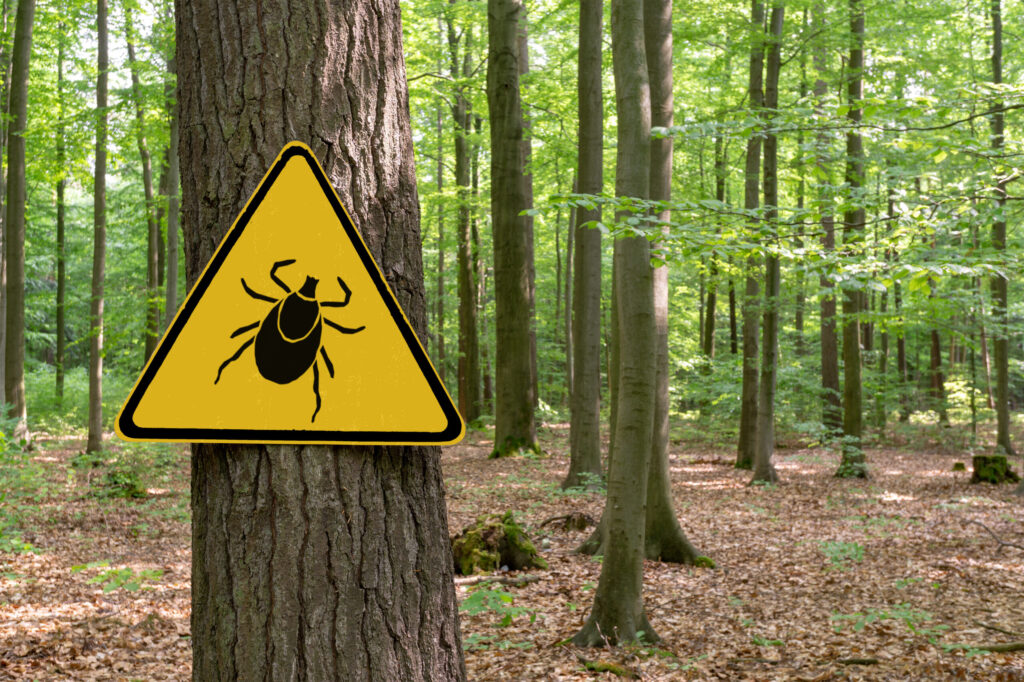
Widely distributed in the Northeast, South, and Midwest US, excepting the far north areas, the lone star tick (Amblyomma americanum) has been gaining notoriety with its ability to spread Alpha-gal syndrome (AGS), a delayed allergy to beef and pork, through its bite. While several tick species can spread the allergy, the lone star tick is the primary vector in the US.
AGS is named for the sugar molecule, Galctose-alpha-1,3-galactose (or Alpha-Gal for short) which all mammals, except primates (including humans), carry. It is passed to humans when a tick feeds on a mammal (e.g., a deer), ingests the Alpha-Gal, then bites a human, transmitting the molecule to the person. In some people, this causes the immune system to produce antibodies to fight the perceived threat posed by the sugar which then triggers the release of histamines causing an allergic reaction to all mammalian meats and products. Although the most commonly reported symptom is hives, one study found that more than 50% of cases also reported anaphylaxis.
The allergy is difficult to diagnose because the reaction can be delayed up to 10 hours, with symptoms ranging from hives, sneezing, stomach pain/nausea, vomiting, diarrhea, and shortness of breath to life-threatening anaphylaxis. As with any food allergy, once a person is afflicted with AGS, they must be vigilant about their food choices, sometimes completely avoiding mammalian meats (i.e., (such as beef, pork, lamb, venison, goat, and bison) and their products (e.g., milk, cheese, gelatin, glycerin, etc.).
The first state in which a reportable condition was made was Arkansas in September 2023; since then, with lone star ticks most prevalent in the southern states, allergy rates have surged to 32% than elsewhere. However, even that is gradually changing, as the ticks continue to move north and west, as winters become less severe and air temperatures increasingly warm, enabling tick survival.
With climate change allowing for longer warm seasons and increasing habitats for ticks, as well as for host animals, such as deer, mice, and raccoons, we are likely to see a continuing increase in AGS cases in new regions both in the US and globally due to the expansions of suitable tick habitats.
For more information on Alpha-Gal Syndrome (AGS) and recommended protection against ticks, see TAG’s Tick-born Infectious Disease Fact Sheet from our Infectious Disease Fact Sheet Library.
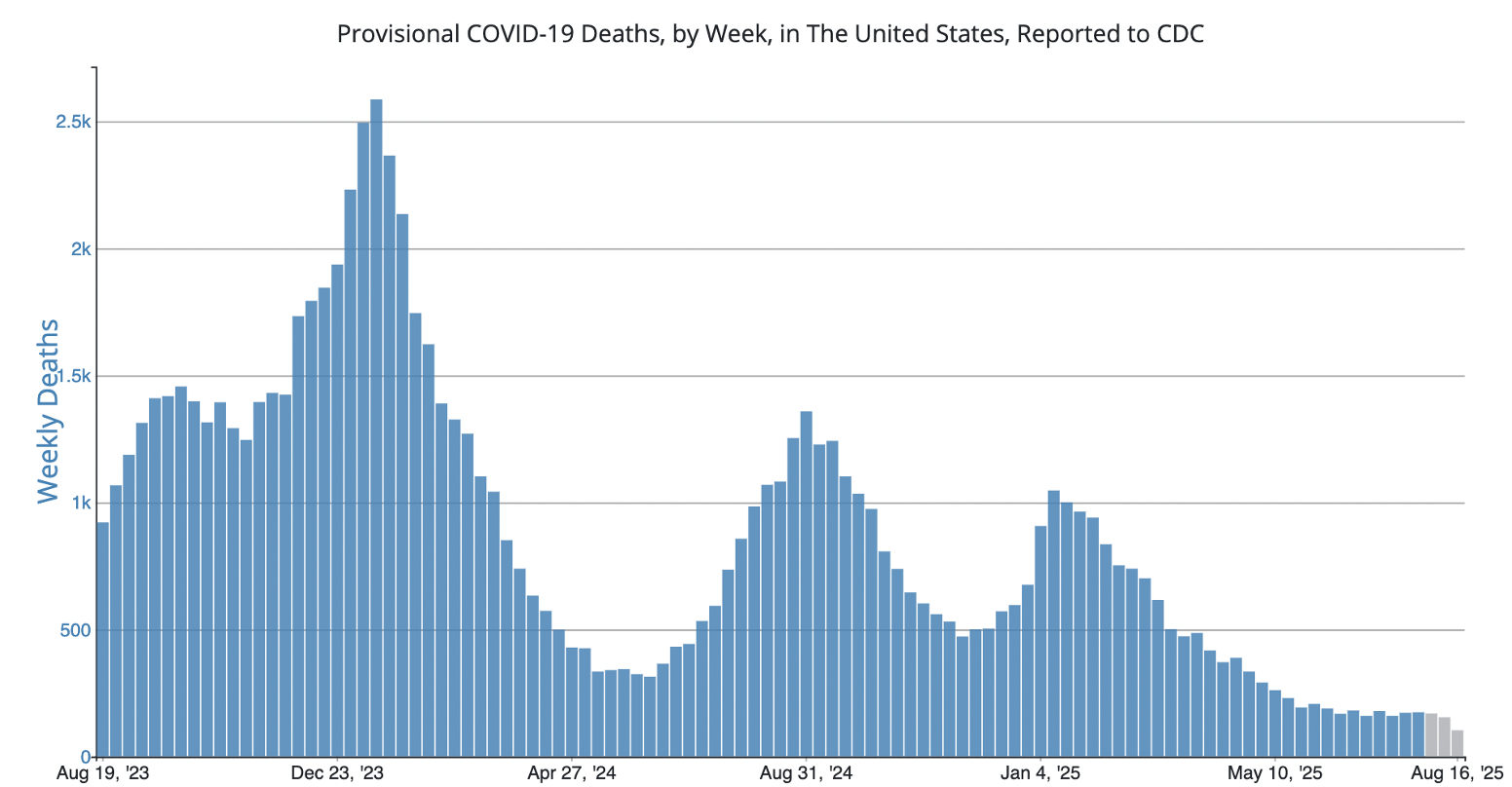
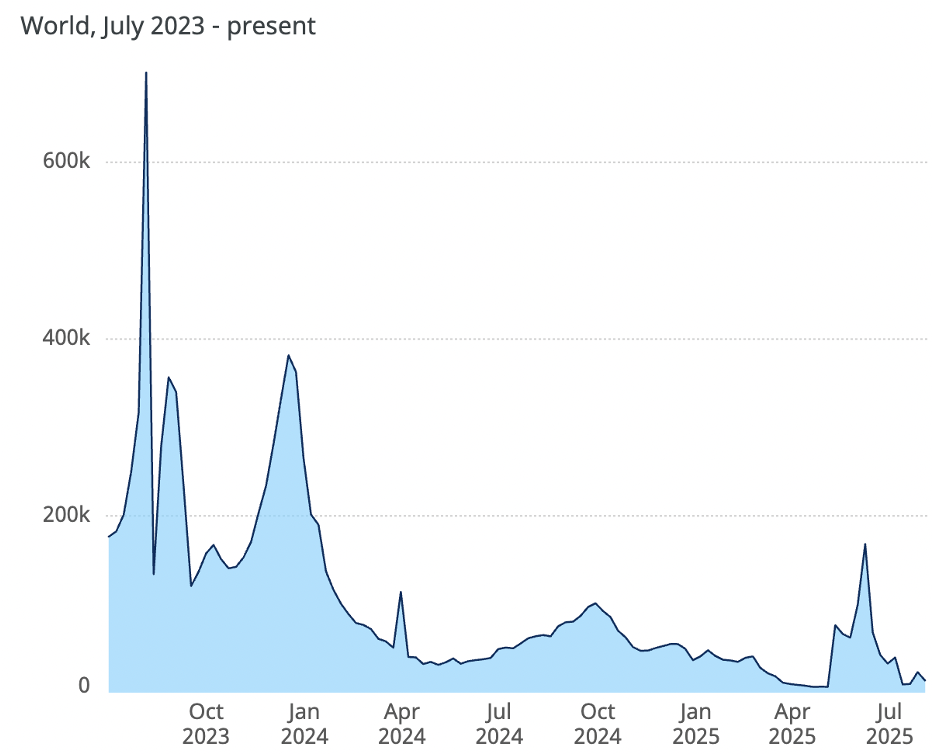
COVID Risk Matrix (data from CDC & WHO):
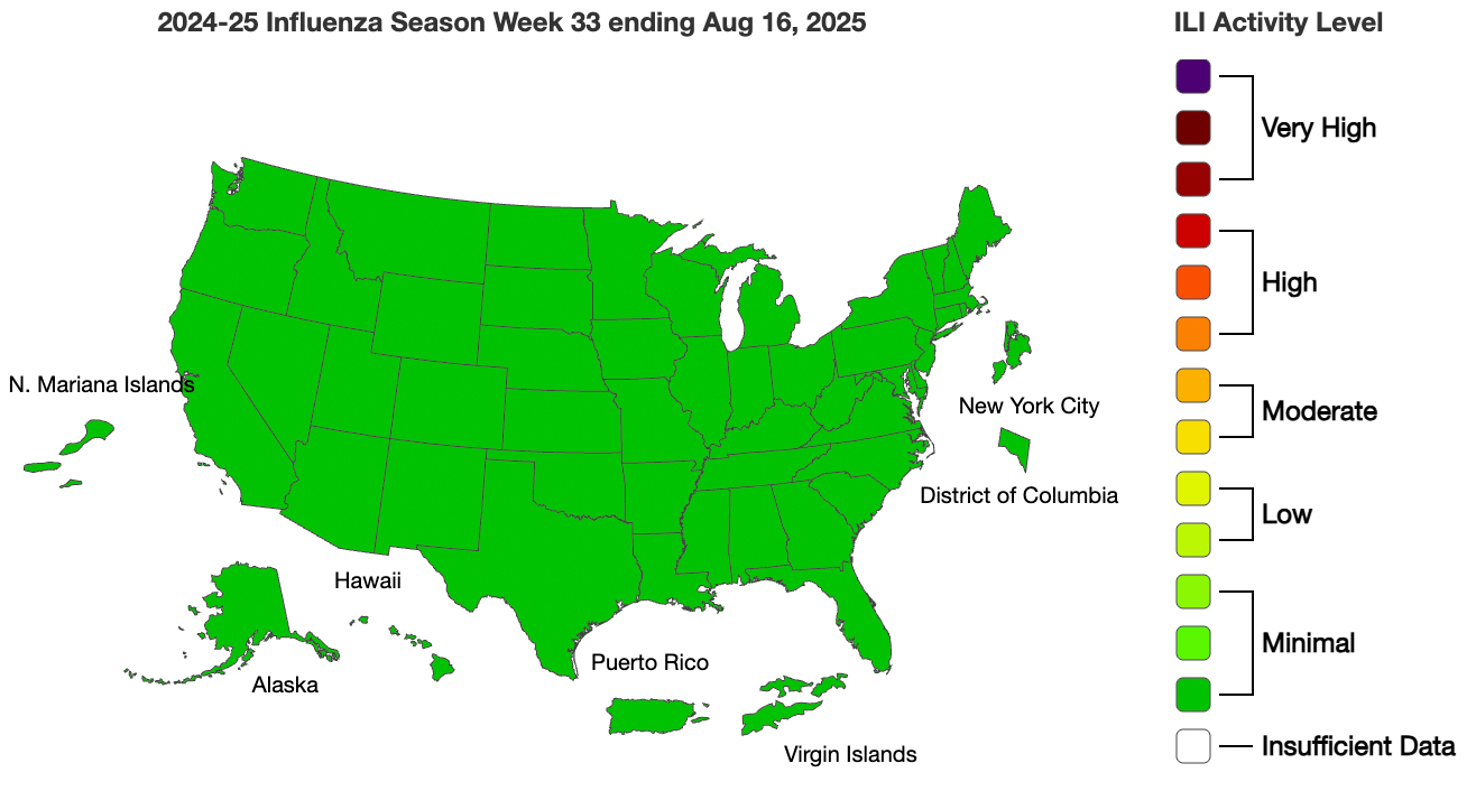
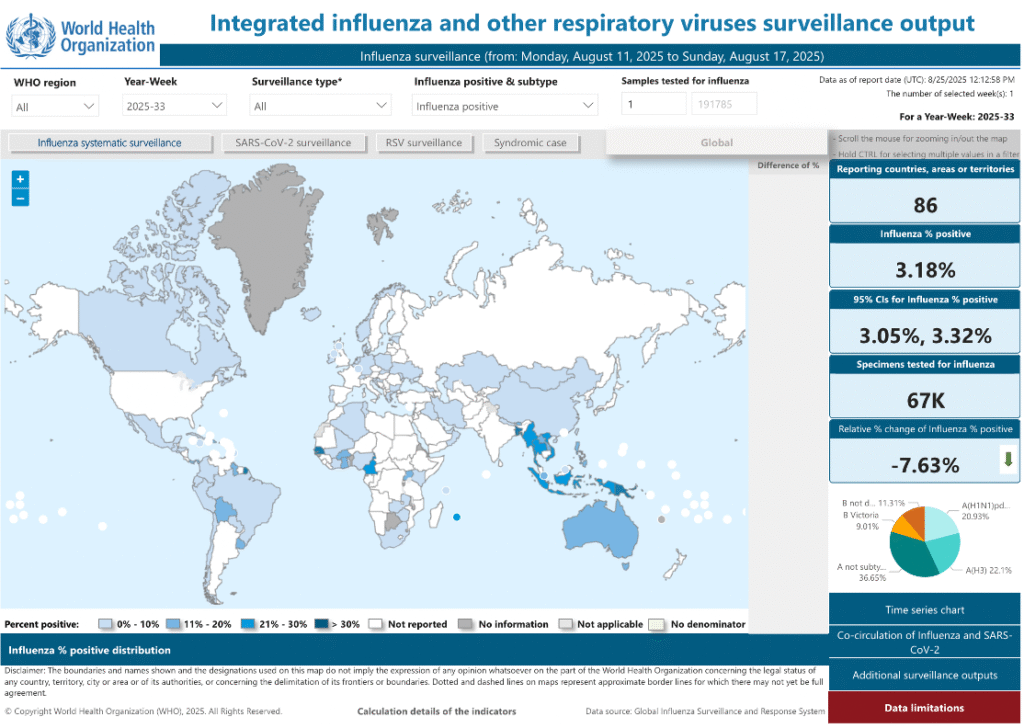
Influenza:
Public Health News:
- More than 20,500 employees at the Department of Health and Human Services have left or been pushed out; positions include thousands of scientists, regulators, and public health specialists. These losses span major health agencies like the CDC, FDA, and NIH, with some divisions losing over one-fifth of their staff. ProPublica’s analysis shows that the cuts have hollowed out expertise vital for vaccine oversight, food and drug safety, disease surveillance, and chronic disease prevention. Critics warn the departures will severely undermine public health protections, while HHS officials defend the reductions as trimming bureaucracy and redirecting resources.
- Based on wastewater surveillance, Covid cases are increasing in the US. The data show that the highest number of cases are likely occurring in the Western U.S., including Alaska, California, Colorado, Nevada and Utah. The NY Times reports that cases may be spreading due to prolonged indoor contact, as people seek relief from outdoor heat as well as increased travel and waning immunity.
- The latest human cases of H5N1 are in California where it’s been confirmed that two dairy workers who had contact with infected cattle, are infected. As with other cases, their symptoms include conjunctivitis and other relatively mild symptoms.
- Alpha-gal syndrome is an emerging, tick bite–associated allergic condition characterized by potentially life-threatening hypersensitivity to an oligosaccharide found in most mammalian meat and products derived from it. Cases in the US have increased substantially. While most are still in the range where the lone star ticks are most prevalent (particularly throughout Arkansas, Kentucky, Missouri, and Suffolk County, New York), cases have been reported in other areas as well.
- The Legionella outbreak in Central Harlem in New York City has increased to 112 cases and 6 deaths as of August 22, 2025. Several cooling towers in the vicinity of the case have tested positive for this bacterium.
- A monthly report of surveillance of West Nile virus infections in humans and animals in Europe through August 6, was recently published. To date in 2025, more than 200 cases have been reported in humans. The majority of human and animal cases (mostly in horses) were reported in Italy.
- Sudan has had nearly 100,000 suspected cases of cholera and has reported more than 2,400 cholera-related deaths since the country’s Health Ministry declared an outbreak a year ago, likely due to contaminated water sources.
- The New Jersey Departments of Health and Environmental Protection are investigating what may be a locally acquired cases of malaria in a resident in Morris County. The infected person had no history of recent international travel. The Anopheles mosquitoes that transmit malaria are present in New Jersey.