

Absenteeisms often create coverage challenges for a business, especially when the absent person is a manager. But, as studies are finding, presenteeisms can present greater, longer-term issues.
Presenteeism is the act of attending work while sick, injured, or mentally unwell. Not only can attending while ill spread disease and reduce their productivity, but studies have found that there is a higher likelihood of the person committing errors and missing a greater amount of work in the future.
While hourly workers are more likely to attend work when unwell due to economic reasons, the manager, who generally have some sort of paid time off, are more likely to continue working when unwell because of high workloads, knowing they will need to catch up when time off is taken, having no backup to take over, or even thoughts of being irreplaceable. However, the presenteeism has been associated with future poor health and has led to exhaustion, burnout, and even depression.
Thus, while low rates of sick leave could seem to suggest a healthy, productive organization, with employers feeling that there is at least some productivity during the time, studies have found that the negative economic consequences of presenteeism exceed those of absenteeism. For example, the proportion of employees with severe exhaustion was more than 30% greater for those with 8 or more days of presenteeism compare with those who had none; and presenteeism led to greater impaired work performance. The results make it clear that employers should encourage employees, including managers, to stay home when unwell. Interventions are also recommended, from assisting in stress management and offering work adjustments and support when needed to providing paid sick leave, a supportive leave culture, and proactive health monitoring. At the end of the day, healthy employees mean better outcomes which means a stronger business.
COVID Risk Matrix:
Influenza:
Public Health News:
- Detection of highly pathogenic avian flu in wild birds in Europe has started to decline this Spring, after a winter season which saw the highest detections in 5 years. Domestic birds’ infection rates remained about even with recent rates, emphasizing the continued need for strong biosecurity practices to prevent interaction of domestic and wild birds. The risk to the public remains low.
- CDC has published Interim Estimates of 2025–26 Seasonal Influenza Vaccine Effectiveness in persons aged > 6 months in the US from September 2025–February 2026. Generally, the results demonstrated lower numbers of outpatient and hospital visits among persons who were vaccinated. Even though the overall vaccine effectiveness was lower during this season, the CDC continues to recommend influenza vaccinations to protect public health. There are continuing discussions recommending that the 2026-2027 discussions include A(H3N2) subclade K which was the new variant that emerged in October, which was too late to be included in the 2025-2026 vaccine; the final decision will be made by FDA in the months to come.
- There is an ongoing randomized, double-blind, placebo-controlled challenge study against norovirus being conducted at Emory University evaluating CDI-988 from CoCrystal Pharma, Inc. This is a direct-acting, oral antiviral substance aimed at infection reduction by targeting all norovirus strains, including recently re-emerging GII.17 variants. CDI-988 previously demonstrated favorable safety and tolerability in a Phase 1 study across all dose levels, including that being administered in the current Phase 1b human challenge study.
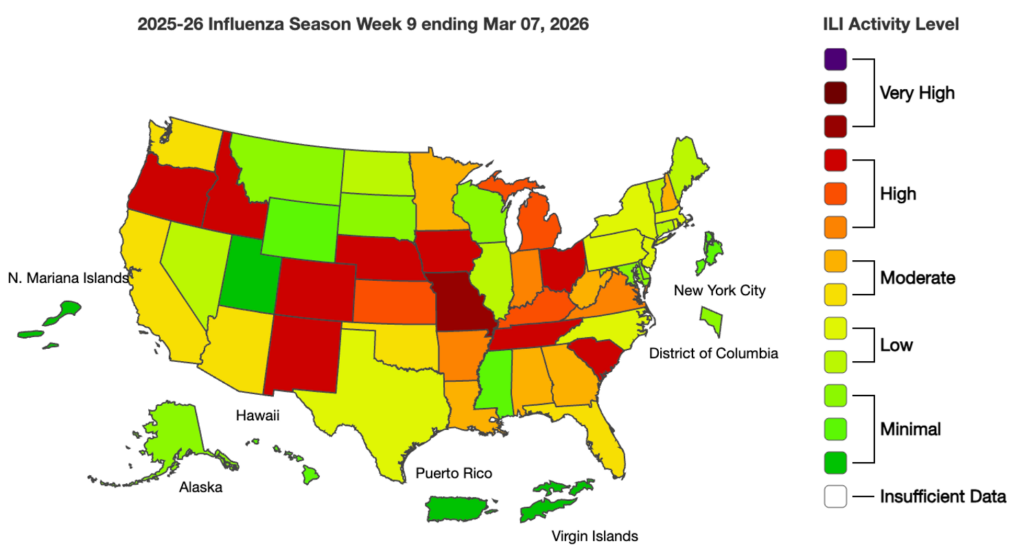
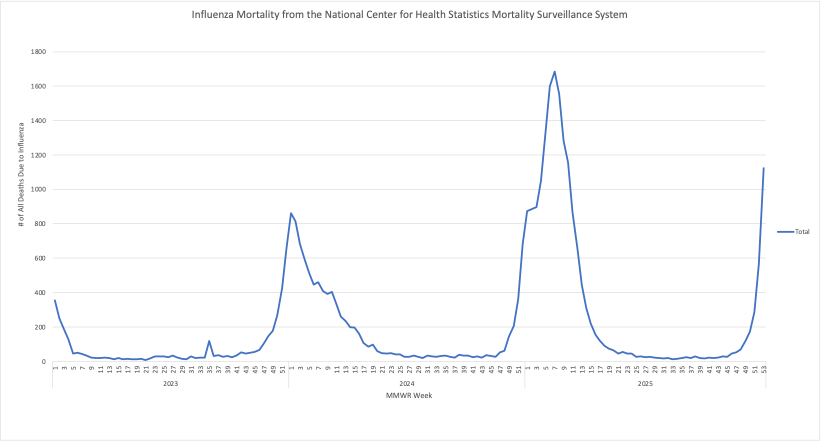
- Eleven influenza-associated pediatric deaths occurring during the 2025-2026 season were reported to CDC this week, bringing the season total to 101 reported influenza-associated pediatric deaths. CDC estimates that there have been at least 27,000,000 illnesses, 350,000 hospitalizations, and 22,000 deaths from flu so far this season.
- Recently the Vaccine and Related Biological Products Advisory Committee (VRBPAC) unanimously endorsed the WHO’s recommendation for viral strains to include in flu shots starting this fall. The new variant that emerged in October 2025, called A(H3N2) subclade K, was recommended for the flu vaccine in the fall. The final decision for US incorporation of this recommendation will be made by FDA Commissioner Martin Makary.
- Cases of measles continue to be identified week over week in the US. In the beginning of 2026, most cases were being identified in Arizona and South Carolina. Recently, there was a shift, and those states are reporting fewer cases consistently while Utah has now tracked more than 400 cases since the beginning of an outbreak that began last year. The total case count for Arizona is 214, South Carolina is at 993, and Utah at 405.