With March being National Frozen Food Month and National Nutrition Month, we thought it would be interesting to see what the science has to say about fresh vs. frozen vegetables.
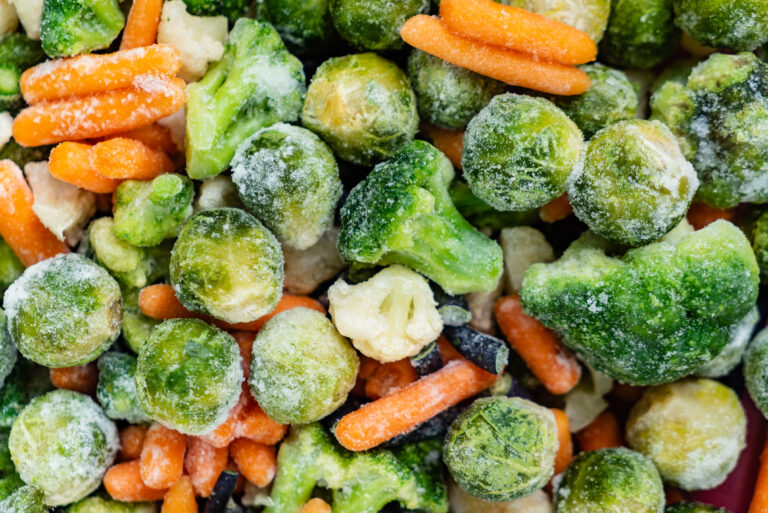
The answer: Studies show little significant difference between fresh and frozen vegetables when picked and frozen or eaten at the height of ripeness.
- In one study published in the ACS Food Chemistry Journal, four vitamins (Ascorbic acid, riboflavin, α-tocopherol, and β-carotene) were evaluated in eight fruit or vegetable commodities to evaluate the differences between fresh and frozen. Samples of each were harvested, processed, and analyzed for nutrient content at three storage times per treatment. In the majority of commodities, there was no significant difference between the level of vitamins in frozen and fresh, with some frozen commodities even showing higher levels of some vitamins. However, β-Carotene was found to decrease drastically in some frozen commodities.
- Another study in the same journal analyzed minerals, total phenolics, and fiber in several fresh and frozen produce. While the nutrient content was highly dependent on the commodity, the majority of the commodities showed no significant difference between fresh and frozen for all analytes.
Produce which is intended to be frozen is generally picked at the height of ripeness and processed within hours of harvest, and the flash-freezing preserves the nutrients, extends shelf life, and enables year-round access to “fresh-picked” produce. So, while fresh-picked produce can be a real treat, it’s rarely available at all times, in all places, or even at all to many people, making frozen produce a comparable alternative in both nutrition and taste.
COVID Risk Matrix:
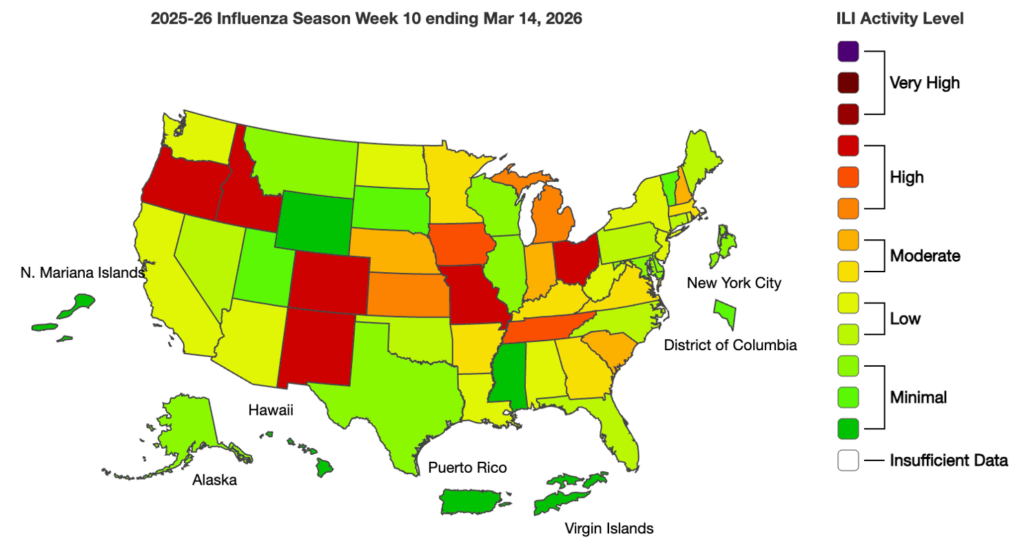
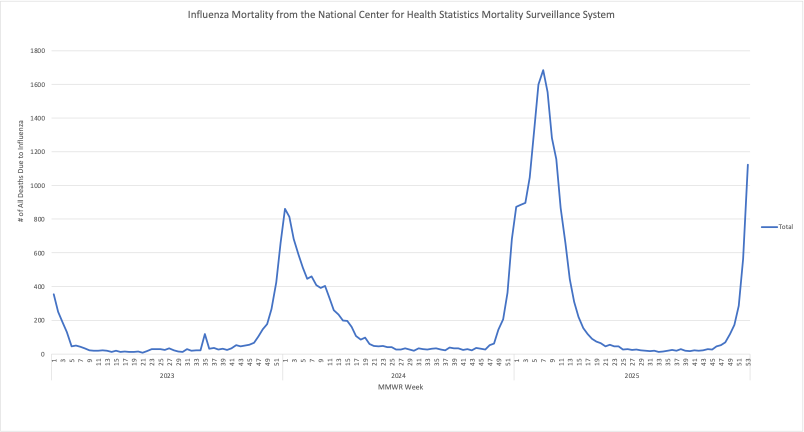
Influenza:
Public Health News:
- The HHS, USDA, and EPA have announced over $1 billion in investments and plan to accelerate progress on farm modernization and long-term food supply security. The purpose is to study the impact of “cumulative chemical exposures” on human health and reducing reliance on “chemical crop protection tools.” Efforts include development of a research and evaluation framework across the food supply.
- National Groundwater Awareness Week was March 8-14, 2026. This annual event serves to remind private well owners that regular testing is recommended to ensure drinking water safety. Nearly half of the US population relies on groundwater as their primary water source. Routine testing where indicated can highlight potential concerns and allow for the implementation of proper treatment protocols.
- A new, highly mutated COVID-19 variant called BA.3.2 has been detected in multiple countries and identified in limited cases and wastewater samples in the United States. First found in South Africa in late 2024, it is genetically distinct from earlier variants and contains many mutations that could affect how well current vaccines work. While it has reached higher prevalence in parts of Europe, it remains rare in U.S. surveillance data so far. Health officials emphasize that continued monitoring is important to track its spread and potential public health impact.
- An outbreak of invasive meningococcal disease has been reported in Kent, England, with 29 cases and two deaths, mainly affecting young adults, including students at the University of Kent. Most confirmed cases are linked to a serogroup B strain that is covered by the Bexsero vaccine, and a possible exposure site has been identified as a nightclub in Canterbury. Health authorities are responding with contact tracing, antibiotics, and a targeted vaccination campaign, with thousands of doses already administered.
- EU countries have reported a rise in travel-related dengue cases among people returning from the Maldives, with at least 46 cases reported so far in 2026. This follows a surge in 2025 and reflects a significant increase in dengue activity within the Maldives itself. Despite the rise in cases, no unusual severity has been observed among infected travelers. The virus is endemic in the Maldives and has reported 631 confirmed cases during January 2026, compared to 72 in January 2025, and 138 in January 2024.