
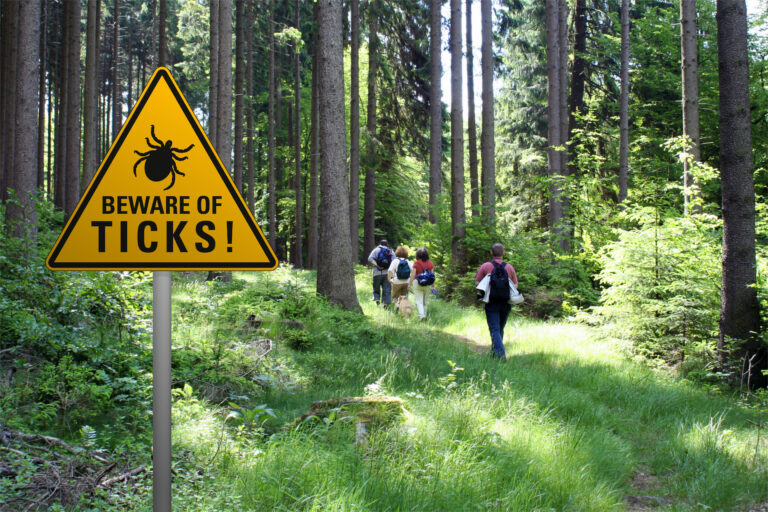
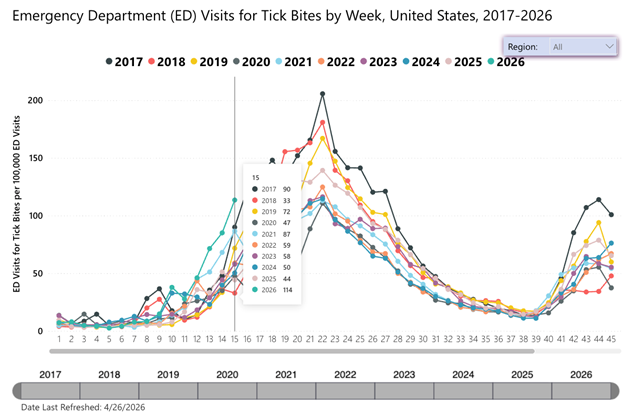
With April already seeing the highest number of ER visits due to tick bites since CDC’s tracking began in 2017, experts are predicting 2026 to be another bad year. The uptick is likely attributed to climate change, with milder than normal winters and earlier springs allowing higher rates of both tick and host (i.e., rodent and mammal) survival.
And, if it’s not bad enough that ticks can carry and transmit at least nine different diseases, a new study has found that ticks can carry – and transmit – more than one of these at a time – and each can require a different treatment. The study revealed that at least 10% of the more than 2,000 ticks studied in NY state carried two or more pathogens, with the most common of the tick co-infections being Lyme disease (a bacterial infection treated with antibiotics) and babesiosis (a parasitic infection requiring anti-parasitic drugs).
The best protection against tick-borne diseases is prevention. If you will be where ticks live (primarily grassy, brushy, or wooded areas):
- Wear long pants, long-sleeve shirts, socks, and shoes.
- Treat clothing and gear with products containing 0.5% permethrin, or purchase permethrin-treated clothing and gear.
- Use EPA-registered insect repellents containing DEET, picaridin, IR3535, Oil of Lemon Eucalyptus (OLE), para-menthane-diol (PMD), or 2-undecanone.
- Walk in the center of trails to stay clear of wooded and brushy areas.
- After being outdoors, check your gear and clothing for ticks. For extra precaution, put all clothing into the dryer on high heat for 10 minutes.
- Check pets for ticks
- Thoroughly check your body for ticks, using a mirror to see all parts.
- Showering within two hours will help reduce your risk of getting Lyme disease and may be effective against other tickborne diseases as well. It also can help wash off unattached ticks and provides a good opportunity to do the tick check.
- If you find an attached tick, use tweezers to remove it as soon as possible. Removing attached ticks within 24 hours can help prevent Lyme disease.
For more information on ticks and tick-borne diseases, see TAG’s Public Health Fact Sheet on Tickborne Diseases.
COVID Risk Matrix:
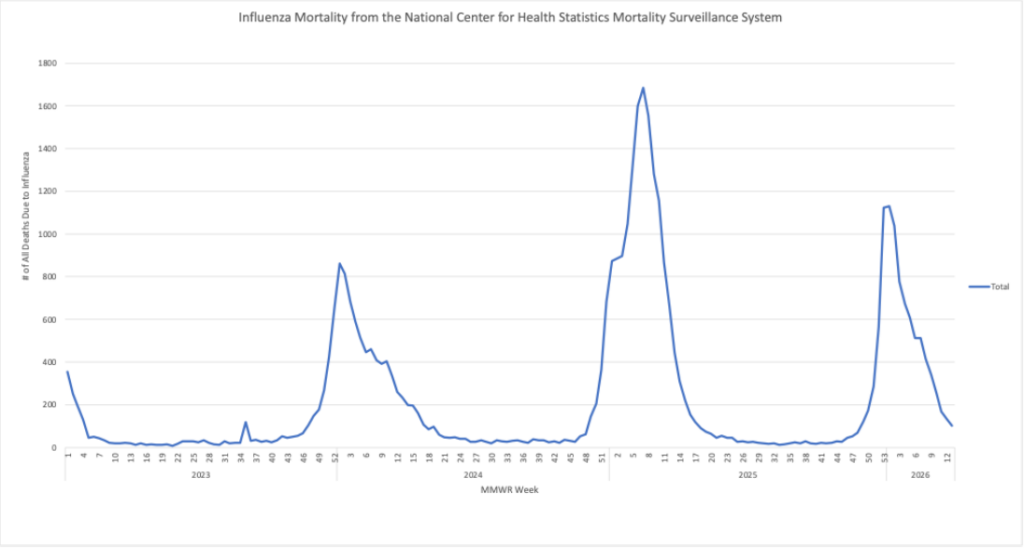
Influenza:
Public Health News:
- The CDC reports that rates of influenza vaccinations among nursing home residents aged greater than 75 are significantly lower than community residents in the same age group.
- European immunization week has just concluded. This initiative lead by the WHO, raised awareness about the important public health role of vaccinations.
- Vanuatu, an island nation in the Pacific, is reporting 112 cases of ciguatera fish poisoning in 2026 to date; this exceeds the total cases reported in 2025. Widespread environmental exposure due to toxins produced by marine microscopic algae is suspected. Fish consuming contaminated algae can accumulate the toxin, which is heat stable, and can cause symptoms like gastrointestinal distress, neurological issues (reversal of hot/cold sensation), and fatigue.
- Ticks may carry more than one pathogen, leading to people potentially suffering from more than 1 infection. Recent work focuses on an examination of more than 2,000 ticks in NY state. At least 10% of them were found to carry 2 or more pathogens. The most common tick co-infection was with the agent responsible for Lyme disease and babesiosis, two illnesses that require different treatment regimens. Data from ticks collected in Sweden suggest a similar pattern.
- Last week the CDC reported a multistate outbreak of Salmonella Saintpaul linked to backyard poultry, with 34 cases across 13 states and 13 hospitalizations but no deaths. Most cases involve young children (41% are under age 5) and the majority of those infected had recent contact with poultry. Investigators are continuing to trace the source, including hatcheries and places where people bought birds.