
With Americans’ confidence in the US food supply hitting an all-time low, a majority of respondents in the latest IFIC consumer survey attribute their lack of confidence to beliefs that the food industry prioritizes profit over safety and that the industry doesn’t work together to keep food safe. But even while stating that the most important food safety issues are foodborne illness from bacteria (E. coli, Salmonella, Listeria, etc.), only 28% of respondents have ever taken action in a recall, even though they were aware of being affected by it.
The annual IFIC survey of American consumers was fielded from March 13-27, 2025, to understand perceptions, beliefs, and behaviors surrounding food and food-purchasing decisions. Respondents included 3,000 Americans aged 18 to 80 years.
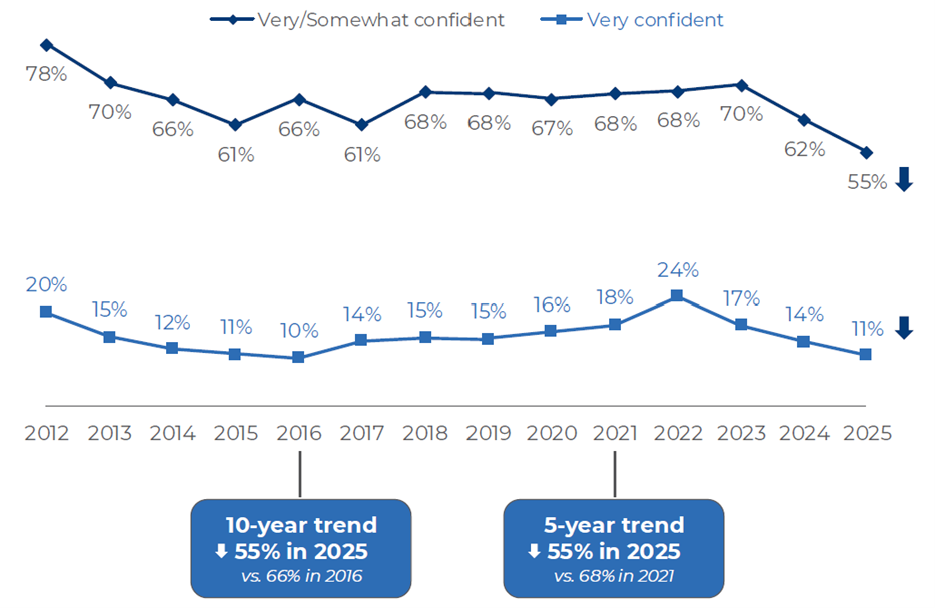
American confidence in the safety of food has seen a downward trajectory since 2012, with the greatest decreases occurring in recent years, as shown in the graph below.
Why is there such a lack of confidence?
Of those responding that they are not too or not at all confident,
- 59% believe that profit is prioritized over safety in the food industry
- 54% don’t believe that everyone across the food system is working together to ensure that the food supply is safe
- 46% don’t think that the federal government’s regulation of the food supply is strict enough
- 43% think there are too many food recalls to believe that the food supply is safe
Interestingly, however, of those with confidence, 49% stated that they do believe everyone across the food system is working together to ensure that the food supply is safe; and nearly as many think that the federal government (48%) and food companies (46%) are committed to ensuring that food is safe.
It’s also interesting to note that while 50% of respondents believed foodborne illness from bacteria to be the most important food safety issue, and 43% saw the number of recalls as indicating an unsafe food supply, only about one-fourth of those who knew they had food implicated in a recall took any action. Most either threw away the recalled food (67%) or returned it for a refund (46%), but 15% ate the recalled food – with more than half then needing medical attention as a result; and 14% donated the food or fed it to their pet. (Note, respondent could choose more than one response reflecting the potential of having to deal with a recalled food more than once.) Just as disturbing as the few numbers who took any action are those who passed on the food to another person or pet knowing that it was complicit.
Among the other food safety issues, a high percentage of respondents deemed as important were carcinogens/cancer-causing chemicals, pesticides/pesticide residues, heavy metals, food additives and ingredients, bioengineered/GMOs, and allergens.
How can the food industry revive confidence in the foods they produce?
In short, the survey showed that increased communication from both food businesses and the government would go a long way toward improving consumer confidence. Your customers want to know:
- How you are ensuring that your food is safe
- How you respond when a food is deemed unsafe
- Where the ingredients in your food come from
- The what and why during a recall
- More about the food they are purchasing with increased label information
Similarly, consumers want to understand how the government ensures food is safe and responds when it is deemed unsafe, and they showed an increased desire for the enactment of stricter food safety regulation.
Confidence in a purchase is a key aspect of a consumer’s final decision to purchase that product – whether it be a car, appliance, toy, or food, believing that the product will provide what is expected in a safe manner will impact their satisfaction and future decisions on purchasing that product or from that manufacturer. Making food safety and transparency an integral part of your culture and your communication, responding to customer questions and requests in an open and timely manner, and staying in the know on consumer concerns will not only help you maintain the confidence and trust of your customers, but could help reduce the need, and consumer demand, for stricter regulation.
All written content in TAG articles, newsletters, and webpages is developed and written by TAG experts, not AI. We focus on the realities and the science to bring you the most current, exacting information possible.