

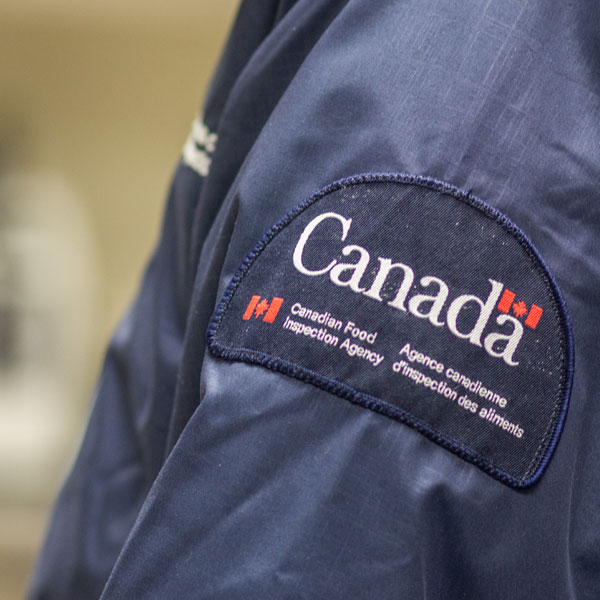
After notifying the industry in July that it would be conducting inspections on SFC licence holders, the CFIA has begun blitzing SFC licenced manufacturers. The aim is to confirm that all licences are correct and to verify that SFCR requirements are being met. CFIA began the blitz in October 2025, with an intent to complete it within a year, by October 2026.
What Will CFIA Be Verifying?
Although some verifications will be made by phone, others will be conducted on-site, with TAG Canada experts already hearing of facilities that have had days-long audits scheduled by CFIA. The blitz is being implemented in part due to a major 2024 recall for which the company had not updated its licence.
To help ensure you are prepared when you get your call or visit, following are the SFCR requirements for which licence holders are responsible:
- Preventive Controls (PCs). All licence holders must Implement PCs to ensure the food you import, manufacture, or sell is safe and meets regulatory standards. (SFCR, Part 4)
- Preventive Control Plan (PCP). If your business activities require it, you must have a written PCP that outlines how you identify and manage food safety risks. (SFCR, Part 4, Division 6)
- The PCP must be actively used in your daily operations.
- It must be kept up to date, including all pertinent documentation, with records kept for 2 years (3 years for shelf-stable low-acids foods in hermetically sealed containers).
- Licence pertinence.The licence covers the business activities, food commodities, and establishments entered in the application and indicated on the licence. As such, it must be updated by requesting an amendment any time any of these change. (SFC Licence 3.0).
How Do I Update My Licence?
If you have a change in the activity, location, or food commodity listed on your licence, it is necessary to request an amendment, for which you must document that you:
- Meet the relevant SFCR requirements associated with the activity or food (i.e., preventive controls, traceability, and labelling)
- Have a written preventive control plan that is updated to reflect these changes (if required)
- Comply with recordkeeping requirements
It is also important to understand that an SFC licence is not transferable; the person/business named in the licence must always be the one that conducts the activity(ies) authorized in the licence. Depending on the circumstances, you may need to amend the licence, or surrender it if the change means a different person is holding the licence. In that case, a new SFC licence would be required for the new person to conduct the activities set out in the licence.
What Can I Expect in an On-Site Inspection?
Typically, a facility will receive a notice that CFIA is scheduling an inspection. However, there are several situations in which CFIA does not, or may not, issue notices, such as in response to a complaint, at high-risk facilities, for a targeted or surprise check, and in emergency situations. In either case, the inspection will follow a similar process. If notice is given, it will explain the scope of the inspection; the information, documents or samples to be required and any communication or documents to be provided at that time.
When the CFIA inspector arrives at your facility, you can expect the following to occur prior to, during, and after the Inspection.
Prior to the inspection, the inspector:
- Meets with you to outline the scope of the inspection. You should provide the inspector with any changes to your company profile and PCP at this time.
- Conducts an initial walk through, determining areas that may need to be addressed.
- Confirms the scope of the inspection based on the walk-through.
During the inspection, the inspector:
- Determines if regulatory requirements are met (including the licence verification) and completes a report.
- Documents inspection observations using a tablet or mobile device.
- Verifies if preventive controls are complete and effective through onsite observation, document/record review, staff interviews, sampling and measurement.
After the inspection, the inspector:
- Meets with you to discuss inspection results and provide the report.
- Schedules a follow-up if non-compliances were noted, to review your establishment’s corrective actions.
What Happens if I’m Not Compliant?
Any non-compliances found during the inspection will require that the establishment take corrective action. But the CFIA notice on SFC licence verification takes it a step further, noting that because it is the responsibility of SFCA-regulated persons/businesses to ensure that they comply with all applicable requirements, including licensing requirements, “failing to meet these obligations could result in enforcement actions, including suspension or cancellation of your licence.”
TAG Canada has extensive experience and expertise in CFIA regulatory compliance. Give us a call to review your SFC licence and other regulatory compliance!