
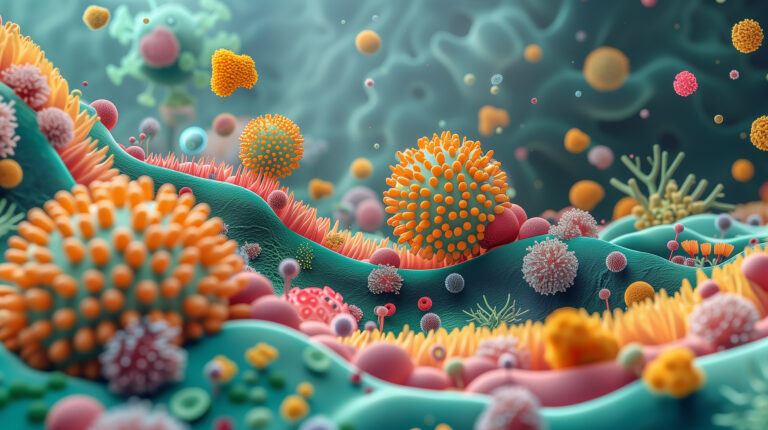
We all have a microbiome of bacteria living in and on our bodies. While some of these are shared by all, others are unique to each individual. It is the unique bacteria, shaped by our genetics, diet, and immune system that a new study has found to be the most persistent and have the most bearing on our health. For example, people with Type 2 diabetes showed a less stable and less diverse microbiome. But because one’s microbiome is huge (averaging 39 trillion microbes) and constantly changing, it is difficult to determine if there is an ideal composition.
There is, however, some research to suggest that having good bacteria may help reduce illness severity. One study showing that the presence of two bacteria – Dolosigranulum pigrum and Corynebacterium species – were found more frequently in patients who did not develop long COVID, suggesting that they may offer some protection. This research also found different bacterial patterns between COVID-19 and influenza, indicating that microbiome profiles could potentially help differentiate infections and hold biomarkers for disease severity.
The use of such findings in disease treatment should be advanced with caution, as treatments involving antibiotics can induce changes in the microbial composition that have a negative impact on one’s health. In particular, antibiotics can affect gut microbiome, impacting functions such as immune regulation, metabolic activities, and thus overall health. This is because the antibiotics will kill both pathogenic germs that cause infections and beneficial germs that protect our body from infection, resulting in an unbalanced microbiome. On the other hand, CDC cites research showing that therapeutic treatments focused on protecting a person’s microbiome can protect them from infections, including healthcare-associated and antimicrobial-resistant infections.
With extensive evidence that human, animal and environmental microbiomes play significant and varied roles in states of health and disease, it is an area which is seeing a great deal of continuing research in both the private and public sectors – such as the various FDA studies on microbiomes “in response to the rapid advancement of science and technology and corresponding implications for FDA-regulated products.”
COVID Risk Matrix:
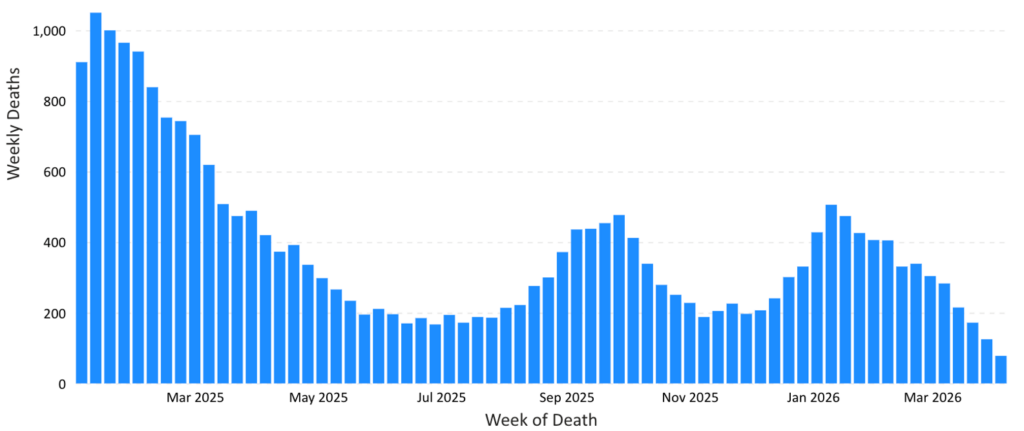
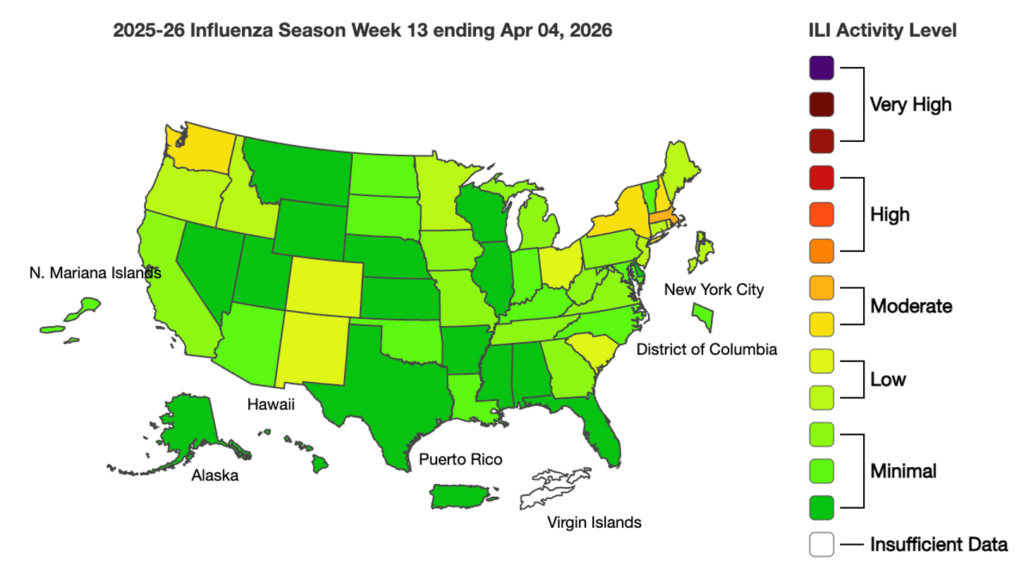
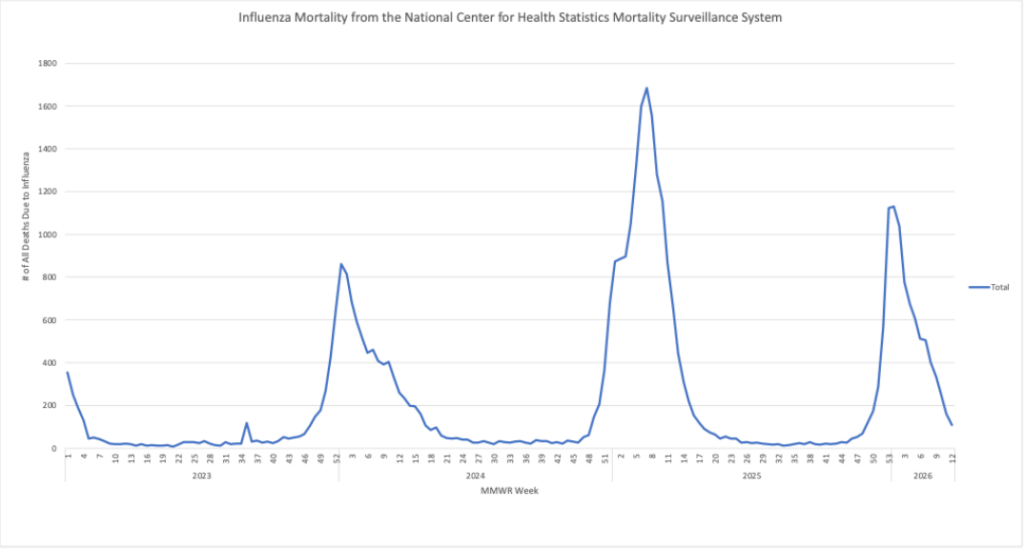
Influenza:
Public Health News:
- US measles case count grew by 43 cases this past week, reaching more than 1,700, but this increase is slower than in previous weeks. Utah recorded 24 of these cases. No measles-related deaths have been confirmed yet this year, but 96 patients have been hospitalized, or 6%, compared with 11% last year. Among all patients this year, 92% are unvaccinated or have an unknown vaccine status, in line with 2025 data.
- An outbreak of Legionnaires’ disease occurred in London, UK, with 8 confirmed cases possibly linked to a common environmental exposure, though no source has been identified yet.
- New research from Denmark indicated that the seasonal flu vaccine may halve the risk of heart attack or stroke, even if it does not prevent flu infection.
- Researchers warned that growing insecticide resistance among South American mosquitoes is threatening malaria control efforts in the region.
- A study examining the microbiome in respiratory systems revealed that the presence of two bacteria—Dolosigranulum pigrum and Corynebacterium species – were found more frequently in patients who did not develop long COVID, suggesting that they may offer some protection.
- At least 54 suspected cases of scombroid syndrome (histamine fish poisoning) associated with the consumption of tuna were reported in The Philippines. Investigation revealed a point-source exposure linked to fish originally intended for dried-fish processing before being sold fresh. Likely lapses in temperature control may have occurred during transport and storage.